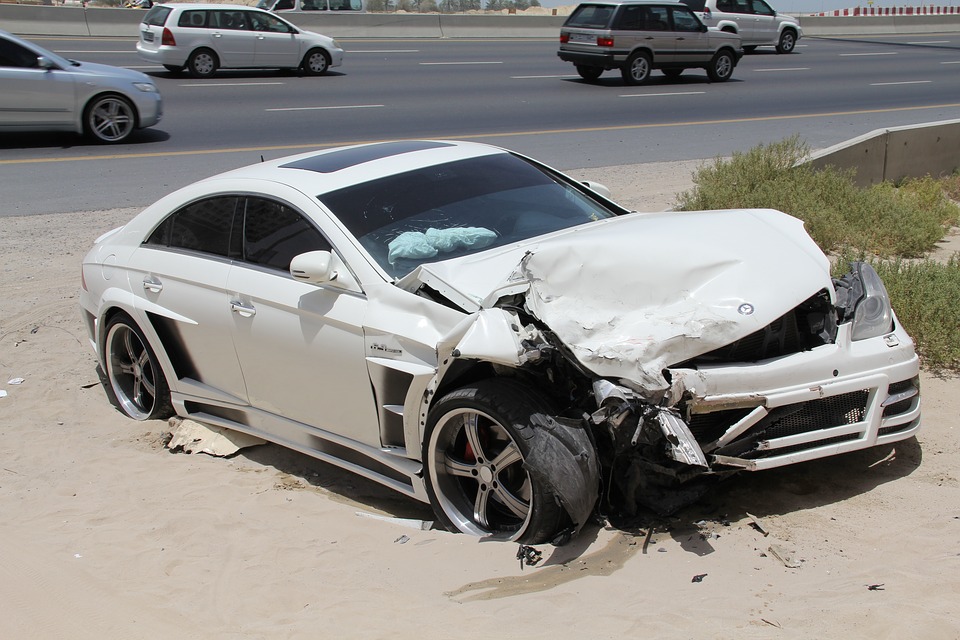
Driving a new car off the dealer’s lot and onto the open road can be exciting. For many new owners, however, the excitement is often tempered by the fear that their car will sustain significant damage while it is still nearly new. When a new or newer car is damaged, the real concern is the gap between the amount of money owed on the car and the amount an insurance policy will pay if the new car is deemed a total loss. Those wishing to limit the financial consequences of such a gap typically do so by purchasing some form of Guaranteed Auto Protection, or GAP.
In the event of a total loss, GAP is designed to pay the difference between the current outstanding balance on the car loan or lease, and the actual cash value of the vehicle, which is what an insurance policy will typically after a loss. In some cases, this gap can represent a significant amount of money. Importantly, this gap develops the instant the new car is driven off the lot.
Once a car is purchased and driven off the dealer’s lot, it can no longer be sold at the retail price. Indeed, a new car owner suffering from buyer’s remorse after only a few miles will soon discover that his or her car is no longer worth the original retail price. Rather, the dealer will negotiate the return of the used car on a wholesale basis, which can be significantly less than retail. And, while cars depreciate throughout their useful life, the decline in value is greatest during the first year, and can equal between 15 and 25 percent of the price of the car, with most of the depreciation occurring during the first few months.
Consequently, the rate at which a new car depreciates is typically greater than the rate at which a financed car is paid off. As a result, the owner of a new car will owe more than the car is worth until enough payments have been made to catch up with the initial depreciation. Until then, the owner will be upside down on the loan, and therefore exposed to the risk caused by the gap.
To illustrate the risk, let’s look at John, who purchased his new car for $40,000, but who did not purchase GAP coverage. Since his down payment was only enough to cover the cost of the fees and taxes, John was required to take out a loan for the full purchase price of $40,000. Before the car was destroyed by a fire, John was able to make three monthly payments, thereby reducing the balance of the car loan to $38,500.
Due to depreciation, the insurance company set the actual cash value of John’s car at $32,000. After subtracting the $500 deductible, John will receive $31,500 from his insurance company. The difference between the loan balance ($38,500) and the amount paid by the insurance company ($31,500) is the gap. Since John is still obligated to repay the loan’s balance to the bank, the gap is going to cost John $7,000.
This is the risk caused by the gap, and as illustrated by John’s example, it can be a significant risk. Had John purchased GAP coverage, the $7,000 gap would have been covered for him. However, John is not the only one who should have purchased GAP coverage. GAP coverage should be seriously considered by anyone doing one or more of the following:
- Leasing their car;
- Financing for 60 months or more;
- Driving more than 15,000 miles per year;
- Making a down payment of 20% or less; and
- Rolling negative equity from an old car into a new car.
While the decision to purchase GAP coverage should be easy, choosing the best coverage can be a bit more complicated. Unfortunately, the regulation of GAP products is not always uniform or straightforward. In fact, the extent to which a GAP product is regulated depends in large part on who is selling it.
For example, many people incorrectly assume that GAP is always an insurance policy. A GAP product can be a contract, rather than an insurance policy, in which a creditor agrees to waive a customer’s liability for payment in the event the debt (the loan balance) exceeds the value of the collateral (the car). For example, a Florida statute, which specifically authorizes the use of “Guaranteed Asset Protection” products, expressly exempts them from regulation under Florida’s Insurance Code.
If a specific GAP product is not considered an insurance policy, then a purchaser may not enjoy the protection that is generally available to consumers under a state’s insurance laws. Specific policy forms, including exclusions, may not be regulated. Additionally, the cost of the product, even if it is referred to as a premium, may not be regulated by the state, thereby increasing the possibility of unfair or abusive pricing. Alternatively, if GAP coverage is being provided by an insurance company, then the lack of regulation by a state’s insurance department should not be a concern.
The absence of a uniform GAP policy or contract means that particular attention must be paid to exclusions found in the document to make sure there are no surprises. Though there are variations, GAP products contain numerous exclusions or limitations of coverage, including those for overdue payments, excessive mileage for leased cars, negative equity rolled over from prior loans, wear and tear deductions, and equipment upgrades.
Given the numerous, and sometimes significant variations among GAP products, as well as the absence of uniform regulation of such products, there are many potential pitfalls for consumers. The best way to avoid these pitfalls, while at the same time increasing the scope of protection afforded by a GAP product, is to work with an experienced insurance agent when purchasing or leasing a new car. This advice holds true even if GAP coverage is being offered at the car dealership, so prices and coverage terms can be compared.
If you would like more information about GAP coverage, please contact us.

 Setnor Byer Insurance & Risk