Firework safety tips for a happy and safe July 4th celebration

By Anita Byer

July 4th fireworks have become a beloved tradition, so it is easy to temporarily forget that blowing stuff up can be dangerous. According to the Consumer Product Safety Commission (CPSC), eleven people were killed and nearly 15,000 people were injured by fireworks last year. Surprisingly, not all injuries were caused by the big, loud, and awesome fireworks that everyone loves. Last year, there were approximately 1,700 emergency room visits to treat injuries caused by sparklers. The reality is that all fireworks can be dangerous, so it is important to keep safety in mind if you plan to light fireworks this year, even sparklers.

Incident and injury data can help us better understand the risks posed by fireworks on Independence Day. According to the CPSC,

  • Adults aged 25 to 44 accounted for the largest share of reported injuries (32%).
  • People aged 15 to 24 accounted for the second largest share of reported injuries (24%). In 2023, victims 15 to 19 years of age had the highest estimated rate of ER visits for firework-related injuries.
  • The most frequently injured body parts were hands and fingers (36%), followed by head, face, and ears (22%).
  • Burns were the most common injury, making up 37% of all emergency room visits.


According to the American Red Cross, the safest way to enjoy fireworks on July 4th is by attending a public fireworks display put on by professionals. Those opting to set fireworks off at home, however, should observe the following safety tips.

  • Never give fireworks to small children.
  • Never throw or point fireworks toward people, animals, vehicles, structures, or flammable materials.
  • Read and follow all warnings and instructions.
  • Keep a supply of water close by.
  • Make sure the person lighting fireworks always wears eye protection.
  • Light only one firework at a time and never attempt to relight one that does not go off (dud).
  • Store fireworks in a cool, dry place away from children and pets.
  • Never use fireworks around pets, which should be kept away, preferably pets indoors.


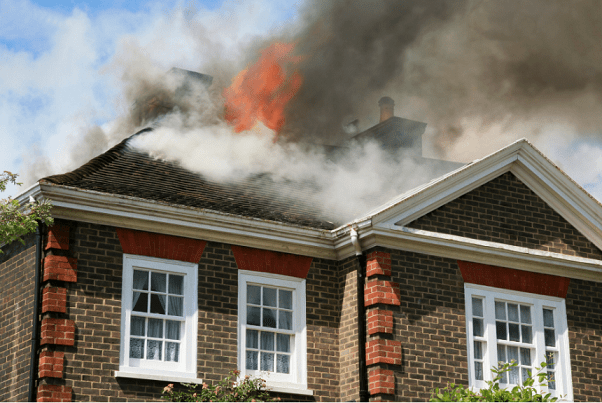
Finally, it is worth remembering that fireworks can also cause, you guessed it, fires. According to the National Fire Protection Association (NFPA), fireworks started an estimated 32,302 fires in 2023, including 3,760 structure fires, 849 vehicle fires, and 27,252 outside fires. This risk is far greater in areas already prone to fires, particularly as fire seasons are becoming longer and more intense, so the use of fireworks may be strictly limited or prohibited by law. Before purchasing or lighting any fireworks, make sure it is legal to do so in your local area.

Have a safe and happy Fourth of July!

Active Shooter Awareness and Response Training

An active shooter is defined as an individual actively engaged in killing or attempting to kill people in a confined and populated area. There were over 500 mass shootings events in the United States last year, according to the Gun Violence Archive (GVA), We have experienced an increase in frequency of these events since the Covid-19 pandemic. We share with you some ways in which you can identify, prevent and prepare for these incidents, as well as behaviors to adopt so you can react quickly when every second counts.

Profile of an active shooter

  • Increase in alcohol or illegal drug use
  • Unexplained increase in absenteeism (At work, school, responsibilities)
  • Depression and withdrawal
  • Increased mood swings and emotional responses
  • Repeated violation of company policies
  • Escalation of domestic problems, talks of severe financial problems
  • Violence and hate speech in social media, comments about violent crimes or weapons
  • Empathy towards individuals committing violence
  • Worsened physical appearance and personal hygiene

Signs of an active shooting being planned/about to take place

  • Unusual items or situations – vehicles parked in odd locations, unattended items, out-of-the-ordinary situations.
  • Eliciting information – an individual has questions beyond idle curiosity regarding a building’s purpose, operations, security procedures, shift changes
  • Observation/Surveillance – an individual pays unusual attention to facilities or buildings
  • Repeated or prolonged observation of a building — Note taking or sketching regarding a building.

How to prevent and prepare for an active shooter situation

  • Be aware of indications of workplace violence, and create system for reporting signs of violent behavior
  • Conduct effective employee screening and background checks during hiring process
  • Foster a respectful workplace environment
  • Make counseling services available to employees
  • Develop an Emergency Action Plan (EAP)
  • Post evacuation routes in conspicuous locations through your facility
  • Encourage law enforcement, emergency responders, SWAT teams, K-9 teams, and bomb squads to train for an active shooter scenario at your location
  • Place removable floor plans near entrances and exits for emergency responders

Prepare an Emergency Action Plan (EAP) to prepare your staff and conduct a training exercise. The EAP must contain the following:

  1. Preferred method for reporting emergencies
  2. An evacuation policy and procedure
  3. Emergency escape procedures
  4. Contact information for, and responsibilities of individuals to be contacted under EAP
  5. Information concerning local area hospitals
  6. An emergency notification system to alert various parties of an emergency (Individuals at remote locations within premises, local law enforcement, local area hospitals)

The training exercise must cover the following topics:

  1. Recognizing the sounds of gunshots
  2. Reacting quickly when gunshots are heard, or a shooting is witnessed (Run / Hide / Fight)
  3. When to call 911
  4. How to react when law enforcement arrives
  5. Mind set during times of crisis

When in an active shooting – RUN / HIDE / FIGHT – always elect to Run/evacuate the scene if possible.

  • Run – know where the nearest exit from you is and have an escape plan in mind (Windows can be used as exits too). Help others escape, if possible, do not stop to assist wounded or frozen people until after the incident has ended. Always keep your hands visible when leaving the scene. Try to stay out of open areas when escaping
  • Hide/Hide Out – if you cannot evacuate, find a place to hide. Lock and barricade all entries (doors and windows). Know the difference between cover and concealment, if available seek cover. Cover – can stop a bullet and provide a hideout / Concealment – can’t stop a bullet but provides a hideout. Turn off lights and any sources of noise (silence your phone, turn off radios, computers, and televisions)
  • Fight/Action – This should be your last resort. Identify items in your space that can be used as weapons (office supplies, furniture, awards, break room appliances). Attempt to incapacitate the shooter by aiming to his knees


Christmas tree fire safety tips

By Anita Byer, Setnor Byer Insurance & Risk

Did you know that fire departments respond to hundreds of home fires involving Christmas trees every year? Data from the National Institute of Standards and Technology, which is part of the U.S. Department of Commerce, shows that Christmas tree fires cause an annual average of 6 civilian deaths, 16 civilian injuries, and more than $16 million in property damage. These numbers are far more significant than they may appear because Christmas trees and holiday decorations are used for a very short time. This means that the risk of fire can be noticeably higher in homes with Christmas trees and holiday decorations.

According to the National Fire Protection Association (NFPA),

  • Fifty percent of Christmas tree fires happen between 3 p.m. and midnight. More than twenty-five percent occurred between 9 a.m. and 3 p.m.
  • Approximately two out of every five home Christmas tree fires started in the living room, family room or den.
  • Electrical distribution or lighting equipment (lamps, bulbs, wiring, cords, plugs, etc.) was involved in more than two in five home Christmas tree fires.
  • More than fifty percent of home Christmas tree fires were caused by electrical failure or malfunction and heat sources placed too close to trees.


The National Institute of Standards and Technology offers the following tips to help reduce the risk of Christmas tree and holiday decoration fires.

  • Water your tree daily. Regularly check the water level so the tree does not dry out.
  • Make sure that the tree is at least three feet away from any heat source (space heaters, candles, fireplaces, heat vents, or lights).
  • Make sure that the tree does not block an exit.
  • Only use decorative lights that have the label of a recognized testing laboratory. Make sure light bulbs, strings, and connections are not broken or damaged in any way.
  • Always turn off tree lights before leaving home or going to bed.
  • Never use lit candles to decorate the tree.
  • Get rid of the tree after Christmas or when it is dry. Keep trees awaiting recycling or disposal away from your home and out of the garage.


Happy Holidays!


Safety tips for Thanksgiving and Black Friday

By Anita Byer, Setnor Byer Insurance & Risk

This week, many will be celebrating Thanksgiving in traditional fashion. By traditional, we mean eating and shopping. With so much time spent planning and preparing, it is easy to forget about the risks associated with these activities. The good news is that both can be made significantly safer by taking appropriate preventative measures. So, before the binging begins, take a few minutes to read the following Thanksgiving and Black Friday safety tips.

Thanksgiving Fire Prevention. Did you know that the average number of residential fires nearly doubles on Thanksgiving? Fortunately, FEMA put together the following list of safety tips to reduce the risk of a Thanksgiving fire.

  • Stand by your pan. If you leave the kitchen, turn the burner off.
  • Keep an eye on what you fry. Most cooking fires start when frying food.
  • Roll up your sleeves. This reduces the chance they will catch fire.
  • Supervise children and pets. Make sure they stay away from the stove.
  • Watch what you’re cooking. If you see smoke, or grease starts to boil, turn the burner off.
  • If there is an oven fire, keep the door closed. Turn off the oven and keep the door closed until it cools down.
  • Move flammable items away from the stove. This includes dishtowels, bags, boxes, paper and curtains.
  • Turn pot handles toward the back of the stove. This makes it harder to bump them or pull them over.
  • Only use a turkey fryer outdoors. Place it on a sturdy surface, away from things that can burn.
  • Check smoke alarms. Working smoke alarms should be close to where anyone may be sleeping.


Avoiding Black Friday (and Cyber Monday) Scams. We are not the only ones preparing to take full advantage of Black Friday. Hackers and other bad actors are preparing too, hoping to take advantage of stressed, hurried, and oftentimes careless consumers. It is a target-rich environment, and the predators know it. The following tips from the Better Business Bureau can help keep you safe while shopping online this holiday season.

  • Beware of false advertising and phony websites. Watch out for lookalike websites. Pay close attention to the spelling of the web address in your browser.
  • Shop with trustworthy sellers on secure sites only. Be wary of unfamiliar merchants. Check their BBB Business Profile on BBB.org. Only purchase from secure websites (web address begins with HTTPS).
  • Keep your antivirus software up to date.
  • Price check before you buy. Best price offers may be misleading. Compare prices yourself because the best deal may not be a real deal.
  • Use your credit card. If questionable charges appear later, you can contest them through your credit card company. Never pay with prepaid debit cards or by wiring money.
  • Understand return policies. Understand the return or exchange policy for the exact items you want to purchase. Be aware that stores may not allow returns for “final sale” or “closeout” items.
  • Watch out for phishing scams. Look out for unsolicited emails, texts, calls, etc. Never click the links or open any attachments. Avoid phishing scams by ignoring suspicious correspondence and calls from unfamiliar phone numbers.
  • Look for the BBB Seal.


Happy Thanksgiving!

Can you guess the top 10 OSHA violations for 2023?

By Anita Byer, Setnor Byer Insurance & Risk

The Occupational Safety and Health Administration (OSHA) recently revealed a preliminary list of the most frequently cited safety violations for fiscal year 2023, which ended September 30th. The announcement, which was made at the 2023 NSC Safety Congress & Expo., is significant because knowing how and why workplace injuries occur puts employers in a better position to develop and implement their own safety and training programs.

This year’s list of most frequently cited safety standards looks a lot like last year’s. In fact, except for a slight change in order, the lists are identical. Fall protection was the most frequently cited violation for the 13th consecutive year. Here is the complete list.

  • Fall Protection (General Requirements)
  • Hazard Communication
  • Ladders
  • Scaffolding
  • Powered Industrial Trucks
  • Lockout/Tagout
  • Respiratory Protection
  • Fall Protection (Training Requirements)
  • Personal Protective and Lifesaving Equipment (Eye and Face Protection)
  • Machine Guarding


An employer’s failure to observe safety standards can quickly become an OSHA violation. These can be very costly. The maximum penalty for the following OSHA violations is currently $15,625 per violation, except for willful or repeated violations, which carry a maximum penalty of $156,259 per violation.

  • WILLFUL: A willful violation is defined as a violation in which the employer either knowingly failed to comply with a legal requirement (purposeful disregard) or acted with plain indifference to employee safety.
  • SERIOUS: A serious violation exists when the workplace hazard could cause an accident or illness that would most likely result in death or serious physical harm, unless the employer did not know or could not have known of the violation.
  • REPEATED: A repeated violation occurs when a previously-cited business fails to correct the violation or is cited again for the same or a substantially similar condition.
  • OTHER-THAN-SERIOUS: A violation that has a direct relationship to job safety and health, but is not serious in nature, is classified as “other-than-serious.”


Workplace safety, for better or worse, begins at the top. Knowing how and why workplace injuries occur puts employers in a better position to prevent them. With an effective workplace safety program, employers can reduce the risk of workplace injuries and may even end up paying less for workers’ compensation insurance.

Please contact us to find out how an effective workplace safety program can reduce the cost of workers’ compensation insurance.


New OSHA rule means more employers will be required to electronically report injury data

By Anita Byer, Setnor Byer Insurance & Risk

The Occupational Safety and Health Administration recently published a final rule that creates a new injury and illness reporting requirement for employers operating in certain industries. As of January 1, 2024, establishments with 100 or more employees operating in designated high-hazard industries must electronically submit injury and illness information to OSHA once a year. The goal of this new reporting requirement is to reduce the frequency and severity of occupational injuries and illnesses by increasing public awareness and understanding.

Existing OSHA regulations generally require nonexempt employers with more than ten employees in most industries to keep records of occupational injuries and illnesses. This was not changed by the final rule. Covered employers are still required to record information about recordable injuries and illnesses on three separate OSHA forms.

  • Form 300 (Log of Work-Related Injuries and Illnesses)
  • Form 300A (Summary of Work-Related Injuries and Illnesses)
  • Form 301 (Injury and Illness Incident Report)

Some employers, by virtue of their size and industry, are also required to electronically submit injury and illness data to OSHA once a year. Currently, two groups of employers are subject to an electronic submission requirement. When the final rule becomes effective, however, there will be three such groups.

As you will see, these employer groups are determined primarily by the total number of employees working at an establishment during the previous calendar year. This is necessary because OSHA’s recordkeeping regulations require employers to maintain and report injury and illness data at the establishment level. OSHA regulations define an establishment as a single physical location where business is conducted or where services or industrial operations are performed. This makes it possible for a single employer to have multiple “establishments” for purposes of OSHA’s electronic reporting requirements.

Under the final rule, the following groups of establishments will be required to electronically submit injury and illness information from their recordkeeping forms to OSHA once a year.

  • Establishments with 20-249 employees in certain designated industries will continue to be required to electronically submit information from their Form 300A to OSHA annually. These designated industries are identified by NAICS codes and listed in appendix A to the regulations.
  • Establishments with 250 or more employees in industries that are required to routinely keep OSHA injury and illness records will continue to be required to electronically submit information from the Form 300A to OSHA annually.
  • [New Group] Establishments with 100 or more employees in certain designated industries will be subject to a new requirement to electronically submit information from their OSHA Forms 300 and 301 to OSHA once a year. The designated industries for this group are identified by NAICS codes and listed in the newly-created appendix B to the regulations.

Before the final rule goes into effect, employers must determine whether they have an establishment that will be subject to OSHA’s new electronic submission requirement. Does the establishment operate in one of the designated industries listed in the final rule’s new appendix B? Did the establishment have 100 or more employees at any point during the previous calendar year, including full-time, part-time, temporary and seasonal employees? Only those who answered yes to both questions are subject to the final rule’s new electronic submission requirement.

Unfortunately, employers do not have much time left to figure this out. Establishments subject to the final rule must submit all the required information to OSHA by March 2 of the following calendar year. These establishments will have to electronically submit their 2023 injury and illness information to OSHA by March 2, 2024, which will be the first submission deadline under the final rule.

The revised regulations should serve as a reminder for employers of their obligation to provide a safe and healthy workplace. In addition to protecting employees from work-related injuries, employers may benefit financially from lower workers’ compensation insurance premiums.

Please contact us if you would like more information about controlling workers’ compensation insurance costs.

Catalytic converter thefts soaring nationwide

By Anita Byer, Setnor Byer Insurance & Risk

Thieves in search of precious metals have caused catalytic converter thefts to soar nationwide. The National Insurance Crime Bureau analyzed insurance claims involving catalytic converters and found a dramatic increase in the number of thefts across the United States. According to the NICB, there was a 325 percent increase in thefts from 2019 to 2020. In 2021, catalytic converter theft claims increased 1,215 percent compared to 2019. Here’s what you need to know about the recent surge in catalytic converter thefts.

What is a catalytic converter? A catalytic converter is part of an automobile’s exhaust system. It contains a catalyst designed to convert environmentally harmful exhaust into less harmful gasses. Catalytic converters are located on the underside of a vehicle and look like a large metal box with two pipes coming out of it.

Why do thieves steal catalytic converters? Money. These devices rely on precious metals to convert a car’s exhaust into less harmful gasses. By precious, we mean expensive. Catalytic converters contain platinum ($891 per ounce), palladium ($2,219 per ounce) and rhodium ($14,250 per ounce). It’s easy to understand why catalytic converters are stolen once you know what’s inside.

Which vehicles are thieves targeting? According to Carfax, thefts are not limited to certain types of vehicles or manufacturers. Although multiple vehicles are being targeted, some patterns have emerged. According to Kelley Blue Book, hybrid cars seem to be at greater risk because the precious metals inside the catalytic converter last longer than they do in gas-powered vehicles. Newer cars are more likely to be targeted than older ones for the same reason. Personal and commercial trucks and SUVs seem to be targeted more frequently, not necessarily because they are more valuable, but because they are higher off the ground, which makes then easier to steal. Unfortunately, no car is safe.

What can you do to protect your catalytic converter from being stolen? The NICB recommends installing a catalytic converter anti-theft device, which are readily available from various manufacturers. Kelley Blue Book offers the following tips to reduce the likelihood of theft.

  • Get your catalytic converter etched. Identifying numbers make it easier to determine a converter’s rightful owner. It also makes it much harder for the converter’s wrongful owner to sell it for quick cash.
  • Whenever possible, park your car indoors, in a well-lighted area or in an area covered by surveillance cameras.
  • Install a dashboard camera or anti-theft device. Though nothing is foolproof, thieves are less likely to target vehicles with obvious security measures.

What’s being done to address the problem? A number of states have proposed legislation to help reduce the number of catalytic converter thefts. According to the NICB, in 2021, twenty-six states proposed bills to address the problem, including ten states that either enacted new legislation or revised existing legislation. Legislation is also being considered at the federal level. In January 2022, the Preventing Auto Recycling Theft Act was introduced in Congress.

Is a stolen catalytic converter covered by insurance? A stolen catalytic converter may be covered under the comprehensive portion of your personal or commercial auto insurance policy. This coverage generally covers damage to a vehicle caused by something other than a collision. Each policy, however, contains various exclusions that may affect coverage.

If you’re not sure whether your current auto insurance policy covers a stolen catalytic converter, please contact us.

Risk of workplace injuries higher among first-year employees

By Anita Byer, Setnor Byer Insurance & Risk

Did you know that the risk of workplace injuries is higher among first-year employees? A recent analysis of workers’ compensation claims by Travelers revealed that an employee’s first year on the job is often the most dangerous. Thirty-five percent of workplace injuries occurred during an employee’s first year. Thirty-seven percent of all workdays missed due to injury were taken by first-year employees. This obviously isn’t welcome news, but the resulting awareness is crucial to reversing this disturbing trend. Now, employers know to implement additional safety policies and procedures designed to reduce the risk of injury among first-year employees.

The first step to developing an effective safety program is to identify the most common causes of workplace injuries. According to Travelers’ analysis of more than 1.5 million workers’ compensation claims, the most common causes of first-year injuries were:

  • Overexertion (27%)
  • Slips, trips and falls (22%)
  • Struck by an object (14%)
  • Cuts and punctures (6%)
  • Caught-in or -between hazards (6%)
  • Motor vehicle accidents (6%)

The most common injuries suffered by first-year employees were:

  • Strains and sprains (38%)
  • Fractures (13%)
  • Contusions (95)
  • Cuts and puncture wounds (6%)
  • Inflammation (6%)
  • Dislocations (6%)

Though workplace injuries can and do happen anywhere and everywhere, the heightened risk of injury to first-year employees is more pronounced in specific industries. According to Travelers, the industries most affected by first-year injuries were:

  • Restaurants (53% of claims and 47% of claim costs)
  • Construction (48% of claims and 52% of claim costs)
  • Services (43% of claims and 38% of claim costs)
  • Transportation (39% of claims and 41% of claim costs)

Employers can do a number of things to reduce the risk of injury among first-year employees. Integrating safety into the hiring process, for example, makes employees aware of the risks and the organization’s emphasis on workplace safety. Employers can also perform a job-safety analysis or implement an accident analysis program to better understand the risks associated with specific jobs and tasks. The kinds of preventative measures may vary depending on the circumstances, but every workplace safety program must include regular safety training for all employees, beginning day one.

Workplace safety, for better or worse, begins at the top. Knowing how and why workplace injuries occur puts employers in a better position to prevent them. With an effective workplace safety program, employers can reduce the risk of workplace injuries and may even end up paying less for workers’ compensation insurance.

Please contact us to find out how an effective workplace safety program can reduce the cost of workers’ compensation insurance.

OSHA Imposes Mandatory COVID-19 Vaccination and Testing Policy on Employers with 100+ Employees

By Anita Byer, Setnor Byer Insurance & Risk

The Occupational Safety and Health Administration announced a new emergency temporary standard (ETS) to reduce the spread of COVID-19 in the workplace. It generally requires private employers with 100 or more employees (covered employers) to develop, implement and enforce a mandatory COVID-19 vaccination policy. Alternatively, covered employers can adopt a policy requiring employees to either be vaccinated or undergo regular COVID-19 testing and wear a face covering at work. The ETS is effective as of November 5, 2021, but covered employers have thirty days to comply with most of its provisions.

In addition to implementing a COVID-19 vaccination / testing policy, covered employers must:

  • Determine each employee’s vaccination status, obtain proof of vaccination and maintain records (and a roster) of each employee’s vaccination status.
  • Provide reasonable time (up to 4 hours) for employees to get vaccinated and reasonable time and paid sick leave to recover from any side effects.
  • Ensure that each unvaccinated employee is tested for COVID-19 at least weekly (if in the workplace at least once a week) or within 7 days before returning to work (if away from the workplace for a week or longer).
  • Require employees to provide prompt notice of a positive COVID-19 test or diagnosis.
  • Immediately remove any employee, regardless of vaccination status, who received a positive COVID-19 test or diagnosis and keep them out of the workplace until return-to-work criteria are met.
  • Require unvaccinated employees to wear a face covering when indoors or in a vehicle with another person for work purposes.
  • Provide employees with information about: the ETS and its requirements; vaccine efficacy and safety; protections against retaliation and discrimination; and criminal penalties for knowingly supplying false statements or documentation.

The ETS does not require employers to pay for testing, though some may be required to do so to comply with other laws, regulations or collective bargaining agreements. Employers are also not required to pay for face coverings. OSHA posted additional information and resources, including FAQs, policy templates and fact sheets, at COVID-19 Vaccination and Testing ETS.

This is obviously a momentous policy change with far-reaching implications. In the coming days, covered employers nationwide will be digging through the 150-page ETS (triple column, single-spaced) to learn more about its specific requirements because the devil, as always, is in the details. State governors and attorneys general are no doubt doing the same. Some have already announced their intention to oppose the ETS in court. This is just the beginning.

Novelty and uncertainty always increase the likelihood of mistakes and the need for Employment Practices Liability Insurance. Please contact us for additional information about protecting your business during the COVID-19 pandemic.

NOAA Updates 2021 Hurricane Season Forecast to Include More Named Storms

By Anita Byer, Setnor Byer Insurance & Risk

The National Oceanic and Atmospheric Administration updated its 2021 hurricane season outlook and is now predicting more named storms than previously forecast. This is significant because the 2021 season is already breaking records—Hurricane Elsa became the earliest 5th named storm ever recorded. It’s also concerning because tropical activity spikes from mid-August through mid-October. According to NOAA, “after a record-setting start, the 2021 Atlantic hurricane season does not show any signs of relenting as it enters the peak months ahead.”

NOAA initially predicted that the likelihood of an above-normal 2021 hurricane season was 60 percent. But now, the likelihood of an above-normal season is 65 percent. The number of named storms and hurricanes is higher now too. Before hurricane season began, NOAA forecast 13-20 named storms and 6-10 hurricanes. While the initial forecast of 3-5 major hurricanes (winds of 111 mph or higher) remains unchanged, forecasters at NOAA are now expecting:

  • 15-21 Named Storms (winds of 39 mph or higher)
  • 7-10 Hurricanes (winds of 74 mph or higher)

NOAA forecasters believe that oceanic and atmospheric conditions will generally favor above-average activity for the remainder of the Atlantic hurricane season. For example, reduced vertical wind shear and an enhanced west Africa monsoon help create conditions that can increase seasonal hurricane activity. Unfortunately, these favorable conditions increase the likelihood of damaging wind, rain, flooding, storm surge, loss of property and loss of life. According to the Director of the National Weather Service, “now is the time for families and communities to ensure their preparations are in place.” We couldn’t agree more.

NOAA’s updated forecast should provide all the motivation needed to remain alert, prepared and ready to act if your home or business are in the path of a storm. Remember, it only takes one hurricane making landfall to make it an active season for you. It’s better to be safe than sorry.

Please contact us if you would like more information about protecting your personal and business property during the 2021 Hurricane Season.