Catalytic converter thefts soaring nationwide

By Anita Byer, Setnor Byer Insurance & Risk

Thieves in search of precious metals have caused catalytic converter thefts to soar nationwide. The National Insurance Crime Bureau analyzed insurance claims involving catalytic converters and found a dramatic increase in the number of thefts across the United States. According to the NICB, there was a 325 percent increase in thefts from 2019 to 2020. In 2021, catalytic converter theft claims increased 1,215 percent compared to 2019. Here’s what you need to know about the recent surge in catalytic converter thefts.

What is a catalytic converter? A catalytic converter is part of an automobile’s exhaust system. It contains a catalyst designed to convert environmentally harmful exhaust into less harmful gasses. Catalytic converters are located on the underside of a vehicle and look like a large metal box with two pipes coming out of it.

Why do thieves steal catalytic converters? Money. These devices rely on precious metals to convert a car’s exhaust into less harmful gasses. By precious, we mean expensive. Catalytic converters contain platinum ($891 per ounce), palladium ($2,219 per ounce) and rhodium ($14,250 per ounce). It’s easy to understand why catalytic converters are stolen once you know what’s inside.

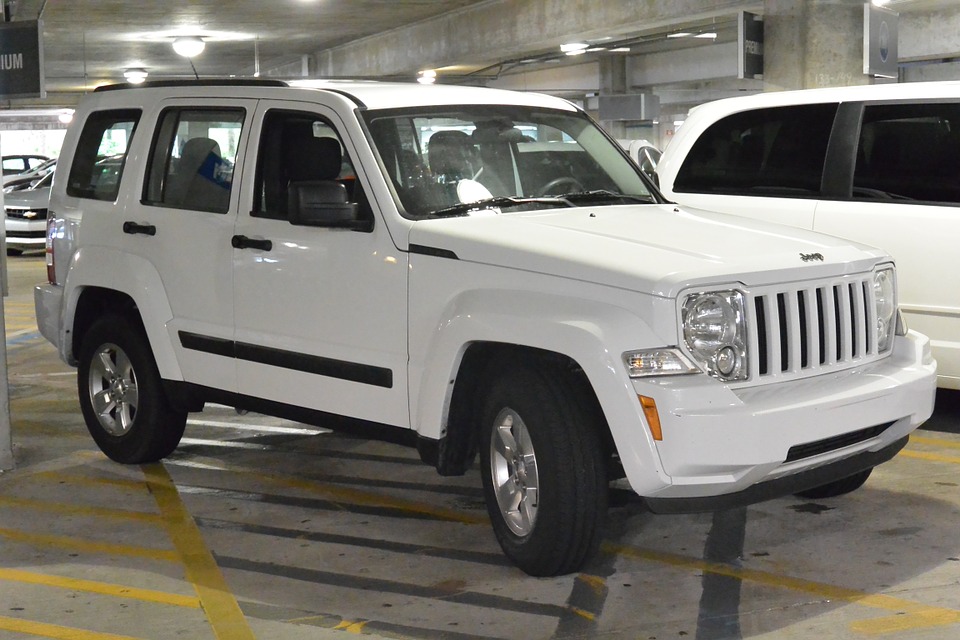
Which vehicles are thieves targeting? According to Carfax, thefts are not limited to certain types of vehicles or manufacturers. Although multiple vehicles are being targeted, some patterns have emerged. According to Kelley Blue Book, hybrid cars seem to be at greater risk because the precious metals inside the catalytic converter last longer than they do in gas-powered vehicles. Newer cars are more likely to be targeted than older ones for the same reason. Personal and commercial trucks and SUVs seem to be targeted more frequently, not necessarily because they are more valuable, but because they are higher off the ground, which makes then easier to steal. Unfortunately, no car is safe.

What can you do to protect your catalytic converter from being stolen? The NICB recommends installing a catalytic converter anti-theft device, which are readily available from various manufacturers. Kelley Blue Book offers the following tips to reduce the likelihood of theft.

  • Get your catalytic converter etched. Identifying numbers make it easier to determine a converter’s rightful owner. It also makes it much harder for the converter’s wrongful owner to sell it for quick cash.
  • Whenever possible, park your car indoors, in a well-lighted area or in an area covered by surveillance cameras.
  • Install a dashboard camera or anti-theft device. Though nothing is foolproof, thieves are less likely to target vehicles with obvious security measures.

What’s being done to address the problem? A number of states have proposed legislation to help reduce the number of catalytic converter thefts. According to the NICB, in 2021, twenty-six states proposed bills to address the problem, including ten states that either enacted new legislation or revised existing legislation. Legislation is also being considered at the federal level. In January 2022, the Preventing Auto Recycling Theft Act was introduced in Congress.

Is a stolen catalytic converter covered by insurance? A stolen catalytic converter may be covered under the comprehensive portion of your personal or commercial auto insurance policy. This coverage generally covers damage to a vehicle caused by something other than a collision. Each policy, however, contains various exclusions that may affect coverage.


If you’re not sure whether your current auto insurance policy covers a stolen catalytic converter, please contact us.

Now Is the Perfect Time for Your Annual Insurance Check-Up

By Anita Byer, Setnor Byer Insurance & Risk

The end of the year is a great time to reflect on the past and prepare for the future. It’s also the perfect time for an annual insurance check-up. As the days, weeks and months go by, our lives change. So do our insurance needs. To make sure you haven’t outgrown your insurance, it’s a good idea to review your coverages at least once a year to determine whether any recent life changes require any insurance changes.

  • Have you gotten married? You may be entitled to marital status or multi-car premium discounts on your auto insurance. Your homeowners’ insurance may no longer be sufficient after merging two households under one roof.
  • Have you had a baby? Children need to be covered by health insurance and should be protected by life insurance.
  • Did your child get a driver’s license? Covering teenagers under a parent’s auto insurance policy is often cheaper than purchasing a separate policy. Discounts may also be available for good grades or driving school.
  • Have you switched jobs? New jobs often mean new fringe benefits, so identify which employer-provided coverages have been gained or lost, and adjust personal coverages accordingly. If income increases, coverage limits may also need to be increased.
  • Have you done extensive renovations on your home? Major home improvements, such as adding a new room, enclosing a porch or expanding a kitchen, may leave you underinsured. Homeowners’ coverage limits may need to be increased to cover the increased value of your renovated home. New structures, like a gazebo, pool or hot tub, may not be covered under your current policy.
  • Did you buy a second home? Second homes may be harder to insure because they are often located in areas with specific risks (earthquakes, avalanches, floods, etc.) and vacant for long periods of time.
  • Have you acquired any new valuables (jewelry, electronics, fine art, antiques)? Standard homeowners’ policies offer limited coverage for certain high-value items, so a personal property floater may be necessary.
  • Did you purchase any new toys? In addition to being valuable, items like boats, motorcycles and recreational vehicles can create potentially significant liability exposures that must be covered by insurance.

According to the Insurance Information Institute, these questions can help identify and avoid painful coverage gaps. They can also save you money if it turns out you have more insurance than you need. Please contact us to learn more about evaluating your current insurance needs.

Business Insurance 101: Certificates of Insurance

Certificates of Insurance make the business world go round and round. General contractors demand them from subcontractors. Commercial lenders request them from borrowers. Landlords require them from tenants. Virtually every business will request or will be asked to provide a Certificate of Insurance at one time or another, which raises an important question. What’s a Certificate of Insurance?

Certificates of Insurance (COIs) are used to verify insurance coverage. They are issued by insurance companies and agents to provide proof of insurance to the person or entity needing verification—the certificate holder. COIs provide specific information about existing insurance coverage, such as:

It’s important to know what COIs are, but so is knowing what they are not. Certificates of Insurance:

  • Are NOT insurance policies.
  • Do NOT provide certificate holders with any rights under the insured’s policy.
  • Do NOT extend or modify the coverage provided by the insured’s policies.
  • Do NOT create a contract between the insurance company and the certificate holder.

COIs are provided for informational purposes only. They offer a superficial snapshot of insurance coverage that is in place at the time it is created. Nothing more. In fact, a COI issued today may be out of date tomorrow. The only way to truly evaluate insurance coverage is by reading the policy itself. Nevertheless, as long as you understand their limitations, Certificates of Insurance provide a quick, easy and efficient way to request or provide proof of insurance coverage.

Please contact us to learn how Setnor Byer Insurance & Risk can help manage your Certificates of Insurance.

It’s Time for Your Annual Insurance Check-Up

The start of a new year is the perfect time for an annual insurance check-up. As the days, weeks and months go by, our lives change. So do our insurance needs. To make sure you haven’t outgrown your insurance, it’s a good idea to review your coverages at least once a year to determine whether any recent life changes require any insurance changes.

  • Have you gotten married? You may be entitled to marital status or multi-car premium discounts on your auto insurance. Your homeowners’ insurance may no longer be sufficient after merging two households under one roof.
  • Have you had a baby? Children need to be covered by health insurance and should be protected by life insurance.
  • Did your child get a driver’s license? Covering teenagers under a parent’s auto insurance policy is often cheaper than purchasing a separate policy. Discounts may also be available for good grades or driving school.
  • Have you switched jobs? New jobs often mean new fringe benefits, so identify which employer-provided coverages have been gained or lost, and adjust personal coverages accordingly. If income increases, coverage limits may also need to be increased.
  • Have you done extensive renovations on your home? Major home improvements, such as adding a new room, enclosing a porch or expanding a kitchen, may leave you underinsured. Homeowners’ coverage limits may need to be increased to cover the increased value of your renovated home. New structures, like a gazebo, pool or hot tub, may not be covered under your current policy.
  • Did you buy a second home? Second homes may be harder to insure because they are often located in areas with specific risks (earthquakes, avalanches, floods, etc.) and vacant for long periods of time.
  • Have you acquired any new valuables (jewelry, electronics, fine art, antiques)? Standard homeowners’ policies offer limited coverage for certain high-value items, so a personal property floater may be necessary.
  • Did you purchase any new toys? In addition to being valuable, items like boats, motorcycles and recreational vehicles can create potentially significant liability exposures that must be covered by insurance.

According to the Insurance Information Institute, these questions can help identify and avoid painful coverage gaps. They can also save you money if it turns out you have more insurance than you need. Please contact us to learn more about evaluating your current insurance needs.

Does Your Business Need a USDOT or MC Number?

The Department of Transportation’s (DOT) Federal Motor Carrier Safety Administration (FMCSA) monitors and ensures compliance with motor carrier safety and commercial carrier regulations. Contrary to what many believe, 18-wheel trucks aren’t the only vehicles covered by FMCSA regulations. Depending on its operations, any business may be required to have a USDOT Number, an MC Number, or both.

USDOT Number

USDOT Numbers are unique identifiers used by the FMCSA when collecting and monitoring a company’s safety information, compliance reviews, crash investigations and inspections. A business involved in interstate commerce must have a USDOT Number if it owns a vehicle that:

  • Is used in transporting material found by the Secretary of Transportation to be hazardous and transported in a quantity requiring placarding (whether interstate or intrastate);
  • Has a gross vehicle weight rating or gross combination weight rating, or gross vehicle weight or gross combination weight, of 4,536 kg (10,001 pounds) or more, whichever is greater;
  • Is designed or used to transport more than 8 passengers (including the driver) for compensation; OR
  • Is designed or used to transport more than 15 passengers, including the driver, and is not used to transport passengers for compensation.

Interstate commerce means trade, traffic or transportation in the United States that is:

  • Between a place in a State and a place outside of such State (including a place outside of the United States);
  • Between two places in a State through another State or a place outside of the United States; OR
  • Between two places in a State as part of trade, traffic, or transportation originating or terminating outside the State or the United States.

In addition to FMCSA regulations, some states also require a USDOT Number to operate or register commercial motor vehicles, including Florida, Georgia, New Jersey and North Carolina.

MC Number (Operating Authority)

The FMCSA also issues various kinds of Operating Authority that dictate the type of operations a business may run and the cargo it may carry. This is known as an MC Number. Unlike USDOT numbers, which identify carriers operating in interstate commerce, MC Numbers identify carriers transporting regulated commodities for hire in interstate commerce.

An MC Number is generally required for businesses that:

  • Operate as for-hire carriers transporting goods or passengers for compensation;
  • Transport passengers in interstate commerce; or
  • Transport federally-regulated commodities or arranging for their transport, in interstate commerce.

Since there are different kinds of Operating Authority, a business may need more than one MC Number. And, different Operating Authorities may have different insurance requirements. For example, Motor Carriers of Passengers are required to have bodily injury and property damage insurance. The minimum required coverage is $5,000,000 if a company has any vehicles with a seating capacity of 16 or more passengers (including the driver); otherwise, the minimum required coverage is $1,500,000.

The FMCSA may impose penalties and assess fines for failing to have a required USDOT or MC Number. Businesses may face additional penalties in those states that have their own registration requirements. In Florida, for example, the failure to obtain a USDOT Number can result in a $500 fine.

Please contact us if you would like more information about complying with the various operating and insurance requirements governing your fleet or operations.

Additional information is also available in our weekly Risk Management Newsletters.

What to do After an Accident?

In many of the approximately six million car accidents each year, taking immediate action after a crash can minimize damage to people and property. Since even minor accidents can leave you dazed and confused, we created this infographic to help you remember the steps you should take immediately after an accident… just in case.

If you would like a more detailed description of what to do, you can review our previous blog: Steps to Take after a Car Accident.

Some other helpful tools for you to use include this Accident Report (as mentioned in infographic) as well this Witness Report. You can print these documents and keep in your glove box to use for record keeping. While we hope you never need them, it may come in handy for you or a loved one.

Contact us if you have questions about what your insurance company may or may not provide after an accident. An expert at Setnor Byer Insurance & Risk can help you navigate the chaos and confusion that always seems to follow an accident. However, the best thing to do is speak with one of our experts before an accident occurs. We’ll make sure your policies are updated and find you the the best (and most affordable!) auto coverage.

For more tips and information, subscribe to Setnor Byer Insurance & Risk’s weekly risk management news brief.

Ten Ways to Save on Auto Insurance

Would you be interested in finding great auto insurance coverage at the best possible price? Of course you are, everyone is, which is why we created this list of ten ways to lower auto insurance premiums. Chances are that at least one of these tips can help you save money.

  • Shop ‘til you drop. Shopping around is the best way to learn about options and compare prices. If you don’t have the time to study insurance companies, read policy forms or evaluate coverage options, let us do the work for you. As an independent insurance agent, Setnor Byer Insurance & Risk can access multiple insurance companies to find great coverage at affordable rates.
  • Before buying that new car, find out how much it will cost to insure. Checking insurance rates before your next purchase may lead you to a car with a lower total cost of ownership.
  • Opting for higher deductibles can mean lower premiums. A deductible is the amount you pay upfront before your insurance policy kicks in. If you choose a higher deductible, you could lower your costs. But beware—if you do happen to have an accident, make sure you have enough squirreled away to pay the claim.
  • Use a driving monitor system. Some companies will send you a device that plugs into your car’s diagnostic port. It tracks things like hard braking, speed, and distance travelled. If you are a safe driver, you can be rewarded with lower rates. If you are not a safe driver, this probably isn’t a very good option.
  • Maintain good credit. Studies have found a statistical correlation between credit score and the likelihood of filing an insurance claim. Insurance companies applied these statistics to create a fairly simple formula: better credit = less likely to file a claim = lower premiums.
  • Speaking of good credit, if you’re married, list the spouse with better credit on the policy first.
  • Bundle. Lower premiums are typically available to those who bundle coverage with a single insurance company. If you have multiple autos or are willing to obtain other kinds of coverage from the same company, such as homeowners’ insurance, you may be entitled to a multi-policy discount.
  • Lyft lover or member of UberPool? If you don’t drive much, you can often receive a low-mileage discount.
  • Reduce the coverage on that clunker. If you have an older-model car that’s getting up there in years, you may be able to reduce coverage on that vehicle. Chances are, it’s not worth what it was.
  • Contact Setnor Byer Insurance & Risk for more information.. We have agents ready to help you save money on your auto policy and to our insurance professionals can find out if you’re eligible for other premium discounts. There could be more savings out there for you!

Subscribe to our newsletters for more savings tips and tricks.

Understanding Auto Insurance

Whether purchasing a new policy or determining if a loss is covered under an existing policy, it helps to have a basic understanding of how auto insurance works. Here is a brief explanation of some common auto insurance concepts and coverages that you can use to determine if you have the protection you need.

Collision coverage pays for car damage caused by a collision with another car or an object. This type of coverage is typically required by finance companies.

Comprehensive coverage pays for losses caused by something other than a collision, such as theft, vandalism, falling objects, fire and weather (wind, hail, etc.). This type of insurance coverage is also known as Comp or Other-Than-Collision coverage.

Liability insurance covers damage to others for which the insured is responsible. There are two main types of auto liability coverage, both of which are generally required by state law. Bodily Injury (BI) Liability insurance covers damages resulting from injury or death, such as medical and funeral expenses, loss of income, pain and suffering. Property Damage (PD) Liability insurance covers damage to the property of others, such as cars, mailboxes, trees and fences. Liability coverage does not pay for the insured’s own bodily injury or property damage.

Personal Injury Protection (PIP or No-Fault) insurance pays for injuries sustained in an auto accident. In addition to the insured, PIP may also cover family members, passengers and household residents. PIP insurance generally provides benefits for medical expenses, loss of income, funeral expenses and other similar expenses, regardless of who is at fault. The requirement to carry PIP insurance and the benefits that must be paid by an insurance company vary by state.

Uninsured Motorist (UM) coverage pays for an insured’s bodily injury and/or property damage that is caused by an uninsured motorist. UM insurance allows an insured to collect from his or her own insurance company. Underinsured Motorist (UIM) coverage is a similar type of coverage that pays for an insured’s bodily injury and/or property damage caused by a motorist with insufficient insurance.

Stacking is a way to increase a policy’s uninsured or underinsured motorist coverage limits. If UM or UIM coverage is stacked, then the policy’s limits will be multiplied by the number of vehicles covered under the policy. For example, an insured with UM limits of 50/100 ($50,000 per person/$100,000 per accident) and three covered vehicles can essentially increase her UM limits to 150/300 by electing to stack her coverage. The manner in which an insured must accept or reject the stacking of limits is often governed by state law.

Guaranteed Auto Protection (GAP) insurance pays the difference between the current outstanding balance on a car loan or lease and the actual cash value of the car. This coverage can prove valuable when the amount owed on the car is more than the value of the car when it rendered a total loss after an accident. This would be the case, for example, when a new car is totaled the day after it was purchased and driven off the dealer’s lot.

Deductible is the amount an insurance company will deduct from the loss before paying up to the policy’s limits. Though insureds typically have options when choosing a deductible, state laws and finance agreements often have specific deductible requirements.

Coverage Limit is the amount an insurance company will pay in the event of a claim. Those who purchase only the minimum coverage limit required by their state’s law are probably underinsured. Coverage limits of $100,000/$300,000 are generally recommended.

If you would like more information about comparing and obtaining personal and commercial auto insurance coverage, please contact us.

If you would like to subscribe to our newsletters please click here.

What is “No-Fault” Auto Insurance?

No-Fault Automobile Insurance is designed to reduce the overall cost of insurance by making quick payments to individuals injured in an accident regardless of fault and by limiting the right to file lawsuits after the accident. Though relatively straightforward, the concept of No-Fault insurance is commonly misunderstood because there is a lack of uniformity among the minority of states that operate under a No-Fault system.

In its purest form, No-Fault Automobile Insurance, which is also known as Personal Injury Protection (PIP) or First-Party Benefits, allows policyholders to recover damages directly from their insurance companies even if the accident was their fault. In exchange for automatic insurance benefits, those injured in the accident cannot sue for damages under tort law.

This “pure” form of No-Fault insurance does not exist. Instead, approximately a quarter of the states adopted their own laws by adding No-Fault type provisions into their traditional insurance system.

In these states, individuals injured in an accident can typically recover damages from their own insurance company even if they were at fault, but the amount they can recover is limited by statute. The kinds of damages are generally limited to medical reimbursements, lost wages and other out-of-pocket expenses. Non-pecuniary damages, such as pain and suffering, cannot be recovered.

These states also allow lawsuits if the injuries meet a minimum threshold of severity. The minimum severity required to file a lawsuit, which can vary by state, can be expressed as a verbal threshold that defines the seriousness of the injury (“severe and permanent”) or a monetary threshold based on medical costs incurred.

Other states have their own variations of No-Fault Automobile Insurance, such as:

  • Add-On: Some states allow drivers to add insurance coverage allowing them to receive benefits from their own insurance company regardless of fault while preserving their right to sue in tort.
  • Choice: In these states, drivers may choose a No-Fault Automobile Insurance policy or a traditional policy.

With all the possible variations, including changes to existing laws, it is easy to see why No-Fault Automobile Insurance is often misunderstood. Nevertheless, when it comes to automobile insurance, it is important to know what the law requires and what the law provides.

If you would like more information about No-Fault Automobile Insurance, or if you would like to discuss your insurance needs, contact us.

For an online auto insurance quote please click here.

Do I Need Rental Car Insurance?

Even after learning that the mid-sized car he reserved was unavailable, Jerry Seinfeld did not hesitate when asked whether he would like to purchase insurance for the remaining rental car. “Yeah, you better give me the insurance because I’m gonna beat the hell out of this car.”

Though this dialogue is fictional, the situation is not. Unfortunately, many of those asked about rental car insurance simply do not know how to respond.

According to the National Association of Insurance Commissioners, 42% of those surveyed were either thoroughly confused or had only a rough idea about rental insurance. Thirty-four percent of those surveyed bought a rental car company’s insurance just to make sure they were covered. Thus, a significant number of people are making important decisions without knowing precisely what they are buying or what they are refusing. Needless to say, uninformed decisions involving insurance should be avoided.

Rental car companies typically present their customers with multiple options of additional coverage, including liability insurance, accident insurance, personal effects coverage, and collision damage waiver (CDW). The most common option is the CDW, which is also known as loss damage waiver. While not technically insurance at all, the CDW allows car renters to avoid any financial responsibility if a rental car is stolen or damaged. The CDW may also cover any loss of use fees, which are designed to cover the amount that rental car companies charge customers for every day a damaged or stolen rental car is out of service.

Determining whether any of these options should be purchased from the rental car company depends on each driver’s particular situation. If the correct decision is made, two things will happen: 1) the driver will not have any gaps in coverage, and 2) the driver will not have duplicate coverage. This is accomplished by determining whether any of the benefits offered by a rental car company’s products can be found elsewhere.

  • The most common sources of concurrent coverage for liabilities associated with a rental car are:Personal Automobile Insurance Policy. If a driver is already covered under a comprehensive and collision auto insurance policy, damage to the rental car may very well be covered. Any coverage would be subject to applicable limits, deductibles, and exclusions under the policy. The scope of coverage and any limitations should be confirmed with an insurance agent.
  • Personal Umbrella Liability Policy. A personal umbrella may provide coverage in the event of a loss involving a rental car. Any coverage would be subject to applicable limits, deductibles, and exclusions under the policy. For example, the care, custody, and control exclusion must have an exception for damages to non-owned vehicles that were not required by contract to be covered by insurance. The scope of coverage and any limitations should be confirmed with an insurance agent.
  • Credit Card. If used to pay for the rental car, a driver’s credit card may provide free rental coverage and other associated benefits. The credit card agreement should be reviewed carefully to clarify exactly what may or may not be covered, as well as any conditions to coverage.

In many instances, one or more of these resources may cover most or all of the obligations a driver assumes when he or she signs a rental car agreement. In such cases, rental car insurance, at least in part, would be redundant. Since rental car insurance is rarely free, and is often expensive, there is a strong financial incentive to avoid redundant insurance coverage.

The most important part of this process is confirming the absence of any gaps in coverage. For example, if a personal automobile insurance policy does not provide international coverage, then that policy cannot be relied on for international travel. Also, if a car is being rented for business use, then a personal umbrella may not provide coverage for an occurrence involving the rental car. Identifying coverage gaps requires a good understanding of the insurance policy or credit card agreement relied upon to provide coverage, and the scope of use of the rental vehicle.

Given the consequences of incorrectly expecting coverage under an existing insurance policy, it may be helpful to consult with an insurance professional before deciding whether to purchase or forego rental car insurance. The same recommendation also applies to credit card agreements and the protections afforded to those using the credit card to rent a car. Since rental car insurance products generate revenue for rental car companies, the rental counter may not be the best source of information or guidance.

Avoiding both gaps in coverage and duplicate coverage for potential rental car liability requires effort and inquiry on the part of a driver. However, since the cost of failing to prevent either or both of these situations could be significant, the effort is often justified.

If you have any questions, or if you would like an insurance quote, please contact us.