Contracting tips for condominium associations

By Anita Byer, Setnor Byer Insurance & Risk

It’s only a matter of time before a condominium association will need to hire a contractor for a construction project on the property. In fact, hiring professionals to rebuild, renovate or repair association property is one of the most important duties of association board members. These hiring decisions cannot be taken lightly, as they can significantly affect the value of unit owners’ homes.

Association board members, as fiduciaries, are bound to exercise prudence, to act in good faith, and to always place the interests of the association above their own in the execution of their duties. As such, they must spend the association’s money wisely and carefully, particularly when contracting for services. Here are a few tips for condominium association board members when evaluating and entering contracts with contractors.

  • Request multiple references from the contractor’s current and prior customers with similar projects, and check them. Phone calls are good, but site visits are better. If possible, visually inspect the contractor’s completed projects. To get a better idea of what to expect once the work commences, ask to tour one of the contractor’s active worksites.
  • Make sure the contractor is properly licensed. Check the appropriate state and local licensing authorities to confirm the contractor is properly licensed. Review the contractor’s licensing history to find any gaps, violations or disciplinary actions. Contractors with red flags should be investigated further, or removed from consideration entirely.
  • Make sure the contract has indemnification, defense and hold harmless provisions to protect the condominium association and unit owners from all loss or liability arising out of the work being performed that is caused in whole or part by the contractor or any subcontractors. There are standard insurance coverage endorsements that contractors should have in place to protect the association.
  • Make sure the contractor has general liability insurance coverage with limits of no less than $1 million for each Occurrence and $2 million in the aggregate. For higher risk projects, ask for at least $1 million in excess liability insurance coverage. Contractors should not be allowed to commence any work without a signed contract or before satisfactory insurance coverage is confirmed.
  • Require that the contractor (and any subcontractors) name the condominium association as an additional insured on the contractor’s general liability policy for ongoing work and completed operations. It is best to have the contractor send you a copy of the endorsement to confirm that the association is properly named.
  • Require that the condominium association be promptly notified if the contractor’s insurance is cancelled or non-renewed for any reason.
  • Make sure that the coverage afforded by the contractor’s insurance policy is primary and non-contributory. The policy should also include a waiver of the right of subrogation in favor of the condominium association.
  • If the contractor will be hiring subcontractors to perform part of the work, any such subcontractors must satisfy the same insurance requirements as the primary contractor.
  • Confirm with the contractor that proper fall protection procedures are observed and necessary safety equipment is in place. Condominium associations should not provide safety equipment to contractors or their employees because if that equipment fails, the association may be held liable.
  • Ensure that formal safety training is provided by the contractor to all employees. Confirm that a daily documented inspection process is in place for all safety equipment, ladders, scaffolding, hoists, platforms, etc.

It should come as no surprise that board members are held to a higher standard of conduct. This standard is clear when it comes to hiring contractors as board members must act in the best interests of the association. Those who fail in this respect may find that instead of serving their community, they have damaged it. Please contact our team to discuss the various risk management services available to our condominium association clients.

ACA’s affordability threshold will be lower than ever before in 2024

By Anita Byer, Setnor Byer Insurance & Risk

The Affordable Care Act’s affordability threshold will be lower in 2024 than ever before. The Internal Revenue Service recently announced that the affordability threshold for employer-sponsored group health plans that begin in 2024 will be 8.39 percent. The affordability threshold, which is currently 9.12 percent, affects an employer’s potential liability for shared responsibility assessments (the pay-or-play penalty) under the ACA. The decreasing threshold means that an affordable group health plan in 2023 could become “unaffordable” in 2024, despite identical pricing and employee contribution requirements. So, employers with 50 or more full-time or full-time equivalent employees (Applicable Large Employers or ALEs) must review, and possibly adjust, employee cost and contribution requirements for group health insurance coverage in 2024.

Applicable Large Employers are generally required to offer full-time employees “affordable” minimum essential health care coverage to avoid an ACA shared responsibility assessment (penalty). Affordability is calculated as a percentage of household income. To be affordable in 2024, an employee’s required contribution for the lowest-cost, self-only coverage option offered by their employer (regardless of which coverage option is selected) cannot exceed 8.39 percent of that employee’s household income.

Since employers typically do not know their employees’ household incomes, ALEs can use one of the ACA’s affordability safe harbors to determine the maximum amount an employee can be required to pay without exceeding the affordability threshold. For example, assume Sam works 40 hours per week for 52 weeks, earning $12 per hour. The most Sam can be required to pay for the lowest-cost, self-only coverage option offered by Sam’s employer during the 2024 plan year is:

  • $174.51 per month (W-2 Safe Harbor Method);
  • $130.88 per month (Rate of Pay Safe Harbor Method); or
  • $101.94 per month (Federal Poverty Line Safe Harbor Method [48 Contiguous States 2023]).

If Sam earned $15 per hour, Sam’s required contribution for the lowest-cost, self-only coverage option cannot exceed:

  • $218.14 per month (W-2 Safe Harbor Method);
  • $163.61 per month (Rate of Pay Safe Harbor Method); or
  • $101.94 per month (Federal Poverty Line Safe Harbor Method [48 Contiguous States 2023]).

Note that the basis on which the ACA’s affordability threshold is applied is plan-year, not calendar-year. In other words, next year’s affordability threshold (8.39 percent) will apply on the first day of the new plan year in 2024, which could be January 1, July 1, or any other day in 2024. For non-calendar-year plans, the current affordability threshold (9.12 percent) will continue to apply until the new plan year begins in 2024.

The consequences for failing to satisfy the ACA’s affordability requirement can be severe. Applicable Large Employers need to review, and possibly adjust, next year’s group health plan offerings, pricing options, cost-sharing structure, and in some cases, compensation levels, to ensure compliance with the ACA’s affordability requirement.

Please contact us if you would like to learn more about affordable group health plan options for 2024.

Outlook on U.S. homeowners’ insurance market downgraded from stable to negative

By Anita Byer, Setnor Byer Insurance & Risk

Buying homeowners’ insurance has become a pain in the you know what. It keeps getting harder for homeowners to find adequate and affordable insurance in a market with dwindling coverage options and surging prices. Unfortunately, it is starting to look like things may get worse before they get better. AM Best, a global credit rating agency specializing in the insurance industry, recently downgraded its outlook on the U.S. homeowners’ insurance market segment from stable to negative.

According to AM Best’s Market Segment Outlook: US Homeowners (9/18/2023), the downgraded outlook was prompted by three consecutive years of net underwriting losses in the homeowners’ sector and other ongoing market challenges. Under current market conditions, AM Best believes that it will be highly unlikely for homeowners’ insurers to achieve underwriting profitability over the near term. This is concerning because, like it or not, insurance companies cannot survive without profits. One way for insurers to achieve profitability is to increase revenue by charging higher premiums. Another way is to reduce underwriting losses by refusing new policies or non-renewing existing policies. Either way, homeowners are left with fewer options and higher prices.

AM Best identified various market conditions to support the decision to issue a negative outlook for the U.S. homeowners’ insurance segment.

More billion-dollar weather and climate disasters. Catastrophic weather and climate events are happening more often than before. According to the National Oceanic and Atmospheric Administration, the U.S. experienced 18 separate weather and climate disasters costing at least 1 billion dollars in 2022. It was the eighth consecutive year in which 10 or more separate billion-dollar events impacted the U.S. For context, the 1980–2022 annual average of billion-dollar events is 8.1.

AM Best’s negative outlook on the homeowners’ market is due in part to the increasing pressure felt by insurers due to the recent above-average catastrophic activity. It is also unclear whether the increasing frequency and severity of catastrophic weather and climate events should be viewed as above-average or the new normal. Unfortunately, recent NOAA data tends to support the latter view. As of September 11, 2023, there have already been 23 confirmed billion-dollar events.

Secondary perils becoming loss drivers. Losses from secondary perils from natural catastrophes are approaching, sometimes exceeding, losses caused by primary perils, like earthquakes and hurricanes. Secondary perils are the secondary effects of a primary peril, such as hurricane-induced flooding. Secondary perils also include independent, high-frequency, low-to-medium severity events, like river flooding, thunderstorms and landslides.

According to Gallagher Re’s Natural Catastrophe Report (Jan. 2023), “the topic of primary versus secondary perils has taken on heightened significance in recent years as these so-called secondary perils—marked by higher-frequency/lower-cost events—have shown accelerating loss growth and often aggregate to higher annual totals.” AM Best’s negative outlook was due in part to the recent emergence of secondary perils as primary loss drivers.

AM Best noted additional market conditions in support of its negative outlook, including elevated reinsurance costs, economic pressures, rising loss costs, inflation and supply-chain disruptions. Until these conditions improve, homeowners will have to endure a homeowners’ insurance market with limited options and high prices.

Please contact our team of experienced and responsive insurance and risk management professionals to find affordable options to protect your home and your business during in a hardening insurance market.

NCCI proposes 15% rate decrease for Florida workers’ compensation insurance in 2024

By Anita Byer, Setnor Byer Insurance & Risk

Florida employers may be paying less for workers’ compensation insurance next year. The National Council on Compensation Insurance (NCCI) is recommending an average 15.1 percent rate level decrease in Florida’s voluntary workers’ compensation market for 2024. NCCI, a rating organization authorized to make rate filings on behalf of workers’ compensation insurance companies in Florida, submitted its proposed rate decrease to the Florida Office of Insurance Regulation for review and approval. If approved, the rate decrease would become effective January 1, 2024.

NCCI’s proposed rate reduction is based on claims experience data for policy years 2020 and 2021, as of year-end 2022. According to NCCI’s rate filing summary, a favorable loss experience has been observed in each of these time periods. This was a primary driver of the proposed 15.1 percent decrease. NCCI also notes that the proposed rate reduction includes additional changes due to recent medical fee schedule updates and higher investment returns expected in today’s interest rate environment.

The favorable conditions prompting the proposed rate decrease in Florida seem to extend nationwide. According to NCCI, the workers compensation system remains healthy.

  • Lost-time claims relative to premium have returned to their 20-year trend trajectory, declining 4% in the past year.
  • Employment and wage growth marked a return to pre-pandemic levels.
  • Recent wage increases are outpacing average claim costs along with continued countrywide declines in total claims.
  • Payroll, as the exposure base, is inflation-sensitive, so as wages rise, premiums automatically increase along with the cost of associated workers compensation benefits. Consequently, wages, premiums, and indemnity benefits typically stay in balance.

There are, however, some areas of concern. According to NCCI, there was a notable rise in claim costs for 2022. Year over year, medical claim costs increased approximately 5 percent and indemnity claim costs increased approximately 6 percent. Although medical inflation is predicted to increase at a rate of about 3% per year, it remains below the inflation rate of the Consumer Price Index.

Remember, the 15.1 percent rate decrease has only been proposed by NCCI. Florida’s Office of Insurance Regulation must still analyze NCCI’s data and may request an adjustment to the current recommendation before holding a public hearing. Although optimism surrounds NCCI’s recommendation, next year’s workers’ compensation premium rates will not be known until Florida’s Office of Insurance Regulation issues a final order.

Please contact us about paying less for workers’ compensation insurance in 2024.

NOAA updates hurricane season forecast, now predicting above-normal storm activity

By Anita Byer, Setnor Byer Insurance & Risk

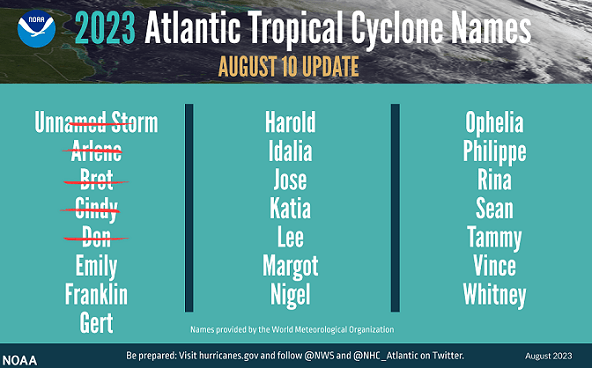
The National Oceanic and Atmospheric Administration recently updated its 2023 Atlantic hurricane season forecast, but not for the better. Prompted in part by record-warm sea surface temperatures, NOAA forecasters have increased their prediction for the ongoing 2023 Atlantic hurricane season from a near-normal level of activity to an above-normal level of activity. This is concerning because tropical activity spikes from mid-August through mid-October. “The updated outlook calls for more activity,” cautions Matthew Rosencrans, lead NOAA hurricane forecaster, “so we urge everyone to prepare now for the continuing season.”

NOAA’s updated forecast increased the likelihood of an above-normal Atlantic hurricane season from 30 percent (in May) to 60 percent. The likelihood of near-normal activity has decreased from 40 percent to 25 percent. The likelihood of seeing a below-normal season is now only 15 percent. And, since it is impossible to have above-normal storm activity without more storms, NOAA’s updated forecast is also predicting more named storms.

An average hurricane season produces 14 named storms, of which seven become hurricanes, including three major hurricanes. NOAA’s updated 2023 outlook, which covers the entire six-month hurricane season, is predicting (with 70 percent confidence):

  • 14 – 21 Named Storms (was 12 – 17)
  • 6 – 11 Hurricanes (was 5 – 9)
  • 2 – 5 Major Hurricanes (was 1 – 4)

According to NOAA, the main climate factors expected to influence Atlantic hurricane activity are the ongoing El Niño and record-warm sea surface temperatures. Although El Niño usually helps lessen tropical activity during the Atlantic hurricane season, those limiting conditions have been slow to develop and may not be in place for much of the remaining hurricane season. NOAA notes that a below-normal wind shear forecast, slightly below-normal Atlantic trade winds and a near- or above-normal West African Monsoon were also key factors in shaping the updated hurricane season forecast.

Hurricane season is long and maintaining preparations is hard, but the peak of tropical activity is not the time to let things slide. NOAA’s updated forecast should provide all the motivation you need to remain alert, prepared and ready to act if your home, business or boat is in the path of a storm. Remember, it only takes one hurricane making landfall to make it an active season for you. It’s better to be safe than sorry.

Please contact us about protecting your personal and business property against tropical storms and hurricanes.

New OSHA rule means more employers will be required to electronically report injury data

By Anita Byer, Setnor Byer Insurance & Risk

The Occupational Safety and Health Administration recently published a final rule that creates a new injury and illness reporting requirement for employers operating in certain industries. As of January 1, 2024, establishments with 100 or more employees operating in designated high-hazard industries must electronically submit injury and illness information to OSHA once a year. The goal of this new reporting requirement is to reduce the frequency and severity of occupational injuries and illnesses by increasing public awareness and understanding.

Existing OSHA regulations generally require nonexempt employers with more than ten employees in most industries to keep records of occupational injuries and illnesses. This was not changed by the final rule. Covered employers are still required to record information about recordable injuries and illnesses on three separate OSHA forms.

  • Form 300 (Log of Work-Related Injuries and Illnesses)
  • Form 300A (Summary of Work-Related Injuries and Illnesses)
  • Form 301 (Injury and Illness Incident Report)

Some employers, by virtue of their size and industry, are also required to electronically submit injury and illness data to OSHA once a year. Currently, two groups of employers are subject to an electronic submission requirement. When the final rule becomes effective, however, there will be three such groups.

As you will see, these employer groups are determined primarily by the total number of employees working at an establishment during the previous calendar year. This is necessary because OSHA’s recordkeeping regulations require employers to maintain and report injury and illness data at the establishment level. OSHA regulations define an establishment as a single physical location where business is conducted or where services or industrial operations are performed. This makes it possible for a single employer to have multiple “establishments” for purposes of OSHA’s electronic reporting requirements.

Under the final rule, the following groups of establishments will be required to electronically submit injury and illness information from their recordkeeping forms to OSHA once a year.

  • Establishments with 20-249 employees in certain designated industries will continue to be required to electronically submit information from their Form 300A to OSHA annually. These designated industries are identified by NAICS codes and listed in appendix A to the regulations.
  • Establishments with 250 or more employees in industries that are required to routinely keep OSHA injury and illness records will continue to be required to electronically submit information from the Form 300A to OSHA annually.
  • [New Group] Establishments with 100 or more employees in certain designated industries will be subject to a new requirement to electronically submit information from their OSHA Forms 300 and 301 to OSHA once a year. The designated industries for this group are identified by NAICS codes and listed in the newly-created appendix B to the regulations.

Before the final rule goes into effect, employers must determine whether they have an establishment that will be subject to OSHA’s new electronic submission requirement. Does the establishment operate in one of the designated industries listed in the final rule’s new appendix B? Did the establishment have 100 or more employees at any point during the previous calendar year, including full-time, part-time, temporary and seasonal employees? Only those who answered yes to both questions are subject to the final rule’s new electronic submission requirement.

Unfortunately, employers do not have much time left to figure this out. Establishments subject to the final rule must submit all the required information to OSHA by March 2 of the following calendar year. These establishments will have to electronically submit their 2023 injury and illness information to OSHA by March 2, 2024, which will be the first submission deadline under the final rule.

The revised regulations should serve as a reminder for employers of their obligation to provide a safe and healthy workplace. In addition to protecting employees from work-related injuries, employers may benefit financially from lower workers’ compensation insurance premiums.

Please contact us if you would like more information about controlling workers’ compensation insurance costs.

Florida changes milestone inspection requirements for condominiums

By Anita Byer, Setnor Byer Insurance & Risk

Numerous changes were recently made to Florida’s mandatory milestone inspection requirement for condominium associations. This statewide requirement was enacted last year to ensure aging condominium buildings that are three stories or more in height remain safe for continued use. Its fundamental purpose was to prevent a repeat of the tragic 2021 building collapse in Surfside, Florida. Now, condominium associations must determine the applicability and implications of Florida’s amended mandatory milestone inspection requirement.

Senate Bill 154 made quite a few changes to the milestone inspection requirement. Some were made for purposes of clarification. Others were made to address issues and ambiguities that were revealed after the law was enacted. All the changes, however, need to be reviewed and understood by board members statewide because any one of them could have significant implications for their condominium association.

For example, the new deadline to complete a building’s initial milestone inspection will be relatively meaningless to some associations, but crucial to others. Under the amended law, if a condominium building that is three or more stories in height reached 30 years of age before July 1, 2022, its initial milestone inspection must be done before December 31, 2024. But, if a building reaches 30 years of age on or after July 1, 2022, and before December 31, 2024, its initial milestone inspection must be done before December 31, 2025.

Some associations will also need to know that the 25-year milestone inspection for buildings located within three miles of the coastline is no longer mandatory. Instead, local agencies responsible for enforcing milestone inspections have the option to set a 25-year inspection requirement for buildings three stories or more in height if justified by local environmental conditions, including proximity to seawater.

The milestone inspection requirements for condominium buildings three or more stories in height were also amended to:

  • Limit milestone inspections to buildings that include a residential condominium;
  • Provide that milestone inspection requirements apply to buildings owned by mixed-use condominiums and clarify that all owners of a mixed-use condominium building are responsible for ensuring compliance and sharing costs;
  • Authorize local enforcement agencies to extend the inspection deadline for a building upon a petition showing good cause that the association has contracted with an architect or engineer to perform the milestone inspection and it cannot reasonably be completed before the deadline;
  • Permit local enforcement agencies to accept an inspection and report that was completed before July 1, 2022, if it substantially complies with the milestone requirements; however, associations must still comply with unit owner notice requirements. (Note: If a local enforcement agency accepts a previous inspection as a milestone inspection, the deadline for a subsequent 10-year re-inspection is based on the date of a previous inspection.);
  • Provide that the condominium association is responsible for all inspection costs attributable to the portions of the building for which it is responsible under the governing documents of the association;
  • Require associations to give unit owners notice about the inspection deadlines, electronically or by posting on the association’s website, within 14 days after they receive the initial milestone inspection notice from the local enforcement agency;
  • Require the milestone inspector to submit a phase two progress report to the local enforcement agency within 180 days of submitting the phase one inspection report; and
  • Clarify that an association must distribute a copy of the summary of the inspection reports to unit owners within 45 days of its receipt.

Given the potential significance of all the recent changes to Florida’s mandatory milestone inspection requirement, association board members should consider consulting a licensed professional to ensure compliance and avoid violations. Board members should also review their association’s Directors and Officers (D&O) insurance policy to confirm sufficient coverage as mistakes are more likely to happen whenever the law changes. Please contact our team to discuss the various risk management services available to our condominium association clients.

Does the average homeowner’s perception of weather risks match reality?

By Anita Byer, Setnor Byer Insurance & Risk

When it comes to protecting our homes against weather and climate disasters, our perception of weather risks must match the current reality, which is constantly changing. For instance, the reason it seems like damaging weather events are happening more often is because they are. According to NOAA, the United States is experiencing billion-dollar weather and climate events more often than before. Of all the billion-dollar events that have taken place since 1980, nearly 30 percent occurred within the past five years. So, as the reality of weather risks changes, the question becomes whether our perceptions are changing too. Fortunately, the Insurance Information Institute, together with Munich Re, recently conducted a nationwide survey of homeowners to find the answer.

The Homeowners Perception of Weather Risks 2023Q2 Consumer Survey sought to gauge homeowners’ current perceptions of climate events and weather risks. The reported results reveal a fascinating divergence of views among homeowners nationwide. Some are positive, others are promising and a few are concerning. For example, homeowners were asked when they think their residences might be impacted by climate risks/weather events in the future.

  • 59 percent believe their residence will be impacted within the next 10 years (positive).
  • 13 percent believe their residence will be impacted within the next 30 years (promising).
  • 25 percent do not believe their residence will ever be impacted (concerning).

Prior Experiences. Interestingly, a homeowner’s prior experience seems to significantly affect their current perception of weather risks. Ninety-two percent of those who experienced a weather event in the last five years believe their residence will be impacted by another weather event in the next 10 years. Whereas 36 percent of the homeowners who did not experience a weather event in the last five years do not believe their residence will ever be impacted by a weather event.

Top Weather Risk. Participants were asked to identify the type of weather event most likely to cause severe damage to their home. Fifty-four percent selected thunderstorms, making it the number one concern nationwide. According to the survey report, this perception aligns with data that thunderstorms are the most common and most damaging type of natural catastrophe in the U.S. (For purposes of the survey, thunderstorms include flooding and tornadoes since these events commonly occur concurrently.)

Not surprisingly, perceptions of weather risks vary by region. In the south, homeowners are most concerned about hurricanes. In the northeast, snowstorms and flooding top the list of concerns. Tornadoes are the primary concern for those living in the Midwest. Earthquakes and wildfires are the most common concerns of those living in the west.

Flood Risk. Sixty-four percent of homeowners responded that their homes were not at risk of flooding, and 14 percent were unsure of their home’s flood risk. This is concerning because recent weather events have made it abundantly clear that there is no such thing as a no-flood zone. The good news is that 78 percent of homeowners who believe they have a flood risk purchased flood insurance.

The survey demonstrates the need to educate homeowners about their actual weather risks as damaging climate events continue to increase in frequency and severity. Homeowners will not be as motivated to act (insurance, resiliency, preparations, etc.) if the perceived risk is less than the actual risk. Their perception must align with reality.

Contact our team of experienced and responsive insurance and risk management professionals to find affordable options to protect your home and your business against weather risks.

When do employers need a Summary Plan Description?

By Anita Byer, Setnor Byer Insurance & Risk

If you are an employer sponsoring an employee group health plan, you must have an ERISA-compliant Summary Plan Description. The federal Employee Retirement Income Security Act (ERISA) is designed to protect plan participants by setting minimum disclosure standards for covered plans. An ERISA-covered group health plan is an employment-based plan that provides medical care coverage, including hospitalization, sickness, prescription drugs, vision or dental. Administrators of these plans, which often includes the employer/plan sponsor, are required to provide important plan information in writing in the form of a Summary Plan Description (SPD).

The Summary Plan Description is used to disclose and communicate important information about an employer’s employee benefit plan. It provides information about the plan, what benefits are available under the plan, the rights of participants and beneficiaries under the plan, and how the plan works. SPDs must be furnished to employees without charge within 90 days after the employee becomes a participant or within 120 days of the plan’s adoption date. SPDs must also be provided within 30 days of being requested.

Pursuant to ERISA regulations, the SPD must:

  • identify the plan name, plan number and employer identification number;
  • describe the type of plan (i.e., employee welfare benefit plan, employee benefit plan);
  • describe the type of plan administration;
  • provide contact information for the plan administrator and service of process;
  • describe the plan’s eligibility requirements;
  • describe circumstances which may result in disqualification, ineligibility, denial, loss, forfeiture, suspension or reduction of benefits;
  • state the date of the plan’s fiscal year;
  • describe the procedures governing claims for benefits, applicable time limits and remedies if claims are denied;
  • describe provisions governing termination of the plan; and
  • include a statement of rights available to plan participants under ERISA.

The SPD must also explain various aspects of the benefits being provided, such as the plan’s:

  • cost-sharing provisions, including costs of premiums, deductibles, coinsurance and co-payment requirements;
  • annual or lifetime caps or limits on benefits;
  • coverage for preventive services;
  • coverage for drugs, medical tests, devices and procedures;
  • the use of network providers, the composition of provider networks and whether, and under what circumstances, coverage is provided for out-of-network services;
  • conditions or limits on the selection of primary care providers or providers of specialty medical care; and
  • conditions or limits applicable to obtaining emergency medical care.

Since comprehension is the key, SPDs must follow strict style and formatting requirements. For example, SPDs must:

  • be written in a manner calculated to be understood by the average plan participant;
  • be sufficiently comprehensive to apprise participants of their rights and obligations under the plan;
  • not be formatted in a way that misleads or misinforms plan participants;
  • present the plan’s advantages and disadvantages without exaggerating the benefits or minimizing the limitations; and
  • ensure that the plan’s exceptions, limitations, reductions or restrictions are not minimized, rendered obscure or otherwise made to appear unimportant (style, caption, printing type and prominence must be the same as that used to describe plan benefits).

Plan administrators must consider the level of comprehension and education of typical plan participants and the complexity of the terms of the plan. In most cases, this requires limiting or eliminating technical jargon and long, complex sentences. It may also require the use of clarifying examples, illustrations, clear cross references and a table of contents.

Unlike these general descriptions, ERISA’s SPD requirements are highly technical and very specific. Employers must ensure strict compliance with all applicable rules. Given ERISA’s relative complexity, employers may need to consult licensed professionals to avoid the potentially severe consequences that can result from violations. In addition to having an ERISA fidelity bond to protect against losses due to fraud or dishonesty by persons handling funds, employers should also carry employment practices liability insurance.

Please contact us about affordable group health plan options and ways to limit the accompanying liabilities.

NOAA predicts near-normal 2023 hurricane season

By Anita Byer, Setnor Byer Insurance & Risk

The National Oceanic and Atmospheric Administration is predicting near-normal hurricane activity for the 2023 Atlantic hurricane season. NOAA forecasters predict a 40% chance of a near-normal season, a 30% chance of an above-normal season and a 30% chance of a below-normal season. Unlike the last three hurricane seasons with La Niña present, NOAA scientists predict a high potential for El Niño to develop this summer, which can suppress hurricane activity. The Atlantic hurricane season runs from June 1 to November 30.

This year, NOAA is forecasting (with 70 percent confidence):

  • 12 – 17 total named storms (winds of 39 mph or higher)
  • 5 – 9 hurricanes (winds of 74 mph or higher)
  • 1 – 4 major hurricanes (winds of 111 mph or higher)

Forecasters at Colorado State University’s Tropical Meteorology Project currently expect the 2023 Atlantic hurricane season to have slightly below-average storm activity. Their latest forecast is for 13 named storms, including 6 hurricanes and 2 major hurricanes. The probability of a major hurricane (Category 3-4-5) making landfall somewhere along the east coast of the United States (including Florida) is 22 percent. The probability of a Gulf Coast landfall (from the Florida Panhandle westward to Brownsville, Texas) is 28 percent.

Although El Niño is expected to suppress hurricane activity this year, NOAA notes that its potential influence on storm development could be offset by favorable conditions throughout the tropical Atlantic Basin. According to NOAA, favorable conditions include the potential for an above-normal west African monsoon, which produces easterly waves and seeds some of the stronger and longer-lived Atlantic storms. NOAA also identified warmer-than-normal sea surface temperatures in the tropical Atlantic Ocean and Caribbean Sea, which creates more energy to fuel storm development.

A lot is made of these annual predictions, but it only takes one storm to make it an active hurricane season for you. “As we saw with Hurricane Ian, it only takes one hurricane to cause widespread devastation and upend lives. So regardless of the number of storms predicted this season, it is critical that everyone understand their risk and heed the warnings of state and local officials. Whether you live on the coast or further inland, hurricanes can cause serious impacts to everybody in their path,” said FEMA Administrator Deanne Criswell.

Now is the time to start preparing for the upcoming hurricane season. Contact our team of experienced and responsive insurance and risk management professionals to find affordable options to protect your home and your business in the event of a hurricane.