Now Is the Perfect Time for Your Annual Insurance Check-Up

By Anita Byer, Setnor Byer Insurance & Risk

The end of the year is a great time to reflect on the past and prepare for the future. It’s also the perfect time for an annual insurance check-up. As the days, weeks and months go by, our lives change. So do our insurance needs. To make sure you haven’t outgrown your insurance, it’s a good idea to review your coverages at least once a year to determine whether any recent life changes require any insurance changes.

  • Have you gotten married? You may be entitled to marital status or multi-car premium discounts on your auto insurance. Your homeowners’ insurance may no longer be sufficient after merging two households under one roof.
  • Have you had a baby? Children need to be covered by health insurance and should be protected by life insurance.
  • Did your child get a driver’s license? Covering teenagers under a parent’s auto insurance policy is often cheaper than purchasing a separate policy. Discounts may also be available for good grades or driving school.
  • Have you switched jobs? New jobs often mean new fringe benefits, so identify which employer-provided coverages have been gained or lost, and adjust personal coverages accordingly. If income increases, coverage limits may also need to be increased.
  • Have you done extensive renovations on your home? Major home improvements, such as adding a new room, enclosing a porch or expanding a kitchen, may leave you underinsured. Homeowners’ coverage limits may need to be increased to cover the increased value of your renovated home. New structures, like a gazebo, pool or hot tub, may not be covered under your current policy.
  • Did you buy a second home? Second homes may be harder to insure because they are often located in areas with specific risks (earthquakes, avalanches, floods, etc.) and vacant for long periods of time.
  • Have you acquired any new valuables (jewelry, electronics, fine art, antiques)? Standard homeowners’ policies offer limited coverage for certain high-value items, so a personal property floater may be necessary.
  • Did you purchase any new toys? In addition to being valuable, items like boats, motorcycles and recreational vehicles can create potentially significant liability exposures that must be covered by insurance.

According to the Insurance Information Institute, these questions can help identify and avoid painful coverage gaps. They can also save you money if it turns out you have more insurance than you need. Please contact us to learn more about evaluating your current insurance needs.

It’s Time for Your Annual Insurance Check-Up

The start of a new year is the perfect time for an annual insurance check-up. As the days, weeks and months go by, our lives change. So do our insurance needs. To make sure you haven’t outgrown your insurance, it’s a good idea to review your coverages at least once a year to determine whether any recent life changes require any insurance changes.

  • Have you gotten married? You may be entitled to marital status or multi-car premium discounts on your auto insurance. Your homeowners’ insurance may no longer be sufficient after merging two households under one roof.
  • Have you had a baby? Children need to be covered by health insurance and should be protected by life insurance.
  • Did your child get a driver’s license? Covering teenagers under a parent’s auto insurance policy is often cheaper than purchasing a separate policy. Discounts may also be available for good grades or driving school.
  • Have you switched jobs? New jobs often mean new fringe benefits, so identify which employer-provided coverages have been gained or lost, and adjust personal coverages accordingly. If income increases, coverage limits may also need to be increased.
  • Have you done extensive renovations on your home? Major home improvements, such as adding a new room, enclosing a porch or expanding a kitchen, may leave you underinsured. Homeowners’ coverage limits may need to be increased to cover the increased value of your renovated home. New structures, like a gazebo, pool or hot tub, may not be covered under your current policy.
  • Did you buy a second home? Second homes may be harder to insure because they are often located in areas with specific risks (earthquakes, avalanches, floods, etc.) and vacant for long periods of time.
  • Have you acquired any new valuables (jewelry, electronics, fine art, antiques)? Standard homeowners’ policies offer limited coverage for certain high-value items, so a personal property floater may be necessary.
  • Did you purchase any new toys? In addition to being valuable, items like boats, motorcycles and recreational vehicles can create potentially significant liability exposures that must be covered by insurance.

According to the Insurance Information Institute, these questions can help identify and avoid painful coverage gaps. They can also save you money if it turns out you have more insurance than you need. Please contact us to learn more about evaluating your current insurance needs.
Are Transportation Network Companies Putting You at Über-Risk on the Roads?

Have you ever heard of a Transportation Network Company or TNC? If you don’t think you have, think again. Uber, Lyft and Sidecar are all TNCs that arrange transportation for a fee using technology platforms like mobile apps and websites. Given their relative infancy, TNCs are experiencing some growing pains, particularly when it comes to insurance.

Since TNCs fall somewhere between traditional ride-sharing or carpooling activities and taxi or limousine services, there may be potentially significant insurance coverage gaps. If there is an accident involving a TNC, these gaps can affect not only TNC drivers and passengers, but others motorists and pedestrians sharing the roadways.

Coverage gaps are primarily caused by TNC drivers relying on their personal automobile insurance policy for coverage instead of obtaining a commercial insurance policy. Standard personal automobile policies typically exclude coverage when the vehicle is used for commercial purposes, like carrying passengers for a fee. As a result, personal automobile insurance coverages, including liability, physical damage, uninsured motorist and medical payments coverage, may not be available if there is a TNC-related accident.

Gaps are also caused by risk exposures that are unique to the TNC industry. The personal vs. commercial distinction, which was once relatively straightforward, has been blurred by TNCs. Since this distinction is used to determine coverage under a driver’s personal automobile policy, the challenge has become identifying the exact moment an insured personal driver becomes an uninsured commercial TNC driver.

Under the TNC business model, there are three distinct risk exposure periods.

  • Period 1 (Pre-Match): Starts when the TNC driver logs into the TNC application, but is not matched with a passenger.
  • Period 2 (Match Accepted): Starts when a match is made and accepted, but before the passenger enters the vehicle.
  • Period 3 (Occupancy): Starts when the passenger has been picked up and is occupying the vehicle.

Standard personal automobile policies don’t specifically address these periods, so there can confusion and uncertainty when it comes to determining the scope of insurance coverage, if any. However, some insurance companies have amended their exclusions to clarify that once a driver logs into their TNC platform, they are no longer covered under the policy.

Due to their growing popularity, many states have enacted or are in the process of enacting statutory insurance requirements for TNCs and drivers. Florida, for example, has recently proposed legislation to create specific insurance requirements for TNCs. Interestingly, the amount of insurance required under this proposed legislation varies depending on which period the TNC driver happens to be in. Higher coverage limits apply when a driver moves from Period 1 (Pre-Match) to Period 2 (Match Accepted).

Until the current uncertainty surrounding TNCs and insurance coverage is resolved, steps can be taken to reduce the risk of falling into an insurance coverage gap, such as:

  • TNC Drivers: Review your personal automobile insurance policy to find out whether, and to what extent, TNC-related uses are covered or excluded. Find out what kind of insurance coverage is provided by your TNC. Compare your personal insurance and any TNC-provided insurance to identify potential coverage gaps. Obtain additional insurance to fill the gaps.
  • TNC Riders: Find out what insurance requirements apply to TNCs in your area. Confirm (or require) that your driver meets or exceed these requirements.
  • Employers: Update employment and fleet policies to strictly prohibit employees from using company-owned vehicles to engage in any TNC-related activities. This prohibition should also apply to employees using personal vehicles for work-related purposes, so they don’t pick up passengers while running work-related errands.

Please contact us to discuss how we can help you identify and close TNC-related insurance coverage gaps.

To receive regular updates about important insurance developments, subscribe to Setnor Byer Insurance & Risk’s weekly risk management news brief.

Will 2016 Be a Record Year for Motor Vehicle Fatalities?

Are you planning to hit the road one last time before summer comes to an end? If so, we have some advice—BE CAREFUL!

According to the National Safety Council (NSC), the number of motor vehicle deaths from January through June 2016 is 9% higher than during the first half of 2015. At this pace, the number of motor vehicle fatalities in 2016 could exceed 40,000, which would be the highest in nearly a decade.

Estimates for the upcoming Labor Day holiday weekend are equally frightening. The NSC estimates 438 traffic fatalities, the most since 2008. The NSC also estimates 50,300 nonfatal medically consulted injuries, which are injuries serious enough that a medical professional was consulted.

According to the NSC:

  • The estimated annual population death rate is 12.9 deaths per 100,000, which is an 8% increase from 2015.
  • The estimated annual mileage death rate is 1.3 deaths per 100 million vehicle miles traveled, which is 8% increase from 2015.
  • The estimated cost of motor-vehicle deaths, injuries and property damage during the first half of 2016 was $205.5 billion.

States with the most traffic deaths:

  • Texas 1,824 (+11%)
  • California 1,702 (+9%)
  • Florida 1,590 (+10%)
  • Georgia 701 (+7%)
  • North Carolina 668 (+5%)

States with the largest percentage increase from 2015:

  • Vermont +63%
  • New Hampshire +61%
  • Connecticut +45%
  • New Mexico +43%
  • Idaho +37%

Why is 2016 on pace to be the deadliest year in nearly a decade? One reason could be lower gas prices. The NSC notes that gas prices during the first six months of 2016 were on average 16% lower than in 2015 and that this helped produce a 3.3% increase in cumulative vehicle mileage through May. Another reason could be that people continue to engage in risky driving behavior, like speeding, drunk driving, fatigued driving, distracted driving (including cell phone use) and aggressive driving.

Though some accidents just happen , most motor vehicle accidents can be avoided. In addition to avoiding risky driving behaviors, here are some tips from the National Highway Traffic Safety Administration that can decrease the chances of getting into an accident.

  • Plan trips ahead of time.
  • Wear your safety belt—and wear it correctly.
  • Drive at the speed limit. It’s unsafe to drive too fast or too slow.
  • Be alert! Pay attention to traffic at all times.
  • Keep enough distance between you and the car in front of you.
  • Be extra careful at intersections. Use turn signals and to look out for people and cars.
  • Check blind spots when changing lanes or backing up.
  • Most of the time, having the right auto insurance coverage is all you need to recover after an accident. That’s clearly not the case with fatalities. Everyone must do their part to make sure 2016 is not a record year for motor vehicle fatalities.
  • Please contact us if you have questions about your auto insurance or would like a quote.
  • To receive regular updates about developments which may affect your business, subscribe to Setnor Byer Insurance &Risk’s weekly risk management news brief.

Did You Get the Text About Distracted Driving Awareness Month?

Did you know that April is National Distracted Driving Awareness Month? If not, it’s time to take notice. According to the National Highway Traffic Safety Administration, approximately 10% of crash fatalities and 18% of crash injuries involve distracted drivers. The consequences of distracted driving can be severe, and the problem only seems to be getting worse.

Distracted driving is any activity that could divert a person’s attention away from the primary task of driving. There are three general categories of driver distraction, all of which can endanger the safety of drivers, passengers and pedestrians:

  • Visual: Taking your eyes off the road.
  • Manual: Taking your hands off the steering wheel.
  • Cognitive: Thinking about anything other than driving.

Common driving distractions include:

  • Texting;
  • Using a smartphone;
  • Eating or drinking;
  • Talking to passengers;
  • Grooming;
  • Reading (maps, emails, etc.);
  • Using a navigation system;
  • Watching a video; and
  • Adjusting radios and CD/MP3 players.

Though all distractions can be dangerous, texting is by far the most alarming because it requires a driver’s visual, manual and cognitive attention. Unfortunately, the number of drivers engaging in this behavior has been steadily increasing, even though nearly every state has made it illegal.

  • 14 states have primary enforcement laws prohibiting the use of hand-held cell phones while driving, which allow an officer to cite a driver for using a hand-held phone without any other traffic offense taking place.
  • 46 states ban text messaging for all drivers, most through primary enforcement laws. A few states, like Florida, have secondary enforcement laws, so drivers cannot be stopped for texting unless another infraction, such as weaving or speeding, is also observed.
  • 38 states ban cell phone use by novice drivers.
  • We’re past the point of denying the consequences of distracted driving, particularly texting while driving. We know too much. Then why are we seeing more and more drivers focusing on their phones instead of the road?
  • Maybe it’s not enough to simply know the consequences of distracted driving. We must also truly understand them. If you don’t think there is a difference between the two, talk to someone who survived a crash caused by a distracted driver or the survivors of someone who didn’t.
  • It’s time for us to change our distracted driving ways. National Distracted Driving Awareness Month makes it the perfect time to start a new habit of avoiding (or at least reducing) driving distractions. It’s particularly important for parents to be vigilant with their driving-aged children. Young drivers and their young passengers need to hear about the dangers of distracted driving early and often.

Please contact us if you would like more information about protecting against the damage caused by distracted drivers.

For more tips and information about safe driving, subscribe to Setnor Byer Insurance & Risk’s weekly risk management news brief.

What to do After an Accident?

In many of the approximately six million car accidents each year, taking immediate action after a crash can minimize damage to people and property. Since even minor accidents can leave you dazed and confused, we created this infographic to help you remember the steps you should take immediately after an accident… just in case.

If you would like a more detailed description of what to do, you can review our previous blog: Steps to Take after a Car Accident.

Some other helpful tools for you to use include this Accident Report (as mentioned in infographic) as well this Witness Report. You can print these documents and keep in your glove box to use for record keeping. While we hope you never need them, it may come in handy for you or a loved one.

Contact us if you have questions about what your insurance company may or may not provide after an accident. An expert at Setnor Byer Insurance & Risk can help you navigate the chaos and confusion that always seems to follow an accident. However, the best thing to do is speak with one of our experts before an accident occurs. We’ll make sure your policies are updated and find you the the best (and most affordable!) auto coverage.

For more tips and information, subscribe to Setnor Byer Insurance & Risk’s weekly risk management news brief.

Ten Ways to Save on Auto Insurance

Would you be interested in finding great auto insurance coverage at the best possible price? Of course you are, everyone is, which is why we created this list of ten ways to lower auto insurance premiums. Chances are that at least one of these tips can help you save money.

  • Shop ‘til you drop. Shopping around is the best way to learn about options and compare prices. If you don’t have the time to study insurance companies, read policy forms or evaluate coverage options, let us do the work for you. As an independent insurance agent, Setnor Byer Insurance & Risk can access multiple insurance companies to find great coverage at affordable rates.
  • Before buying that new car, find out how much it will cost to insure. Checking insurance rates before your next purchase may lead you to a car with a lower total cost of ownership.
  • Opting for higher deductibles can mean lower premiums. A deductible is the amount you pay upfront before your insurance policy kicks in. If you choose a higher deductible, you could lower your costs. But beware—if you do happen to have an accident, make sure you have enough squirreled away to pay the claim.
  • Use a driving monitor system. Some companies will send you a device that plugs into your car’s diagnostic port. It tracks things like hard braking, speed, and distance travelled. If you are a safe driver, you can be rewarded with lower rates. If you are not a safe driver, this probably isn’t a very good option.
  • Maintain good credit. Studies have found a statistical correlation between credit score and the likelihood of filing an insurance claim. Insurance companies applied these statistics to create a fairly simple formula: better credit = less likely to file a claim = lower premiums.
  • Speaking of good credit, if you’re married, list the spouse with better credit on the policy first.
  • Bundle. Lower premiums are typically available to those who bundle coverage with a single insurance company. If you have multiple autos or are willing to obtain other kinds of coverage from the same company, such as homeowners’ insurance, you may be entitled to a multi-policy discount.
  • Lyft lover or member of UberPool? If you don’t drive much, you can often receive a low-mileage discount.
  • Reduce the coverage on that clunker. If you have an older-model car that’s getting up there in years, you may be able to reduce coverage on that vehicle. Chances are, it’s not worth what it was.
  • Contact Setnor Byer Insurance & Risk for more information.. We have agents ready to help you save money on your auto policy and to our insurance professionals can find out if you’re eligible for other premium discounts. There could be more savings out there for you!

Subscribe to our newsletters for more savings tips and tricks.

Business Insurance 101

Insurance is an essential part of running a successful business. Though you don’t have to be an insurance expert, a general understanding of the following business policies and coverages can help identify and fill potential coverage gaps. It can also make you a more informed and better equipped consumer when the time comes to renew your insurance.

Property Insurance

Standard commercial property insurance covers loss or damage to buildings and structures caused by covered perils, such as theft, vandalism and fire. It also covers business property (contents), such as office furnishings, inventory, materials and computers. This coverage can help pay the costs of repairing or replacing property that is damaged or lost due to a covered event.

Since a property loss is likely to force a temporary suspension of operations, businesses should consider adding business interruption (business income) coverage. In the event of a covered loss, business interruption insurance will cover lost revenue and fixed expenses, like rent and utilities, during the suspension of operations. Extra expense coverage is also available to reimburse costs over and above normal operating expenses, like temporary relocation costs.

General Liability Insurance

Every business is vulnerable to claims of harm or damage brought by third parties. Standard commercial general liability insurance protects against liability claims for bodily injury and property damage occurring on the premises or arising out of business operations. Standard policies also cover personal and advertising injury, such as libel, slander and false arrest, and provide limited medical payments coverage for injuries sustained by non-employees.

Professional Liability Insurance

Businesses providing professional services requiring extensive technical knowledge or training must meet minimum standards of professional conduct. However, professional services, like those performed by doctors, lawyers, accountants, architects and engineers, are generally not covered under a standard general liability policy. Professional liability (errors and omissions) insurance is needed to protect against claims that a professional erroneously performed or failed to perform its professional services.

Commercial Automobile Insurance

Many assume that commercial automobile insurance is only necessary if a business owns one or more vehicles. However, if cars, trucks, vans or other vehicles are used or rented for business purposes, or if employees run business errands in their personal cars, commercial automobile insurance, including coverage for hired and non-owned vehicles, is needed to cover bodily injury or property damage resulting from an accident.

Workers Compensation Insurance

Whether a business is required to carry workers’ compensation insurance is typically determined by state law. In Florida, for example, a business in the non-construction industry that employs four or more part-time or full-time employees must obtain workers’ compensation coverage to provide medical and lost wage benefits to employees injured on the job. Even though some states, like Florida, set the premium for workers’ compensation insurance, a business can reduce its rates by maintaining a safe workplace or implementing a qualifying drug-free workplace program.

Flood Insurance

The average commercial flood claim is nearly $90,000, which may explain why approximately 25% of businesses never reopen after a flood. Damage caused by rising flood waters isn’t covered under standard property policies. A separate flood insurance policy is needed to cover direct physical loss to buildings and contents caused by an excess of water on land that normally is dry.

Employment Practices Liability Insurance

In 2014, the Equal Employment Opportunity Commission received 88,778 charges of unlawful discrimination. Unfortunately, employment-related lawsuits are becoming significantly more expensive to defend and resolve. Employment practices liability insurance is needed to protect against claims of discrimination, wrongful termination, harassment and other employment-related issues, like breach of contract.

Umbrella Insurance

An umbrella policy is designed to protect against an unusually high loss by providing coverage over and above other liability insurance policies. In addition to providing excess coverage limits, an umbrella policy can step in after the aggregate limit of an underlying policy is exhausted by the payment of claims. Umbrellas may also cover claims that are not covered by underlying policies.

If you have any questions or would like to learn more about insuring a business, please contact us.

If you’d like to subscribe to our weekly newsletters, please click here.

Steps to Take After a Car Accident

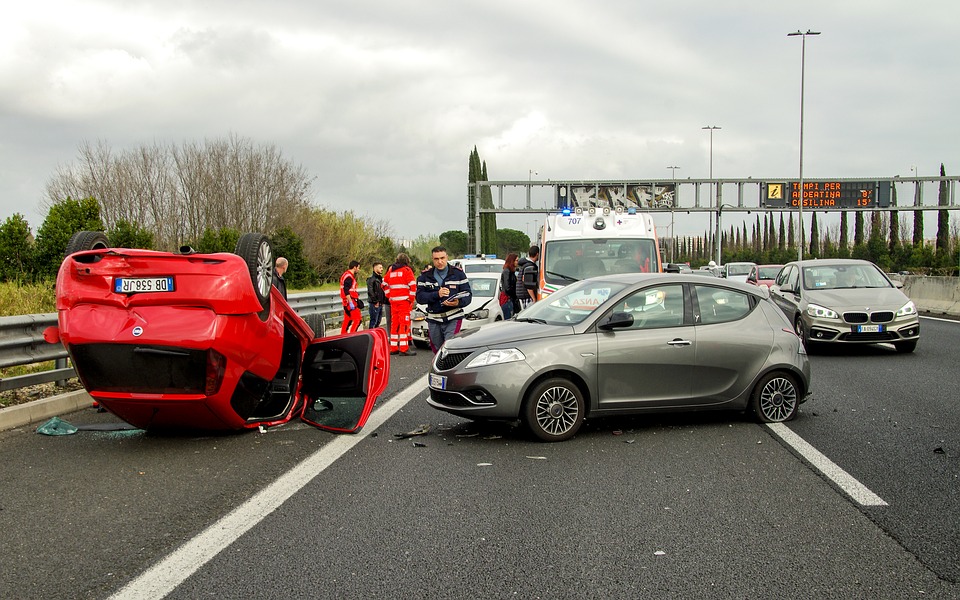
People often say that driving or riding in a car is the most dangerous part of their day. Statistically speaking, many of these people may be right. According to the National Highway Traffic Safety Administration (NHTSA), there were approximately 5.6 million police-reported motor vehicle crashes, 2.1 million injuries and 22,912 fatalities in 2012. Despite these sobering statistics, drivers can take steps after an accident to minimize the damage to people and property.

According to the Insurance Information Institute, drivers should take the following steps immediately after an accident:

Assess the Damage. Immediately after an accident, safely move the vehicle off the road, if possible, and check to see if anyone is injured. When it’s safe to do so, inspect the vehicle to determine the extent of any damage.

Call the Police. If you are in a serious accident, immediately call the police or dial 911. Let them know if anyone is hurt and the extent of their injuries so medical assistance can be dispatched. File a police report even if the police don’t come to the scene of the accident. A report can be important if someone involved in the accident sues for damages or medical injuries, or if there is more damage done to your car than initially thought. If the police do come to the accident scene, get the officers’ names and badge numbers and ask where you can get a copy of their report.

Collect as much information as possible. Get the names and contact information of everyone involved in the crash, including witnesses. Ask all drivers involved in the accident for their license, car registration and insurance ID card. Get the make and model of the cars involved, and make a note of the location, time of day and the weather conditions. A smart phone or other device can be used to record this information. Though emotions may be running high after an accident, focus on the facts and do not discuss who was at fault, or how much insurance you have, with anyone else involved in the accident.

Don’t leave the scene. If you run into an unattended vehicle, try to find the owner. If you can’t, leave a note containing your name, address and phone number.  Record the details of the accident, including the make and model of the car and the address where the accident occurred.

Get the claims process started. Promptly notify your automobile insurance company or agent as soon as possible while the facts are still fresh in your mind. Keep a record of the name, title and contact information for everyone you speak with from your insurance company. Complete any claim forms you receive as soon, and as accurately, as possible. If you have any questions, don’t be afraid to ask the claims adjuster or your insurance agent for assistance.

Keep all documentation. Create a file to keep all of your notes, records and claim forms. This can make the process of resolving your claim quicker and easier.

Taking steps before an accident can also make it easier to recover afterward. It’s important to have appropriate insurance coverage with sufficient limits. If you would like more information about obtaining automobile insurance that meets your needs, please contact us.

If you would like to subscribe to our newsletters please click here.

My Friend Crashed My Car

At one time or another, most of you have let a friend borrow your car. Unfortunately, many of you probably weren’t thinking about insurance coverage as you handed over the keys. So what do you think, if your friend gets into an accident while driving your car, would your automobile insurance cover it?

As always, the first place to look is the insurance policy. Standard auto insurance policies have permissive use clauses that extend insurance coverage to those who had the owner’s permission to use the car. These clauses are intended to benefit and protect the general public and innocent victims of automobile accidents.

Though policy forms vary, permissive use (a/k/a omnibus) clauses are often incorporated into that part of the policy that identifies who is insured under the policy. For example, a policy may state that any person using the automobile is considered an ‘Insured Person’ if they have the owner’s permission to do so.

Permission to use an automobile can generally be either express or implied. Express permission must be of an affirmative character that is directly and distinctly stated, and clear and outspoken. Express permission cannot be merely implied or left to inference.

Implied permission, on the other hand, involves an inference arising from a course of conduct or relationship between the parties in which there is a mutual acquiescence or lack of objection which signifies permission. Implied permission is typically determined from the facts and circumstances in a particular case.

After establishing that the driver had permission to use the car, the next step is determining whether the driver’s use of the car was consistent with the owner’s permission. For example, if a car owner gave permission to drive to the local store, but the friend takes off on a cross-country trip, is this friend really driving with the owner’s permission?

There are generally three rules used by various states to determine whether a driver has exceeded the owner’s permission to use the car.

Conversion (Strict Construction) Rule: This rule requires that the automobile be used for a purpose reasonably within the scope of the permission given, during the time limits expressed and within the geographical limits contemplated by the owner and the driver. Any deviation, no matter how slight, will negate a driver’s permissive user status under the owner’s policy and there will be no coverage in the event of an accident. The friend cruising across the country would not be considered a permissive user in states adopting this rule.

Initial Permission Rule: Some states adopted the more liberal initial permission rule. Under this rule, if permission to use the automobile is initially given, the driver is considered to have the owner’s permission regardless of the manner in which the automobile is used. Since only the first use must be with the owner’s permission, any later deviations made by the driver, such as driving cross-country, are immaterial. For this reason, the initial permission rule is sometimes referred to as the ‘hell-or-high water’ rule.

Minor Deviation Rule: Some states have taken an intermediate approach by adopting the minor deviation rule. Under this rule, a driver can deviate from the scope of permission given by the owner and still be considered a permissive user as long as any deviation is not gross, substantial or major. In other words, this rule permits a slight deviation but condemns a major one. A material deviation, such as going cross-country, voids the initial permission, so if the friend gets in an accident in another state, he or she will not be considered a permissive user entitled to coverage under the owner’s auto insurance policy.

The next time a friend asks to borrow your car, take a minute to consider what might happen if there is an accident. As the owner of the car you will most likely be held liable for damages, so it’s a good idea to know whether you or your insurance company will be paying the bill.

If you have any questions or would like to discuss your insurance options, please contact us.

If you would like to subscribe to our newsletters please click here.