
Will 2016 Be a Record Year for Motor Vehicle Fatalities?

Are you planning to hit the road one last time before summer comes to an end? If so, we have some advice—BE CAREFUL!

According to the National Safety Council (NSC), the number of motor vehicle deaths from January through June 2016 is 9% higher than during the first half of 2015. At this pace, the number of motor vehicle fatalities in 2016 could exceed 40,000, which would be the highest in nearly a decade.

Estimates for the upcoming Labor Day holiday weekend are equally frightening. The NSC estimates 438 traffic fatalities, the most since 2008. The NSC also estimates 50,300 nonfatal medically consulted injuries, which are injuries serious enough that a medical professional was consulted.

According to the NSC:

  • The estimated annual population death rate is 12.9 deaths per 100,000, which is an 8% increase from 2015.
  • The estimated annual mileage death rate is 1.3 deaths per 100 million vehicle miles traveled, which is 8% increase from 2015.
  • The estimated cost of motor-vehicle deaths, injuries and property damage during the first half of 2016 was $205.5 billion.

States with the most traffic deaths:

  • Texas 1,824 (+11%)
  • California 1,702 (+9%)
  • Florida 1,590 (+10%)
  • Georgia 701 (+7%)
  • North Carolina 668 (+5%)

States with the largest percentage increase from 2015:

  • Vermont +63%
  • New Hampshire +61%
  • Connecticut +45%
  • New Mexico +43%
  • Idaho +37%

Why is 2016 on pace to be the deadliest year in nearly a decade? One reason could be lower gas prices. The NSC notes that gas prices during the first six months of 2016 were on average 16% lower than in 2015 and that this helped produce a 3.3% increase in cumulative vehicle mileage through May. Another reason could be that people continue to engage in risky driving behavior, like speeding, drunk driving, fatigued driving, distracted driving (including cell phone use) and aggressive driving.

Though some accidents just happen , most motor vehicle accidents can be avoided. In addition to avoiding risky driving behaviors, here are some tips from the National Highway Traffic Safety Administration that can decrease the chances of getting into an accident.

  • Plan trips ahead of time.
  • Wear your safety belt—and wear it correctly.
  • Drive at the speed limit. It’s unsafe to drive too fast or too slow.
  • Be alert! Pay attention to traffic at all times.
  • Keep enough distance between you and the car in front of you.
  • Be extra careful at intersections. Use turn signals and to look out for people and cars.
  • Check blind spots when changing lanes or backing up.
  • Most of the time, having the right auto insurance coverage is all you need to recover after an accident. That’s clearly not the case with fatalities. Everyone must do their part to make sure 2016 is not a record year for motor vehicle fatalities.
  • Please contact us if you have questions about your auto insurance or would like a quote.
  • To receive regular updates about developments which may affect your business, subscribe to Setnor Byer Insurance &Risk’s weekly risk management news brief.
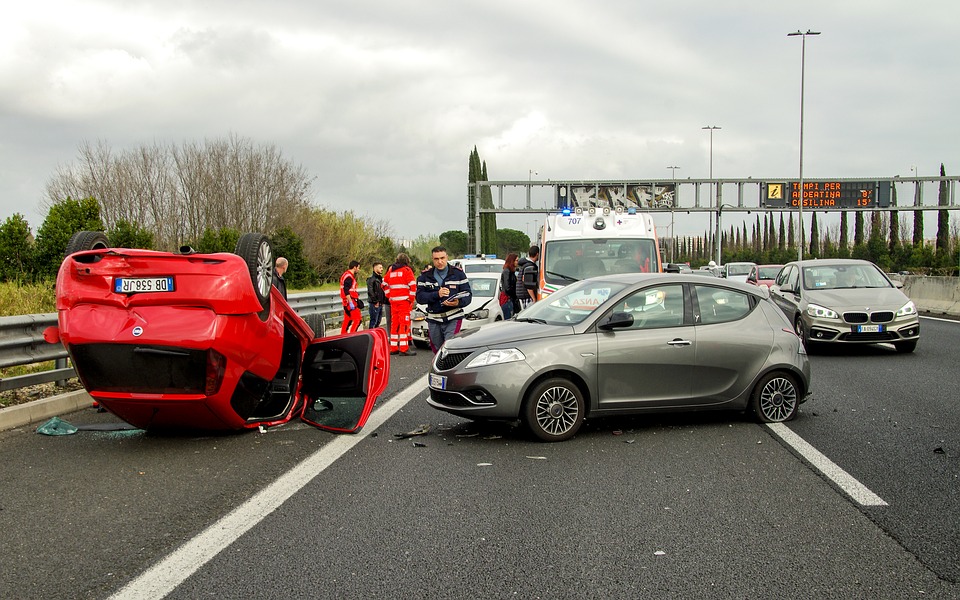

Steps to Take After a Car Accident

People often say that driving or riding in a car is the most dangerous part of their day. Statistically speaking, many of these people may be right. According to the National Highway Traffic Safety Administration (NHTSA), there were approximately 5.6 million police-reported motor vehicle crashes, 2.1 million injuries and 22,912 fatalities in 2012. Despite these sobering statistics, drivers can take steps after an accident to minimize the damage to people and property.

According to the Insurance Information Institute, drivers should take the following steps immediately after an accident:

Assess the Damage. Immediately after an accident, safely move the vehicle off the road, if possible, and check to see if anyone is injured. When it’s safe to do so, inspect the vehicle to determine the extent of any damage.

Call the Police. If you are in a serious accident, immediately call the police or dial 911. Let them know if anyone is hurt and the extent of their injuries so medical assistance can be dispatched. File a police report even if the police don’t come to the scene of the accident. A report can be important if someone involved in the accident sues for damages or medical injuries, or if there is more damage done to your car than initially thought. If the police do come to the accident scene, get the officers’ names and badge numbers and ask where you can get a copy of their report.

Collect as much information as possible. Get the names and contact information of everyone involved in the crash, including witnesses. Ask all drivers involved in the accident for their license, car registration and insurance ID card. Get the make and model of the cars involved, and make a note of the location, time of day and the weather conditions. A smart phone or other device can be used to record this information. Though emotions may be running high after an accident, focus on the facts and do not discuss who was at fault, or how much insurance you have, with anyone else involved in the accident.

Don’t leave the scene. If you run into an unattended vehicle, try to find the owner. If you can’t, leave a note containing your name, address and phone number.  Record the details of the accident, including the make and model of the car and the address where the accident occurred.

Get the claims process started. Promptly notify your automobile insurance company or agent as soon as possible while the facts are still fresh in your mind. Keep a record of the name, title and contact information for everyone you speak with from your insurance company. Complete any claim forms you receive as soon, and as accurately, as possible. If you have any questions, don’t be afraid to ask the claims adjuster or your insurance agent for assistance.

Keep all documentation. Create a file to keep all of your notes, records and claim forms. This can make the process of resolving your claim quicker and easier.

Taking steps before an accident can also make it easier to recover afterward. It’s important to have appropriate insurance coverage with sufficient limits. If you would like more information about obtaining automobile insurance that meets your needs, please contact us.

If you would like to subscribe to our newsletters please click here.

Making the Most of National Electrical Safety Month

Protecting your family, home and property is a full time job. Unfortunately, busy schedules often get in the way of making safety a top priority. Since May is National Electrical Safety Month, now is a good time to discuss electrical hazards and review effective safety practices.

According to the Federal Emergency Management Agency (FEMA), electrical malfunctions are a leading cause of residential building fires. In 2011, there were 26,800 residential building fires caused by electrical malfunctions that resulted in 280 deaths, 1,200 injuries and over a billion dollars in property loss. FEMA reports that residential building electrical fires cause more injuries, death and damage than all nonelectrical residential fires combined.

Steps can be taken to avoid becoming another tragic statistic. For example, since the average home in the United States was built in 1974, the Electrical Safety Foundation International (ESFI) recommends installing updated home safety devices that are designed to meet today’s electrical demands. The following items, for example, can greatly increase electrical safety.

Tamper Resistant Receptacles

Curious kids and electrical receptacles (outlets) are a dangerous combination. Tampering with electrical receptacles causes an estimated 6 to12 child fatalities and 2,400 severe shocks and burns every year. Those relying on plastic outlet covers to protect their children should know that a Temple University study found that 100% of 2 to 4-year-old children were able to remove plastic outlet covers in less than ten seconds.

A Tamper Resistant Receptacle (TRR) has spring-loaded shutters that cover the contact openings, or slots, of the receptacles. These shutters only open when both springs are compressed at the same time. The shutters will not open when a child attempts to insert an object into only one contact opening, so there will be no contact with electricity. According to the ESFI, the cost of installing TRRs in new homes is about 50 cents more than installing traditional receptacles, and the cost of retrofitting existing homes can be done for about $2 per outlet.

Ground Fault Circuit Interrupter

A ground-fault occurs when there is a break in the grounding path that may cause the electrical current to take an alternative path to the ground through a person, resulting in serious injuries or death. A Ground Fault Circuit Interrupter (GFCI) is a fast-acting circuit breaker designed to shut off electric power within as little as 1/40 of a second in the event of a ground-fault. It works by comparing the amount of current going to and returning fromequipment along the circuit conductors. If there is a measurable difference between the two, the GFCI interrupts the current.

Arc Fault Circuit Interrupter

An arc fault is an unintentional discharge of electricity in a circuit that can be caused by damaged, overheated or stressed electrical wiring or devices. Sparking or arcing caused by loose or corroded wires making intermittent contact generates heat and can damage insulation of the wires, which can trigger an electrical fire. Since arcing may not trip a circuit breaker, an Arc Fault Circuit Interrupter (AFCI) is needed to shut off the electricity before a fire can start.

The ESFI also recommends conducting a home electrical safety checkup by asking a number of questions designed to identify potential safety hazards, such as:

  • Are all switches and outlets working properly?
  • Are any switches or outlets warm to the touch?
  • Are any outlets or switches discolored?
  • Do any switches or outlets make crackling or buzzing sounds?
  • Do plugs fit snugly into all outlets?
  • Are any cords cracked, frayed or damaged?
  • Are any cords pinched by furniture, doors or windows?
  • Are cords attached to anything with nails or staples?
  • Are cords placed under carpets?
  • Are any extension cords being used on a permanent basis?
  • Are cords kept tied up while being used?
  • Are appropriate wattage light bulbs being used in all lights?
  • Are all appliance cords placed so they will not come in contact with hot surfaces?
  • Do you have recurring tripped circuit breakers or blown fuses?
  • Are electrical safety devices, such as GFCIs and AFCIs, tested every month?

If potential electrical safety hazards are discovered, the ESFI cautions against taking a do-it-yourself approach and strongly recommends leaving electrical work to the professionals. Nevertheless, the ESFI recommends the following precautions before doing any electrical work:

  • Turn off the power by switching off the correct circuit breaker in the main service panel.
  • Unplug lamps, appliances, etc. that are being worked on.
  • Test wires before touching them to confirm power has been turned off.
  • Never touch plumbing or gas pipes when performing an electrical project.
  • Never attempt a project that is beyond your skill level.

Since completely eliminating the risk of electrical damage is impossible, homeowners and renters should check with their insurance agent to make sure they are adequately protected. In some cases, a personal property floater or ordinance and law coverage may be necessary.

If you would like information about how insurance can play a valuable role in protecting your home from electrical safety hazards, please contact us.

If you would like to subscribe to our newsletters please click here.

Why You Should Control Your Road Rage

Though many have heard about road rage, few truly grasp the problem. Many people don’t know that:

  • More than 1,000 deaths have been attributed to road rage since 2007
  • Over a 5 year period, reports of extremely angered drivers have doubled, increasing by 170%
  • A review of more than 10,000 incidents by the AAA Foundation for Traffic Safety found that road rage resulted in at least 218 murders and 12,610 injuries

Another thing many people don’t know is that their auto insurance will not cover bodily injury or property damage caused by their road rage. In fact, insurance companies will routinely deny these claims, not because of a specific ‘road rage’ policy exclusion, but because of the nature of road rage itself.

The National Highway Traffic Safety Administration defines road rage as an assault with a motor vehicle by the operator of one motor vehicle on the occupants of another motor vehicle. In other words, road rage is viewed as an intentional act. As far as insurance companies are concerned, this makes all the difference.

Auto insurance typically covers ‘accidents’ that result in bodily injury or property damage. So the question becomes whether road rage can be considered an accident. One court recently said no, an accident is never present when a deliberate act is performed. Since road rage does not qualify as an accident, the court ruled in favor of the insurance company. Given their intentional nature, insurance companies can also deny road rage claims under a policy’s intentional act exclusion.

Since the lack of insurance coverage affects perpetrators and their victims, it is important to avoid road rage incidents whenever possible. The AAA Foundation for Traffic Safety suggests the following:

  • Don’t Offend: avoid cutting other drivers off, driving slow in the left lane, tailgating or making gestures
  • Don’t Engage: steer clear of aggressive drivers, avoid eye contact and get help if necessary
  • Adjust Your Attitude: forget winning, put yourself in the other driver’s shoes and control your own anger

If you would like more information about auto insurance or would like help getting the coverage you need, please contact us.

If you would like to subscribe to our newsletters please click here.