NOAA predicts above-average hurricane activity for seventh consecutive year

By Anita Byer, Setnor Byer Insurance & Risk

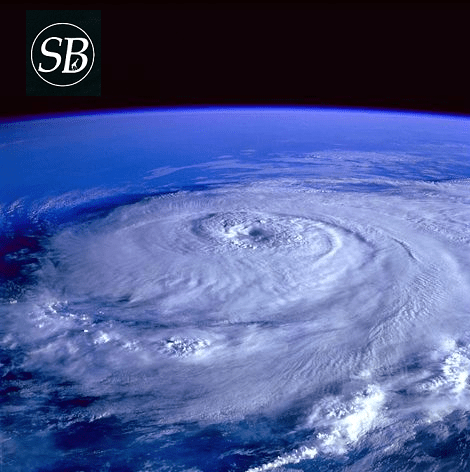
The National Oceanic and Atmospheric Administration released its predictions for the 2022 Atlantic hurricane season. For the seventh consecutive year, forecasters are predicting above-average storm activity. More specifically, NOAA predicts a 65 percent chance of an above-normal season, a 25 percent chance of a near-normal season and a 10 percent chance of a below-normal season. The Atlantic hurricane season runs from June 1 to November 30.

This year, NOAA is forecasting (with 70 percent confidence) a likely range of:

  • 14 – 21 Named Storms (winds of 39 mph or higher)
  • 6 – 10 Hurricanes (winds of 74 mph or higher)
  • 3 – 6 Major Hurricanes (winds of 111 mph or higher)
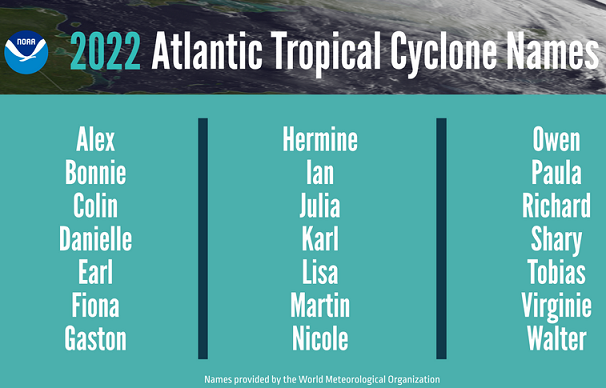
Forecasters at Colorado State University’s Tropical Meteorology Project are similarly predicting an active 2022 Atlantic hurricane season. They are forecasting 19 named storms, including 9 hurricanes and 4 major hurricanes. The probability of a major hurricane (Category 3-4-5) making landfall somewhere along the east coast of the United States (including Florida) is 47 percent. The probability of a Gulf Coast landfall (from the Florida Panhandle westward to Brownsville, Texas) is 46 percent.

The likelihood of increased activity is attributed to several climate factors, including the ongoing La Niña that is likely to persist, warmer-than-average sea surface temperatures and weaker tropical trade winds. An enhanced west African monsoon also supports stronger African Easterly Waves, which seed many of the strongest and longest-lived hurricanes during most seasons. In light of these factors, NOAA is urging everyone to understand their risk and to start preparing for what is expected to be an active hurricane season.

A lot is made of these annual predictions, but it only takes one storm to make it an active hurricane season for you. Start preparing now with Setnor Byer Insurance & Risk’s 2022 Hurricane Checklist. Our team of experienced and responsive professionals can help you find affordable options to protect your home and your business in the event of a hurricane.

Please contact us to discuss affordable insurance options to protect your personal and business property during the 2022 Hurricane Season.

Now Is the Perfect Time for Your Annual Insurance Check-Up

By Anita Byer, Setnor Byer Insurance & Risk

The end of the year is a great time to reflect on the past and prepare for the future. It’s also the perfect time for an annual insurance check-up. As the days, weeks and months go by, our lives change. So do our insurance needs. To make sure you haven’t outgrown your insurance, it’s a good idea to review your coverages at least once a year to determine whether any recent life changes require any insurance changes.

  • Have you gotten married? You may be entitled to marital status or multi-car premium discounts on your auto insurance. Your homeowners’ insurance may no longer be sufficient after merging two households under one roof.
  • Have you had a baby? Children need to be covered by health insurance and should be protected by life insurance.
  • Did your child get a driver’s license? Covering teenagers under a parent’s auto insurance policy is often cheaper than purchasing a separate policy. Discounts may also be available for good grades or driving school.
  • Have you switched jobs? New jobs often mean new fringe benefits, so identify which employer-provided coverages have been gained or lost, and adjust personal coverages accordingly. If income increases, coverage limits may also need to be increased.
  • Have you done extensive renovations on your home? Major home improvements, such as adding a new room, enclosing a porch or expanding a kitchen, may leave you underinsured. Homeowners’ coverage limits may need to be increased to cover the increased value of your renovated home. New structures, like a gazebo, pool or hot tub, may not be covered under your current policy.
  • Did you buy a second home? Second homes may be harder to insure because they are often located in areas with specific risks (earthquakes, avalanches, floods, etc.) and vacant for long periods of time.
  • Have you acquired any new valuables (jewelry, electronics, fine art, antiques)? Standard homeowners’ policies offer limited coverage for certain high-value items, so a personal property floater may be necessary.
  • Did you purchase any new toys? In addition to being valuable, items like boats, motorcycles and recreational vehicles can create potentially significant liability exposures that must be covered by insurance.

According to the Insurance Information Institute, these questions can help identify and avoid painful coverage gaps. They can also save you money if it turns out you have more insurance than you need. Please contact us to learn more about evaluating your current insurance needs.

Florida Home Inspections Will Soar Under Citizens’ New “Holistic” Plan

By Anita Byer, Setnor Byer Insurance & Risk

Citizens Property Insurance Corporation, Florida’s insurer of last resort, is planning to drastically increase the number of residential property inspections in the coming years. Citizens inspected roughly one percent of all its policies in-force last year and plans to inspect 2-3% of its covered properties by the end of this year. These numbers are expected to soar under Citizens’ new holistic inspection plan. So much so that by the end of 2025, Citizens plans to inspect approximately 20% of all its residential policies in-force.

Citizens’ holistic inspection plan has a greater focus on new business inspections and establishes condominium unit inspections. It also incorporates automation so a percentage of properties with little-to-no risk can bypass underwriting review. Citizens plans to use a new, lower cost, highly scalable Virtual Inspection type as well. According to Citizens, its 4-year plan to increase its inspection volume is going to achieve the following results.

  • Reduced Loss Frequency. Property inspections help guard against adverse selection, which is the tendency for people with the greatest probability of loss to be the ones most likely to purchase insurance. Citizens expects to see a 10-20% improvement in the overall impact on loss frequency for inspected policies.
  • Improved Premium (Pricing) Accuracy. Property inspections can help identify undervaluation concerns and maintain sound pricing models by validating rating and pricing characteristics.
  • Reduced Exposure in Private Market Assumptions. Private insurers need inspections when deciding whether to take policies out of Citizens. Citizens expects an increased assumption ration of 10-20% for inspected properties.

In addition to increasing the number of residential property inspections, Citizens amended its eligibility rules to make property ineligible for coverage when inspections reveal that it’s unsafe for occupancy or identify substantial structural deficiencies. They apply to residential policies that are written or renewed on or after October 15, 2021. Citizens already orders inspections for all new commercial property policies and plans to continue doing so through 2025.

Identifying ineligible properties will no doubt benefit Citizens, but what about the property owners? Many may lose access to the crucial insurance coverage provided by Citizens, Florida’s insurer of last resort. What happens then? If you have questions or concerns about Citizens new inspection plan, please contact our team of property insurance professionals.

2021 Hasn’t Broken Record for Most Billion-Dollar Climate Disasters (Yet?)

By Anita Byer, Setnor Byer Insurance & Risk

Did you know that the U.S. experienced 308 billion-dollar weather and climate disaster events since 1980? According to the National Oceanic and Atmospheric Administration, the total cost of these events exceeds $2 trillion. Since 1980, the U.S. averaged 7.1 billion-dollar events per year. In 2020, there were 22 billion-dollar events, the most in any single year…for now. You see, 2021 is already #2 on the list, and there’s still time left on the clock.

During the first nine months of 2021, we’ve already seen 18 billion-dollar weather and climate disaster events, including drought, flooding, severe storms, tropical cyclones, wildfire and winter storms. NOAA created the following map to show the approximate location of each event.

According to NOAA, these events resulted in the deaths of 538 people and had significant economic impact on affected areas. Unfortunately, billion-dollar events are happening more often than before. Over the past five years, the U.S. averaged more than twice as many billion-dollar weather and climate disaster events per year (16.2) than we averaged per year over the past forty years (7.1). This is also the seventh consecutive year with 10 or more billion-dollar events. These events are costlier too. The total cost over the last five years is nearly one-third of the cost total over the past 42 years—the highest 5-year cost average on record.

This disturbing trend underscores the need for adequate insurance coverage to protect against the financial losses caused by weather and climate disaster events. Property insurance has become an absolute necessity for homes and businesses nationwide. These policies do not cover flooding, so every home and business needs flood insurance too, regardless of whether the property is located in a flood zone. Why? There’s no such thing as a No-Flood-Zone!

Please contact us about affordable insurance options that can limit your loss during the next billion-dollar weather and climate disaster event.

How Many Storms Are Predicted for the 2021 Atlantic Hurricane Season?

The National Oceanic and Atmospheric Administration released its predictions for the 2021 Atlantic Hurricane season. The good news is that experts do not anticipate the historic level of storm activity seen in 2020. The not-so-good news is that NOAA is nevertheless predicting a season with above-normal storm activity. The Atlantic hurricane season officially begins June 1st and extends through November 30th.

According to NOAA, there is a 60 percent chance the 2021 Atlantic Hurricane Season will have above-normal storm activity. There is a 30 percent chance that storm activity will be near-normal and a 10 percent chance it will be below-normal. NOAA is forecasting:

  • 13 – 20 Named Storms (winds of 39 mph or higher)
  • 6 – 10 Hurricanes (winds of 74 mph or higher)
  • 3 – 5 Major Hurricanes (winds of 111 mph or higher)

Forecasters at Colorado State University are similarly predicting above-normal storm activity in 2021. They estimate a 45 percent chance that at least one major hurricane (Category 3-4-5) will make landfall somewhere along the U.S. east coast (including Florida). The chance of a Gulf Coast landfall (from the Florida Panhandle westward to Brownsville, Texas) is 44 percent.

Note that beginning this year, NOAA is using updated statistics to determine when hurricane seasons are above-, near-, or below-average. Not surprisingly, replacing older data with more recent data caused the season ‘averages’ to up. Before the update, 12 named storms and 6 hurricanes, including 3 major hurricanes, was considered an ‘average’ season. Now, an ‘average’ season will produce 14 named storms and 7 hurricanes, including 3 major hurricanes. In other words, an ‘average’ season will have more named storms this year than last year.

A lot is made of these annual predictions, but it only takes one storm to make it an active hurricane season for you. Start preparing now with Setnor Byer Insurance & Risk’s Hurricane Season 2021 Checklist. Our team of experienced and responsive professionals can help you find affordable options to protect your home and your business in the event of a hurricane.

Please contact us to discuss affordable options for protecting your personal and business property during the 2021 Hurricane Season.

How Will the NFIP’s New Pricing Model Affect Your Flood Insurance Premiums?

Are you ready for Risk Rating 2.0? The National Flood Insurance Program (NFIP) is rolling out the first major update to its rating and pricing methodology in 50 years. This is a big deal because the NFIP provides about $1.3 trillion of flood insurance coverage to more than 5 million policyholders nationwide. Risk Rating 2.0 is expected to produce increasingly equitable premiums that better reflect a property’s unique flood risk. A laudable goal indeed, but how will the NFIP’s new flood insurance pricing model affect your premiums in the near future?

The Federal Emergency Management Agency, which manages the NFIP, acknowledges that while some premiums will go down, others will go up. Ultimately, it will depend on your property’s individual flood risk. However, according to FEMA, 96% of current policyholders will see either an immediate premium decrease or an increase of less than $20 per month under the new pricing model. FEMA is predicting the following changes to the NFIP’s average monthly premium under the new flood insurance pricing model.

Nationwide

  • 23%        Immediate decrease of $86 per month
  • 66%        $0 – $10 increase per month
  • 7%          $10 – $20 increase per month
  • 4%          $20+ per month

Florida

  • 20%        Immediate decrease
  • 68%        $0 – $10 increase per month
  • 8%          $10 – $20 increase per month
  • 4%          $20+ per month

It’s worth noting that all policyholders have been subject to NFIP premium increases every year. That’s because FEMA has a statutory obligation to charge actuarially sound flood insurance premiums. Under the current pricing model, policyholders on average see premium increases of $8 per month. However, according to FEMA, rate increases will not continue indefinitely under Risk Rating 2.0.

So, when will flood insurance premiums start to change? Due to the significance of the rating overhaul, FEMA is taking a phased approach to rolling out the new pricing model.

  • Phase I. Beginning October 1, 2021, new policies will be subject to Risk Rating 2.0 and existing policyholders can start taking advantage of immediate premium decreases upon policy renewal.
  • Phase II. Beginning April 1, 2022, all renewing policies will be subject to Risk Rating 2.0.

Risk Rating 2.0 will not change mandatory flood insurance requirements. Lenders will continue using Flood Insurance Rate Maps (FIRMs) to identify properties located within Special Flood Hazard Areas and determine whether flood insurance is mandatory under federal law. Those not required by law or by their lender to carry flood insurance should have it anyway. Flooding is the most common and costliest natural disaster in the United States. Flood insurance is important to everyone, everywhere because there’s no such thing as a No-Flood-Zone.

Please contact us to discuss how the NFIP’s Risk Rating 2.0 may affect your personal and commercial flood insurance premiums.

It’s Time for Your Annual Insurance Check-Up

The start of a new year is the perfect time for an annual insurance check-up. As the days, weeks and months go by, our lives change. So do our insurance needs. To make sure you haven’t outgrown your insurance, it’s a good idea to review your coverages at least once a year to determine whether any recent life changes require any insurance changes.

  • Have you gotten married? You may be entitled to marital status or multi-car premium discounts on your auto insurance. Your homeowners’ insurance may no longer be sufficient after merging two households under one roof.
  • Have you had a baby? Children need to be covered by health insurance and should be protected by life insurance.
  • Did your child get a driver’s license? Covering teenagers under a parent’s auto insurance policy is often cheaper than purchasing a separate policy. Discounts may also be available for good grades or driving school.
  • Have you switched jobs? New jobs often mean new fringe benefits, so identify which employer-provided coverages have been gained or lost, and adjust personal coverages accordingly. If income increases, coverage limits may also need to be increased.
  • Have you done extensive renovations on your home? Major home improvements, such as adding a new room, enclosing a porch or expanding a kitchen, may leave you underinsured. Homeowners’ coverage limits may need to be increased to cover the increased value of your renovated home. New structures, like a gazebo, pool or hot tub, may not be covered under your current policy.
  • Did you buy a second home? Second homes may be harder to insure because they are often located in areas with specific risks (earthquakes, avalanches, floods, etc.) and vacant for long periods of time.
  • Have you acquired any new valuables (jewelry, electronics, fine art, antiques)? Standard homeowners’ policies offer limited coverage for certain high-value items, so a personal property floater may be necessary.
  • Did you purchase any new toys? In addition to being valuable, items like boats, motorcycles and recreational vehicles can create potentially significant liability exposures that must be covered by insurance.

According to the Insurance Information Institute, these questions can help identify and avoid painful coverage gaps. They can also save you money if it turns out you have more insurance than you need. Please contact us to learn more about evaluating your current insurance needs.

Florida’s AOB Reform Prompts Citizens to Update Homeowners’ Policies

Floridians insured by Citizens Property Insurance Corporation will see new policy forms next year. Citizens updated its homeowners and other personal lines property insurance policies to reflect Florida’s new assignment of benefits (AOB) laws. These updates will be incorporated into Citizens’ policies with effective dates on or after February 1, 2020.

AOBs, which are commonly used by homeowners after suffering a property loss, generally authorize vendors (contractors, water remediation companies, etc.) to collect payment for services directly from the owner’s property insurance company. In 2019, Florida’s laws were changed to stop the abuse of post-loss AOBs by strictly regulating their use.

In light of these new statutory requirements, Citizens made a number of AOB-related changes to its policy forms. For example, the updated policies include the following AOB-specific definitions.

  • An “assignment agreement” is any instrument which assigns post-loss benefits under a residential property insurance policy to a person providing services to protect, repair, restore, or replace property or to mitigate against further property damage.
  • An “assignor” is the person who assigns post-loss benefits under a residential property insurance policy to another person. (The “assignor” is typically the homeowner or tenant named as the insured under the policy.)
  • An “assignee” is the person who is assigned post-loss benefits. (This is typically the contractor, water remediation company or other vendor providing services to the homeowner.)

The updated policies also:

  • Clarify that assignment agreements do not change the policy’s performance obligations.
  • State that in the event of a covered property loss, Citizens has no duty to provide coverage to an assignee who fails to comply with specific statutory duties.
  • Require assignees to provide Citizens with written notice of intent to initiate litigation before filing a lawsuit.

Citizens will include a Notice of Change in Policy Terms with their 2020 renewal offers. Other insurers may make similar changes to their homeowner’s insurance policy forms in the near future. In the meantime, please contact us if you have any questions about your homeowners’ insurance coverage.

Isn’t It Time for Your Annual Homeowners’ Insurance Check Up?

How long has it been since you reviewed your homeowners’ insurance coverage? For most of us, it’s been too long. We just keep renewing the same policy we purchased years ago. After all, if it was good enough then it should be good enough now, right? Probably not.

As our lives change, so do our insurance needs. We become Airbnb hosts, start home-based businesses and hire domestic employees. We renovate our homes and acquire jewelry and other valuables. Changing circumstances bring about new risks that may not be adequately covered by your old homeowners’ insurance policy.

To avoid potentially devastating coverage gaps, homeowners should evaluate their insurance coverage in the context of their current circumstances. The annual renewal of your homeowners’ insurance policy is the perfect time to do this. Here are some questions to ask before renewing your policy.

Is my dwelling underinsured? In the worst-case scenario, you will need enough dwelling coverage to completely rebuild your home from scratch. This is unlikely with policies that pay actual cash value because depreciation is factored into the claim payout. Policies that pay replacement cost are preferable, but limits need to be adjusted to cover any additions or renovations that would make it more expensive to rebuild or replace a damaged dwelling.

Is my personal property underinsured? More years means more stuff. Personal property coverage limits should correspond to the value of your furniture, appliances, clothing and other personal property. If the total value of your possessions goes up, so should your limits.

Are my valuables covered? Standard policies substantially limit or exclude coverage for certain valuables, like jewelry, precious metals and firearms. If you acquired luxury items, you will need a Personal Property Floater (Scheduled Personal Property Endorsement) to cover them.

Do I have enough liability protection? Liability coverage protects you against third-party claims for bodily injury or property damage. Most homeowners should have at least $300,000 of liability coverage, but those with significant assets should have higher limits.

Do I have the right deductible? The deductible what you pay before the insurance company starts paying. Increasing deductibles may lower premiums, but it’s not for everyone. Before making a change, evaluate your current finances to make sure you can afford to pay a higher deductible in the event of a claim.

Can I bundle policies? Some insurers offer substantial multi-policy discounts. If you have other policies, like automobile or umbrella policies, find out if you can save money by bundling them together with the same insurance company.

Am I eligible for premium discounts? Renovations that reduce the risk of loss can also reduce premiums. If you recently replaced the roof, installed hurricane shutters, purchased a home security system or made other qualifying renovations, you may qualify for premium discounts or credits.

Do I need a separate flood policy? Hurricane Irma taught us that flooding isn’t limited to flood zones and that uninsured flood damage can be devastating. Standard homeowners’ policies do not cover floods, so if you live in an area that is (or is becoming!) prone to flooding, you will need a separate flood insurance policy.

We know that reviewing insurance policies is pretty much the last thing you want to do, but it has to be done. It’s better to understand the insurance coverage you have and discover the coverage you need before you have a claim instead of after.

Please contact us to learn more about evaluating and obtaining adequate homeowners’ insurance coverage.

Do You Know What Homeowner’s Insurance Covers…and What It Doesn’t?

Many of us will remember 2017 as the year of natural disasters. Even if you weren’t in the path of a coming storm or a spreading wildfire, you probably knew someone who was. It was a year of hurricanes, wildfires, flooding and severe weather. Economic losses resulting from weather disasters totaled $344 billion, making 2017 the costliest year ever.

In 2017, there were thirty-one billion-dollar events worldwide. Sixteen were in the United States, including four of the top 10 global economic loss events.

1. Hurricane Harvey ($100 billion)
3. Hurricane Irma ($55 billion)
4. Wildfires ($13 billion)
10. Severe Weather ($3.4 billion)

Insurance played a big role in helping victims recover from staggering property losses. Of the $181 billion in losses suffered in 2017, $84 billion was covered by public and private insurers. Though a substantial number of losses involved homes and personal property, not all of them were covered by homeowners’ insurance. Unfortunately, many victims did not know what their policies did and did not cover until it was too late.

There are two general types (forms) of homeowners’ policies. Broad Form policies protect against perils that are specifically named in the policy. Special Form policies generally provide coverage against all risks, except those that are specifically excluded in the policy. Both standard policy forms generally protect dwellings and personal property against:

  • Fire, smoke and lightning;
  • Windstorm and hail;
  • Explosions and volcanic eruptions;
  • Damage caused by vehicles, aircraft and falling objects;
  • Theft, vandalism, malicious mischief, riot and civil commotion;
  • Weight of ice, snow or sleet;
  • Discharge, overflow or freezing of pipes, heating and A/C systems, fire sprinklers and household appliances;
  • Tears, cracks and burns of water heating, A/C and fire sprinkler systems; and
  • Damage from electrical currents in appliances or wiring.

Standard Special Form policies also protect against all other perils except those that are specifically excluded in the policy. Common exclusions include:

  • Flood;
  • Earthquake;
  • War;
  • Nuclear accident; and
  • Landslide, mudslide and sinkhole.

The increasing frequency and intensity of natural disasters have put homeowners at greater risk. Though we can hope for a better 2018, we would be wise to learn the lessons of 2017. Now is the time to review your homeowners’ insurance coverage. It’s the best way to not only understand the coverage you currently have, but to discover the coverage you still need.

Please contact us to learn more about obtaining adequate homeowners’ insurance coverage.

To receive regular updates about developments which may affect you, subscribe to Setnor Byer Insurance & Risk’s risk management news brief.