2021 Hasn’t Broken Record for Most Billion-Dollar Climate Disasters (Yet?)

By Anita Byer, Setnor Byer Insurance & Risk

Did you know that the U.S. experienced 308 billion-dollar weather and climate disaster events since 1980? According to the National Oceanic and Atmospheric Administration, the total cost of these events exceeds $2 trillion. Since 1980, the U.S. averaged 7.1 billion-dollar events per year. In 2020, there were 22 billion-dollar events, the most in any single year…for now. You see, 2021 is already #2 on the list, and there’s still time left on the clock.

During the first nine months of 2021, we’ve already seen 18 billion-dollar weather and climate disaster events, including drought, flooding, severe storms, tropical cyclones, wildfire and winter storms. NOAA created the following map to show the approximate location of each event.

According to NOAA, these events resulted in the deaths of 538 people and had significant economic impact on affected areas. Unfortunately, billion-dollar events are happening more often than before. Over the past five years, the U.S. averaged more than twice as many billion-dollar weather and climate disaster events per year (16.2) than we averaged per year over the past forty years (7.1). This is also the seventh consecutive year with 10 or more billion-dollar events. These events are costlier too. The total cost over the last five years is nearly one-third of the cost total over the past 42 years—the highest 5-year cost average on record.

This disturbing trend underscores the need for adequate insurance coverage to protect against the financial losses caused by weather and climate disaster events. Property insurance has become an absolute necessity for homes and businesses nationwide. These policies do not cover flooding, so every home and business needs flood insurance too, regardless of whether the property is located in a flood zone. Why? There’s no such thing as a No-Flood-Zone!

Please contact us about affordable insurance options that can limit your loss during the next billion-dollar weather and climate disaster event.

How Will the NFIP’s New Pricing Model Affect Your Flood Insurance Premiums?

Are you ready for Risk Rating 2.0? The National Flood Insurance Program (NFIP) is rolling out the first major update to its rating and pricing methodology in 50 years. This is a big deal because the NFIP provides about $1.3 trillion of flood insurance coverage to more than 5 million policyholders nationwide. Risk Rating 2.0 is expected to produce increasingly equitable premiums that better reflect a property’s unique flood risk. A laudable goal indeed, but how will the NFIP’s new flood insurance pricing model affect your premiums in the near future?

The Federal Emergency Management Agency, which manages the NFIP, acknowledges that while some premiums will go down, others will go up. Ultimately, it will depend on your property’s individual flood risk. However, according to FEMA, 96% of current policyholders will see either an immediate premium decrease or an increase of less than $20 per month under the new pricing model. FEMA is predicting the following changes to the NFIP’s average monthly premium under the new flood insurance pricing model.

Nationwide

  • 23%        Immediate decrease of $86 per month
  • 66%        $0 – $10 increase per month
  • 7%          $10 – $20 increase per month
  • 4%          $20+ per month

Florida

  • 20%        Immediate decrease
  • 68%        $0 – $10 increase per month
  • 8%          $10 – $20 increase per month
  • 4%          $20+ per month

It’s worth noting that all policyholders have been subject to NFIP premium increases every year. That’s because FEMA has a statutory obligation to charge actuarially sound flood insurance premiums. Under the current pricing model, policyholders on average see premium increases of $8 per month. However, according to FEMA, rate increases will not continue indefinitely under Risk Rating 2.0.

So, when will flood insurance premiums start to change? Due to the significance of the rating overhaul, FEMA is taking a phased approach to rolling out the new pricing model.

  • Phase I. Beginning October 1, 2021, new policies will be subject to Risk Rating 2.0 and existing policyholders can start taking advantage of immediate premium decreases upon policy renewal.
  • Phase II. Beginning April 1, 2022, all renewing policies will be subject to Risk Rating 2.0.

Risk Rating 2.0 will not change mandatory flood insurance requirements. Lenders will continue using Flood Insurance Rate Maps (FIRMs) to identify properties located within Special Flood Hazard Areas and determine whether flood insurance is mandatory under federal law. Those not required by law or by their lender to carry flood insurance should have it anyway. Flooding is the most common and costliest natural disaster in the United States. Flood insurance is important to everyone, everywhere because there’s no such thing as a No-Flood-Zone.

Please contact us to discuss how the NFIP’s Risk Rating 2.0 may affect your personal and commercial flood insurance premiums.

Grandfathered Flood Insurance Premiums Can Be Locked-In Indefinitely, But Time is Running Out

The Federal Emergency Management Agency is in the midst of a multi-year initiative to update flood zone maps in more than 20,000 communities nationwide. Current maps need updating to more accurately reflect the risk of flooding. Flood hazards change over time and maps in some areas are based on decades old data. As a result, many will see their current flood insurance premium rates increase sharply. Others will be notified by mortgage lenders that under their new flood zone map, they are now required to purchase and maintain flood insurance.

The good news is that it’s possible to lock in the lower premium by using the current flood map even after the updated map goes into effect. However, to take advantage of the National Flood Insurance Program’s grandfathering options, you will most likely need to act BEFORE the updated flood zone map becomes effective.

Continuous Coverage Grandfathering. To qualify for this option, you must purchase and maintain flood insurance coverage before the new map goes into effect. If you do, your premium will be calculated using the pre-update flood zone or Base Flood Elevation (BFE) even after the updated map becomes effective. Your grandfathered rate is locked in for as long you maintain continuous flood insurance on the property. It can even be transferred to the new owner if your property is sold.

By taking advantage of the continuous coverage grandfathering option, you can save hundreds if not thousands of dollars per year for as long as you own the property. But remember, once an updated map becomes effective, the continuous coverage grandfathering option disappears forever. However, the NFIP offers another option for those who fail to secure flood insurance prior to the updated map’s effective date. Unfortunately, it’s not available to everyone and is significantly more complicated and burdensome than the continuous coverage grandfathering option.

Built-In-Compliance Grandfathering. To qualify for this option, you must provide documentation showing that the property was built in compliance with the flood map in effect at the time of construction and that the property has not been substantially improved. You are not eligible for built-in-compliance grandfathering if your property was constructed before your community’s first flood zone map went into effect.

FEMA’s flood zone remapping initiative is expected to continue for years. If the process hasn’t already started in your community, it may just be a matter of time. If your property is at risk of being remapped into a higher risk flood zone, there may not be much time left to lock in your grandfathered flood insurance rates. Otherwise, you may miss the chance enjoy substantial savings for years or decades to come.

Please contact us if you would like more information about the National Flood Insurance Program’s grandfathered premium options or are interested in obtaining flood insurance.

Mother Nature Doesn’t Read Flood Zone Maps

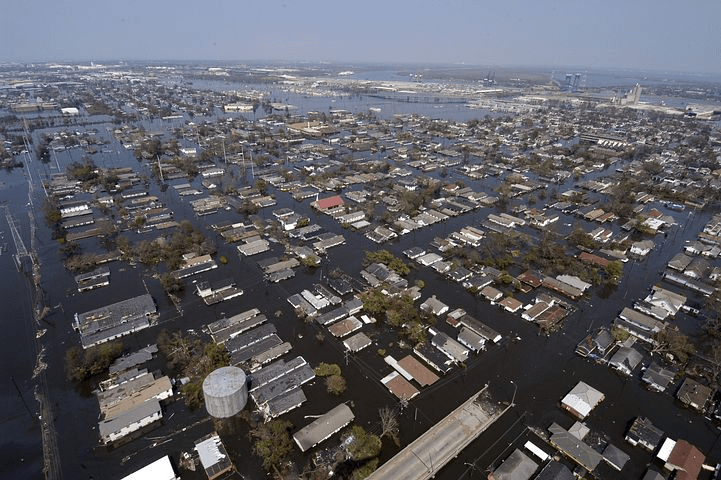
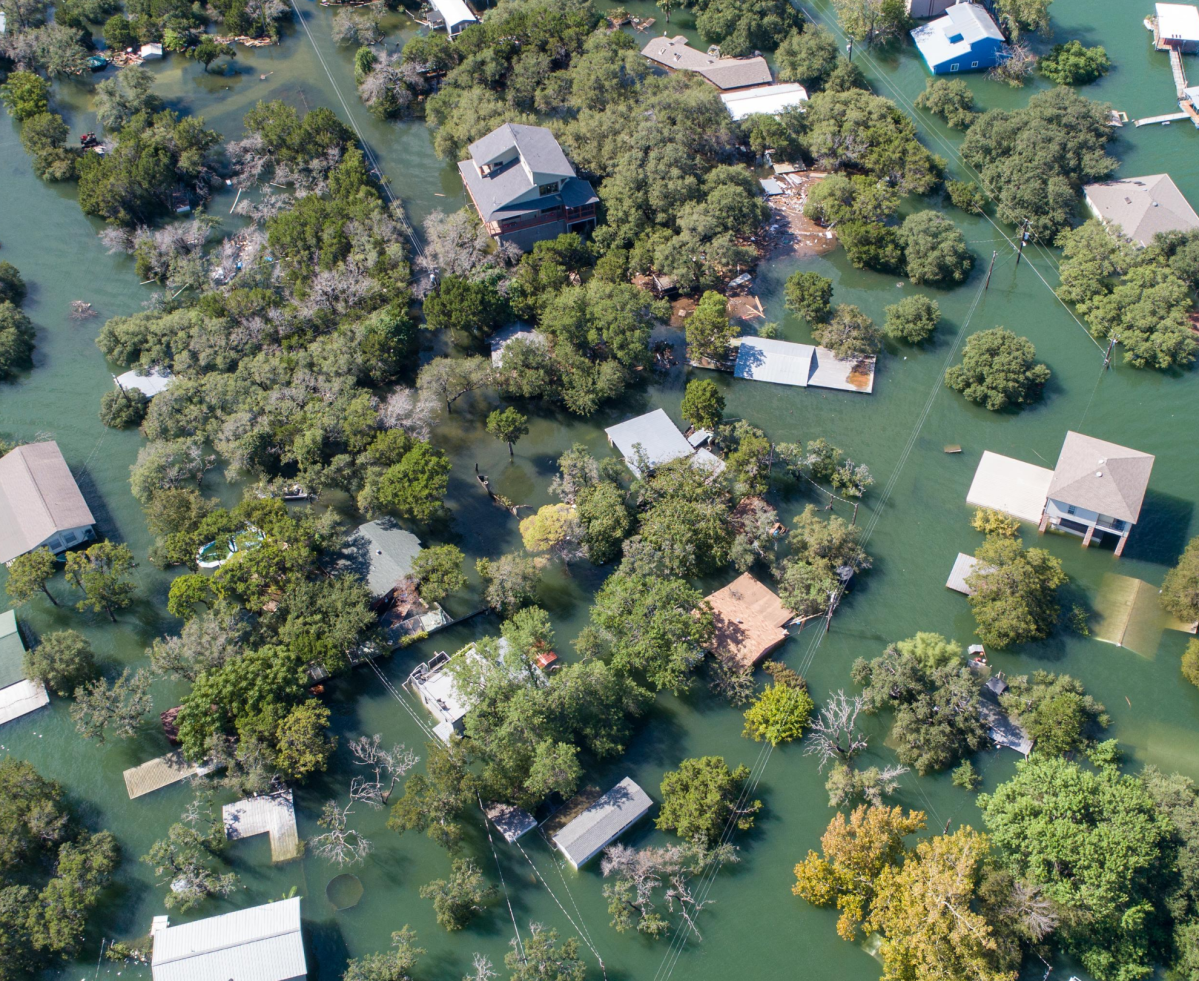
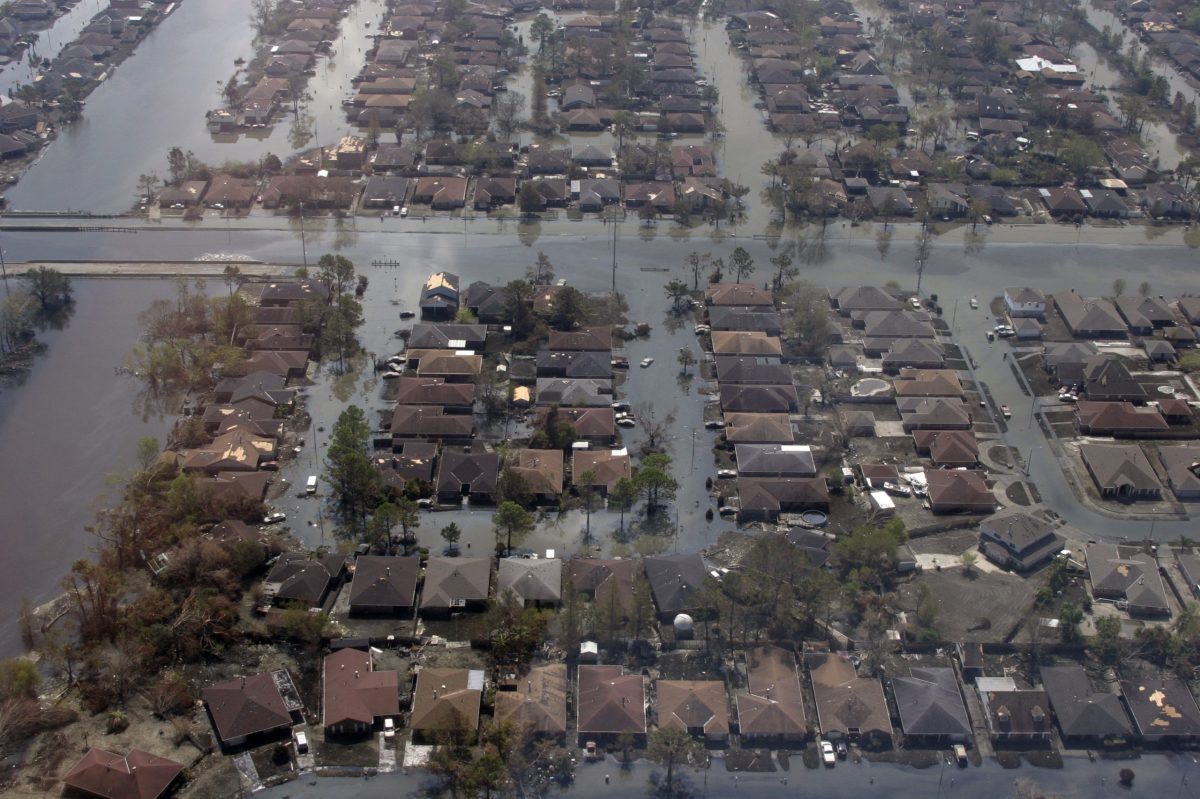
Is your home in a flood zone? You can easily find out by looking at a map of your state. If your house is located anywhere on that map, it’s in a flood zone. It’s true. Just look at the flooding caused by Hurricane Harvey last year. About two-thirds of the flooding occurred outside of FEMA’s Special Flood Hazard Area. More than half occurred outside any mapped flood zone.

“No-Risk-of-Flood” zones simply do not exist. Unfortunately, FEMA’s flood zone maps make it look like they actually do. FEMA takes an all-or-nothing approach to evaluating flood risks, which explains how opposite sides of the same street can be in different flood zones. Unfortunately, this approach fails to appreciate that flooding is the kind of risk that decreases gradually, not abruptly.

Nevertheless, FEMA has chosen to identify flood zones by drawing lines on a map. But, lines can provide a false sense of security because they have two sides. If houses at risk of flooding are on one side, then what’s on the other? FEMA’s flood zone maps make it look like homeowners on the other side of the line don’t have a flood risk.

Flood zone maps were supposed to encourage homeowners to buy flood insurance, but that hasn’t necessarily been the case. Instead, homeowners often use these maps to justify their decision to not buy flood insurance. As we have seen, the consequences of this decision can be devastating.

Hurricane Florence caused an estimated $28.5 billion in flood losses. The National Flood Insurance Program is expected to cover approximately $5 billion of these losses. But, like Hurricane Harvey last year, much of the flooding caused by Hurricane Florence occurred outside of FEMA’s flood zones. The result is an estimated $18.5 billion in uninsured flood losses.

Hurricane Michael appears to be painting the same picture. Early estimates suggest that nearly half of the losses will be uninsured. Most will be flood-related. This means that in a span of less than 30 days, thousands of homeowners experienced severe flooding, but most:

  • Were on the other side of FEMA’s flood zone line;
  • Did not have flood insurance;
  • suffered devastating flood losses; and
  • Don’t know how they will recover.

Floods can happen anywhere, so homeowners need to forget about flood zone maps. Your home is in a flood zone. Even if the risk of flooding is relatively low, you still need flood insurance to protect against potential losses. No more excuses.

Please contact us to learn more about obtaining flood insurance for your home.

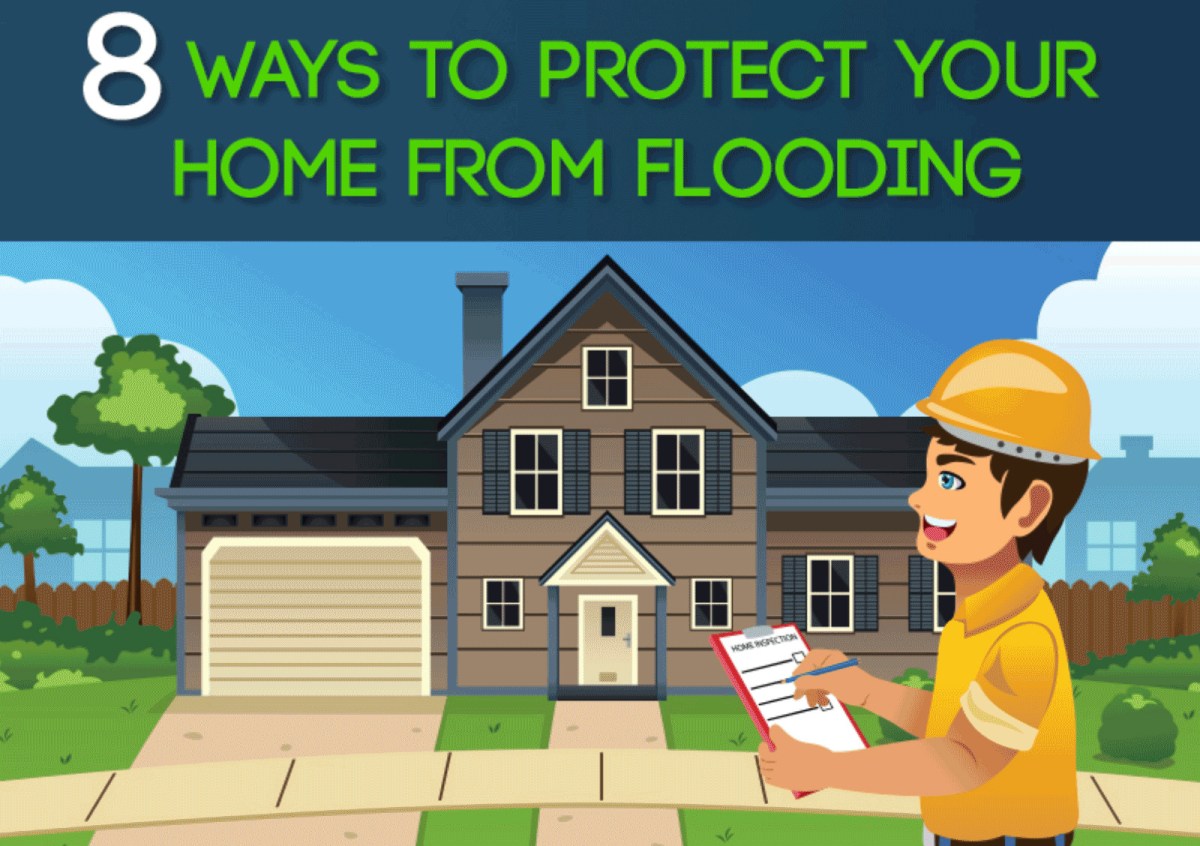
8 Ways to Protect Your Home from Flooding

Flooding has become a serious threat to both coastal and inland areas, especially in Florida. Learn 8 important ways to protect your home for flooding.

Continue reading “8 Ways to Protect Your Home from Flooding”

Insurance Premiums — 2018: Following one of the Costliest Catastrophic Years

While it is yet too early to know the ultimate cost to the United States property/casualty insurance sector for 2017’s catastrophic losses, experts are in agreement that the storm, fire and flood events could cost US insurers as much as 100 Billion – making 2017 one of the costliest ‘catastrophe’ loss years in US history.

The Insurance Information Institute provides context to the referenced numbers by reporting that 2016 insured losses from natural disasters totaled north of 20 Billion, while 2015 approximately 15 Billion. These numbers consider personal and commercial properties, as well as direct and indirect insured losses, such as business interruption.

There is little disagreement that the 2017 catastrophes materially strained capital for many insurers, but there is little evidence to suggest that the insurers won’t recover, especially if they are able to replenish capital with premium increases, particularly on catastrophe-exposed risks with recent losses.

While it is a bit soon to accurately predict rate increases, early indications are that premiums may rise 10 to 20 percent for catastrophe-exposed risks and 20 to 25 percent for catastrophe-exposed risks with recent losses. Other property insurance buyers can expect flat rates or low single-digit increases.

At minimum, it is reported that insurers are retooling their catastrophe models in response to some of the unusual attributes of the 2017 hurricanes — namely, high wind speeds, significant rainfall and storm surge. This retooling will be particularly pronounced for coastal communities, including our very own Florida.

For insurance buyers, this may mean that the long, soft market which began 13 years ago and introduced substantial renewal rate decreases, is over, at least temporarily. Buyers can expect to see property premium increases as early as the 1st half of 2018, with the final quarters ushering in the largest hikes. 

There is possibly some good news, despite projections of premium increases. According to Willis Towers Watson’s 2018 Marketplace Realities report, several factors could dampen the upward pressure on rates, including still-abundant capacity and what experts view as “still eager” alternative capital providers.

While it may still be unclear as to how insurers will respond to the 2017 losses, it is wise, nonetheless, for organizations and individuals to prepare for changing market conditions that are likely to make catastrophe prone properties the target of unfavorable pricing. To counter this, all positive risk characteristics of properties should be noted and negative characteristics should be addressed in order to ensure that insurance underwriters apply fair and actuarially sound pricing to the risk. More so than ever, it is critical to uncover the features that set a property ‘apart from the crowd.’

Those living in coastal communities exposed to high severity wind and flood events are urged to do all they can to fortify their properties against these risks so that insurance remains an affordable and viable risk financing instrument. These same property owners may want to consider what actions they can take, now and in the future, to address the Sea Level Rise (SLR) of 3” – 7” expected by 2030 and 9” – 24” expected by 2060.

Alec Bogdanoff, Ph.D., a resilience expert, noted, “A relatively small investment in storm hardening can generate a large return on investment by limiting the direct and indirect damage a property sustains from a weather or flood event. While insurance can finance a majority of direct property loss, insurance comes with the cost-sharing exposure of large deductibles and waiting periods. Additionally, an interruption of business, even if insured, can have long term consequences to the business’s reputation and perceived reliability. Resiliency is about how quickly one can bounce back from a disaster.”

Dr. Bogdanoff also stated that, ‘sea level rise, if addressed earlier rather than later, is a threat that can be managed. From driveway grading to service equipment placement above grade, minor improvements can substantially reduce the property damage caused by flood, surface runoff or tidal waters. It is anticipated that a private flood insurance market (versus the federally subsidized market), will continue to expand and offer an affordable insurance option, but only to those properties that have flood proofing features.’

And, for the remainder of the property/casualty marketplace:

  • Casualty rates are predicted to be flat or increase by a small percentage.
  • Commercial auto rates for businesses will maintain single-digit increases except for metropolitan areas of some states that are exposed to excess litigation and fraud.
  • Workers’ compensation rates are expected to be stable in most states, with Florida benefiting from a rate reduction for most businesses. Unfortunately, this trend may reverse within a couple of years.
  • All other lines of insurance pricing will be based upon sound underwriting practices that consider individual risk characteristics (-5% – +10%). This applies to Directors and Officers, Environmental and Cyber Risks.

Lessons from Hurricane Irma

Hurricane Irma was an unprecedented storm that affected literally everyone in Florida. Most of us were either expecting or experiencing a direct hit. All of us were given at least a glancing blow. Even though the mess remains and recovery efforts are ongoing, it’s not too soon to share what we learned from Hurricane Irma.

Setnor Byer Insurance & Risk has been helping clients prepare for and recover from hurricanes for nearly 40 years, but Hurricane Irma was different. As the steadily intensifying storm made its way toward Florida, we received an unprecedented number of calls from clients asking about flood insurance for their homes and businesses. Why?

Obviously, everyone is concerned when a massive category 5 hurricane is heading their way, but there was another reason. We all saw the catastrophic flooding in Texas caused by Hurricane Harvey just a few weeks earlier. The damage was devastating. So was the news that nearly 80% of homeowners in the counties most directly affected by Hurricane Harvey did not have flood insurance.

According to the Federal Emergency Management Agency (FEMA), floods are the most common and costliest natural disaster. Unfortunately, too many businesses refuse to carry flood insurance simply because they are not located in a high-risk flood zone. Neither were a majority of those flooded by Hurricane Harvey.

Flood zones are always being remapped, but it’s a long process that can take years. Updated maps quickly become out-of-date. Moreover, the process of identifying property that is susceptible to flooding is not a perfect science. For example, flood zone determinations fail to adequately consider:

  • Localized drainage issues;
  • Long-term erosion;
  • Ongoing development;
  • Topographic variances on individual properties; or
  • The failure of flood control systems.

This is why every home and business should have flood insurance, regardless of whether they are located in a high-risk flood zone. Premiums are relatively affordable, particularly when you consider the risks assumed by a flood insurance policy, such as the:

  • Overflow of inland or tidal waters;
  • Collapse of land along a body of water from waves or currents; and
  • Rapid accumulation of surface waters from any source, including blocked storm drains and broken water pipes below the surface of the ground.

Even if the risk of flooding may not be particularly high for your home or business, this is also true of countless other risks covered by insurance policies. Yet, many would never go without insurance to cover their personal homes and cars. Just like they wouldn’t consider going go without general liability insurance, professional liability insurance, employment practices liability insurance or commercial auto insurance to protect their businesses.

Uninsured flood damage can devastate any home or business, even those not located in high-risk flood zones. Over the course of just a few weeks, we’ve seen the landfall of not one, not two, but three hurricanes that rank among the most powerful storms in recorded history.

Those relying on flood zone maps to justify their decision to not purchase flood insurance should seriously reconsider.

Please contact us to learn more about flood insurance for your home and business.

To receive regular updates, please subscribe to our weekly newsletters.

Does Florida’s Hurricane Irma Emergency Order Affect You?

Hurricane Irma was as big as it was powerful. After making landfall in the Florida Keys, Irma continued on a path of destruction across the entire state. Irma left an unprecedented number of Floridians with storm-related residential property damage. This means a lot of you need to know about the Emergency Order issued by Florida’s Insurance Commissioner.

The order was issued on September 13, 2017, but the process began before Hurricane Irma ever made landfall in Florida. On September 4th, Governor Scott declared a state of emergency in every county in the State of Florida. This cleared the way for the Insurance Commissioner to issue an Emergency Order to “protect the public health, safety and welfare of Florida’s policyholders.”

Here is a summary of provisions that may be particularly important for those left with residential property damage as a result of Hurricane Irma.

Cancellation & Non-Renewals

Residential property insurance policies that cover a dwelling or residential property located in the state that was damaged by Hurricane Irma cannot be cancelled or non-renewed until 90 days after the property has been repaired. A structure is deemed to be “repaired” when it is substantially completed and restored to the extent that it is insurable by another authorized insurer that is writing policies in this state.

The Emergency Order also provides that notices of cancellation that were issued or mailed on or after August 25, 2017 through and including September 3, 2017, must be withdrawn and reissued no earlier than October 15, 2017. The premium for the extended period of coverage will be a pro rata portion of the premium for the entire policy term.

Deadline Extensions

If a policy provision, notice, correspondence or law imposes a deadline for policyholders to perform an act or transmit information that falls on or after September 4, 2017, that deadline is extended to December 3, 2017. However, policyholders with Hurricane Irma claims must still provide information and cooperate in the claim adjustment process.

Though no interest, penalties or other charges can accrue or be assessed as the result of the new deadline, this extension does not apply to premiums due in the normal course of business. The extension also does not apply to new policies effective on or after September 10, 2017.

Payment of Claims

Under Florida law, insurance companies need written authorization to pay claims by debit card or other form of electronic transfer. However, if an insurance company verifies the identity of the recipient and does not charge a fee, the written authorization requirement is waived for the duration of the state of emergency. Insurance companies remain liable for payment if funds are misdirected.

Does Homeowners’ Insurance Cover Damage Caused by a Meteorite?

Nearly 95 percent of homeowners have some form of homeowners’ insurance. Most have a basic understanding about their insurance policies. But, a survey by the Insurance Information Institute revealed that many homeowners have significant knowledge gaps about what is and what is not covered by a standard homeowner’s insurance policy. As you might imagine, these gaps can be very costly.

The good news is that according to the survey, a majority of homeowners correctly identified perils that are covered by a standard homeowner’s insurance policy.

  • Fire (91%)
  • Theft (79%)
  • Hail (73%)
  • Burst Pipes (71%)

The not so good news is that many homeowners think other perils are covered even though they aren’t. For example,

  • 43% think damage caused by flooding from heavy rain is covered.
  • 28% think hurricane storm surge flood damage is covered.

Standard homeowners’ insurance does not cover damage caused by flooding from heavy rain or a hurricane-driven storm surge. A separate flood insurance policy is needed to cover this kind of damage. Though flood insurance is available through the National Flood Insurance Program and from some private insurers, the Insurance Information Institute found that only 12% of homeowners carry flood insurance.

Another common misperception involves “earth movement” coverage. According to the survey, many homeowners incorrectly believe the following perils are covered by standard homeowners’ insurance:

  • Sinkhole (31%)
  • Mudslide (24%)
  • Landslide (23%)

Supplementary insurance is often needed to cover these perils. Mudslide damage can be covered by a flood insurance policy, but landslides, sinkholes and earthquakes typically require separate, specialized policies.

The survey also found that many homeowners were not aware of various coverages that are included in a standard policy.

  • 43% didn’t know that theft of possessions from their car may be covered.
  • 54% didn’t know that theft of a camera while vacationing may be covered.
  • 70% didn’t know that theft of a child’s laptop while at school may be covered.
  • 56% didn’t know that damage caused by airplane debris may be covered.
  • 73% didn’t know that damage caused by a meteorite may be covered.

Given the complexities of homeowners’ insurance and the wide range of risks associated with owning a home, homeowners are encouraged to speak with a reputable and experienced insurance agent. Knowledge is the key to protecting your most valuable asset.

Please contact us to learn more about obtaining adequate homeowners’ insurance coverage.

To receive regular updates about developments which may affect you, subscribe to Setnor Byer Insurance & Risk’s weekly risk management news brief.