How Many Storms Are Predicted for the 2021 Atlantic Hurricane Season?

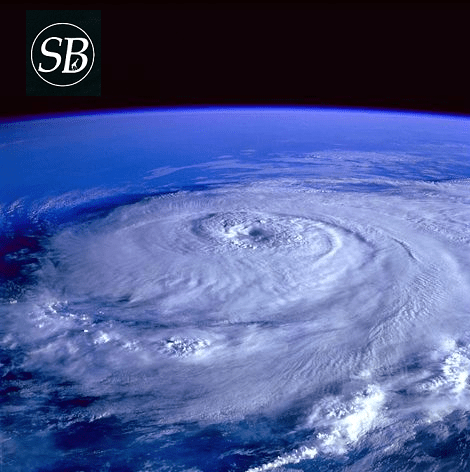
The National Oceanic and Atmospheric Administration released its predictions for the 2021 Atlantic Hurricane season. The good news is that experts do not anticipate the historic level of storm activity seen in 2020. The not-so-good news is that NOAA is nevertheless predicting a season with above-normal storm activity. The Atlantic hurricane season officially begins June 1st and extends through November 30th.

According to NOAA, there is a 60 percent chance the 2021 Atlantic Hurricane Season will have above-normal storm activity. There is a 30 percent chance that storm activity will be near-normal and a 10 percent chance it will be below-normal. NOAA is forecasting:

  • 13 – 20 Named Storms (winds of 39 mph or higher)
  • 6 – 10 Hurricanes (winds of 74 mph or higher)
  • 3 – 5 Major Hurricanes (winds of 111 mph or higher)

Forecasters at Colorado State University are similarly predicting above-normal storm activity in 2021. They estimate a 45 percent chance that at least one major hurricane (Category 3-4-5) will make landfall somewhere along the U.S. east coast (including Florida). The chance of a Gulf Coast landfall (from the Florida Panhandle westward to Brownsville, Texas) is 44 percent.

Note that beginning this year, NOAA is using updated statistics to determine when hurricane seasons are above-, near-, or below-average. Not surprisingly, replacing older data with more recent data caused the season ‘averages’ to up. Before the update, 12 named storms and 6 hurricanes, including 3 major hurricanes, was considered an ‘average’ season. Now, an ‘average’ season will produce 14 named storms and 7 hurricanes, including 3 major hurricanes. In other words, an ‘average’ season will have more named storms this year than last year.

A lot is made of these annual predictions, but it only takes one storm to make it an active hurricane season for you. Start preparing now with Setnor Byer Insurance & Risk’s Hurricane Season 2021 Checklist. Our team of experienced and responsive professionals can help you find affordable options to protect your home and your business in the event of a hurricane.

Please contact us to discuss affordable options for protecting your personal and business property during the 2021 Hurricane Season.

Save Money on Homeowners’ Insurance with Wind Mitigation Credits

Did you know that 15 to 70 percent of your homeowners’ insurance premium can be attributed to the risk of wind damage? Taking steps to prevent or reduce wind damage is known as wind mitigation. These steps can save your home from catastrophic storm damage. They can also save you money. In some cases, wind mitigation credits can reduce the wind-specific portion of a homeowners’ insurance premium by more than 50 percent.

Insurance companies offer premium discounts for specific structural and nonstructural building techniques that are designed to prevent or lessen the risk of damage caused by high winds. Though each home has unique characteristics, some structural or design elements are riskier than others.

According to Florida’s Division of Emergency Management, the highest risk elements include:

  • Non-wind rated shingle roofs.
  • Gable ends with wide overhangs, poorly attached roof sheathing, or over 6’ high.
  • Big windows (over 5’ wide and over 5’ tall).
  • Small jalousie, awning type and mulled windows.
  • Gable end walls for rooms with cathedral or vaulted ceilings.
  • Garage, double entry, and sliding glass doors.
  • Roofs supported by poorly fastened posts or columns.
  • Attached structures of almost any type.

If your home has high-risk elements, now is a good time to start thinking about wind mitigation. Though storm shutters tend to be the most obvious type of wind mitigation, there are other less visible types that can be equally effective. For example, wind mitigation may involve:

  • Water Barriers. Providing a sealed roof deck if pieces of roof covering (shingles, tiles, etc.) are blown away.
  • Anchoring. Reinforcing foundation-to-wall and wall-to-roof connections (toe nails, metal clips, single and double wraps) to establish a continuous load path. A continuous load path allows your home to resist high-wind forces as a unit. Weak links are generally where damage occurs.
  • Gable Ends. Strengthening connections between the roof and the wall by reinforcing the framing and bracing the top and bottom of the gable. Connections can be weakened by gable ends that bow in and out in strong winds.
  • Doorways. Replacing doors, including garage doors, with hurricane-rated doors. Additional bracing can also be applied to existing garage doors.

The availability of wind mitigation credits depends on various factors, many of which are very specific. For example, credits may be denied if the size, spacing or number of roofing nails fail to meet specific minimum standards. Specific inspection reports may also be required to qualify for wind mitigation credits. Florida, for example, requires the use of a Uniform Mitigation Verification Inspection Form.

Wind mitigation inspections, which typically cost less than $250 and take about an hour, are often done by licensed building inspectors, contractors, architects and engineers. Since state laws and specific insurance company requirements may dictate who is qualified to perform wind mitigation inspections, be sure to confirm licenses and check references before hiring an inspector.

Depending on when your home was built, you may be entitled to some wind mitigation credits even without an inspection! If you’re looking for a way to save money on homeowners’ insurance, please contact us to discuss premium discounts and wind mitigation credits.

To receive regular updates about developments which may affect you, subscribe to Setnor Byer Insurance &Risk’s weekly risk management news brief.