
Pushing Back the Clock on the Affordable Care Act

On January 1, 2014, a number of the Affordable Care Act’s (ACA) more significant provisions will go into effect. This means that many employers renewing their health plans on or after January 1st can expect big changes to their plans and, most likely, their premiums. However, some small group employers (typically those with no more than 50 employees) may have the option of delaying these expected changes with off-cycle renewals.

Off-cycle renewals allow employers to change the renewal date of their health plans. Since some of the ACA’s 2014 changes do not apply until the renewal date, health plans renewing earlier in the year will experience premium increases sooner than those renewing later in the year. Regardless of a plan’s natural renewal date, an off-cycle renewal can change a plan’s renewal date to late 2013, thereby effectively delaying implementation of the changes, and the expected premium increase, until late 2014.

With off-cycle renewals, employers may be able to delay the impact of several ACA provisions that are expected to increase premiums, such as:

  • Premium Rating Restrictions (Community Rating). Restrictions on the ability of health insurance issuers to determine premium rates based on health status, gender or other factors. Only age, rating area, family coverage and tobacco use may be used to vary premiums.
  • Essential Health Benefits Requirement. Health plans offered in the small group markets must cover all of the Essential Health Benefit Categories.
  • Guaranteed Availability of Insurance. Requires guarantee issue and renewability of health insurance regardless of health status.
  • Pre-Existing Condition Exclusions. Insurers will not be able to exclude employees from coverage based on pre-existing conditions.
  • Cost-Sharing Restrictions. Limitation on annual deductibles and maximum out-of-pocket expenses.
  • Elimination of Annual Limits on Insurance Coverage. Though lifetime limits on most benefits have been prohibited since 2010, beginning January 1, 2014, annual dollar limits will also be prohibited.

Whether an off-cycle renewal is an option for a particular employer depends on several factors.

  • Size of Employer. Off-cycle renewals are currently being offered to small group employers, which are typically employers with no more than 50 employees, though some employers with up to 100 employees may also qualify.
  • Insurance Company. Insurers decide whether they want to offer off-cycle renewals and to whom. Some insurance companies have decided to not offer off-cycle renewals and other are only making them available to specific clients.
  • Natural Renewal Date. Plans that naturally renew late in the year may not experience sufficient benefits to justify an off-cycle renewal.

Since an off-cycle renewal essentially continues an employer’s current plan, various changes required by the ACA will not affect the premium. However, plans will still be subject to their insurer’s regular medical underwriting process, so employers may still experience a premium increase. Continuing under a current plan also means that employees will not have access to various coverage provisions required by the ACA.

Though there doesn’t seem to be anything in the ACA expressly prohibiting off-cycle renewals, federal regulatory agencies may decide to address and possibly prohibit the practice of manipulating renewal dates. Employers must also ensure compliance with various laws that may be implicated by changing a plan’s renewal date, such as the Internal Revenue Code and ERISA.

Those considering an off-cycle renewal must act soon. Many insurance companies are imposing strict deadlines by which employers must request an off-cycle renewal. Since this can be a lengthy and complicated process, now is the time to get started.

If you would like to see if your health plan would benefit from an off-cycle renewal, please contact us.

If you would like to subscribe to our newsletters please click here.
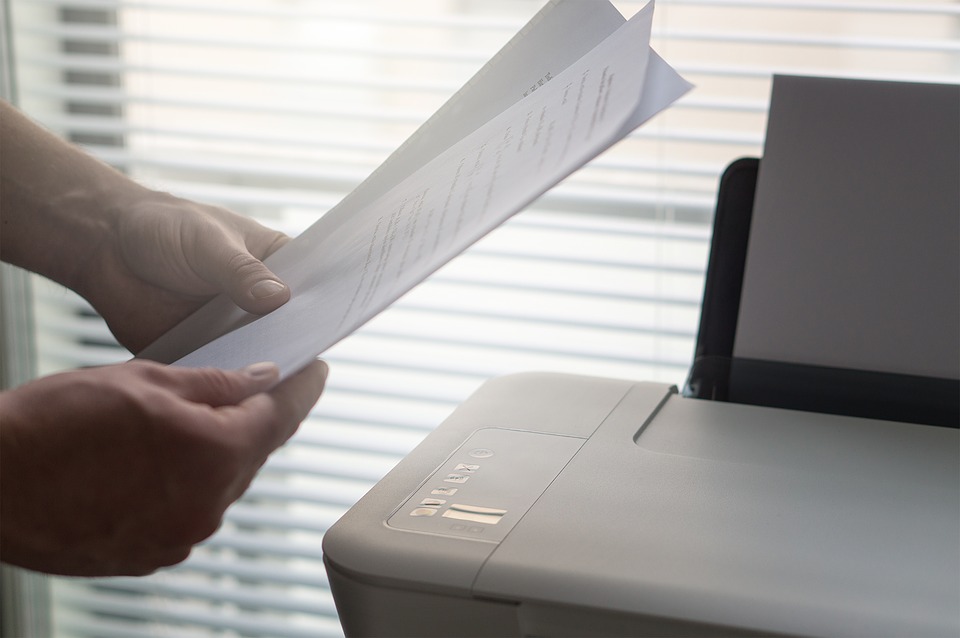
Protecting Sensitive Data: Don’t Forget the Copy Machine

Collecting personally identifying information from clients, such as names, social security numbers and credit card numbers, is common practice. This means that protecting against a data security breach is (or should be) a priority for virtually every organization. Unfortunately, when it comes to implementing data security measures, many organizations overlook a significant and somewhat obvious threat: the copy machine.

Commercial copiers have come a long way, and though they may not look it, they are powerful computers. Today’s generation of networked multifunction copiers are “smart” machines capable of copying, printing, scanning, faxing and emailing documents. To manage incoming jobs and heavy workloads, these copiers require hard disk drives capable of storing a lot of information. And, since they are often leased, returned and then leased or sold again, the Federal Trade Commission (FTC) recommends including copy machines in an organization’s data security plans.

Understanding security options is the first step to controlling the risks posed by copy machines. Most manufacturers offer data security features with their copiers, either as standard equipment or as optional add-on kits. These features typically involve encryption and overwriting.

Encryption is the scrambling of data using a secret code that can be read only by particular software. Copiers offering encryption encode the data stored on the hard drive so that it cannot be retrieved even if the hard drive is removed from the machine. Since encryption is typically an automatic feature with many copiers, specific steps or processes are generally not necessary.

Overwriting changes the values of the bits on the hard drive that make up a file by replacing existing data with random characters. By overwriting the drive space occupied by a file, its traces are removed, and the file can’t be reconstructed as easily. This is different from deleting or reformatting, which doesn’t actually alter or remove the data.

Depending on the copier, the overwriting feature may allow a user to overwrite after every job, periodically or on a preset schedule. Users may also be able to set the number of times data is overwritten; generally, the more times data is overwritten, the safer it is from being retrieved. The FTC recommends overwriting the entire hard drive at least once a month.

Finally, security measures must be taken before returning, selling or discarding a copy machine. Check with the manufacturer, dealer, or servicing company for options on securing the hard drive. Some may offer to remove the hard drive so that it can be disposed of, stored or destroyed pursuant to an organization’s own security policies and procedures. Others may undertake the task of overwriting the hard drive. These services may involve an additional fee, so check the lease or purchase agreement before deciding how to proceed.

Copiers are often the center of an organization’s operations. They have “seen” and saved countless documents with sensitive, confidential or personally identifying information. This is why protecting the copy machine should be a part of every organization’s data security plans.

Organizations should also consider protecting against data security breaches with insurance. Various insurance products are available to protect against privacy injuries, such as identity theft, resulting from security breaches and to cover the cost of complying with various data breach notice laws. Given the complexity of the risk, an experienced insurance agent should be consulted to ensure that proper coverage is obtained and that no gaps remain.

If would like to learn more about preventing data security breaches, take our online course Information Risk Management: Strategies for Preventing and Mitigating Information Security Breaches.

If you would like to learn more about insuring against data security breaches, contact us.

If you’d like to subscribe to our weekly newsletters please click here.

Protecting Valuable Business Papers and Records

Businesses often prepare an inventory of valuable property to simplify the process of filing an insurance claim in the event of a loss. For some reason, papers and records rarely make the list, even though losing these documents could disrupt business operations. Fortunately, insurance is available to cover the unbudgeted and often significant costs of dealing with a loss of business papers and records.

Valuable Papers and Records (VPR) coverage is a type of property insurance that covers the cost to research, replace or restore information that is lost when papers and records are damaged or destroyed. This insurance generally covers papers and records owned by the insured or in the insured’s care, custody and control, and it is often found in property insurance and small business owners’ policies. Large or unique risks may require a separate, stand-alone policy.

Notably, since VPR covers the cost of reproduction, it is not intended to protect items that cannot be replaced or duplicated because they will only be valued at the cost of blank material of substantially identical type. So, if an original Declaration of Independence is lost, the insurer will cover the cost of a blank piece of paper. To ensure maximum protection, irreplaceable items must be listed separately under the policy and possibly appraised so their value can be determined. In some cases, a separate insurance policy may be necessary.

VPR coverage is ideal for most businesses, including:

  • accountants
  • law firms
  • architects and engineers
  • physicians and medical offices
  • businesses that regularly produce and rely on important documents, such as files, receipts, invoices, lists, contracts, etc.

When shopping for VPR coverage, it is important to know what the policy does and does not cover. Although definitions may vary, ‘Valuable Papers and Records’ are generally defined to include documents, manuscripts and records that are inscribed, printed or written, including abstracts, books, deeds, drawings, films, maps and mortgages.

VPR policies do not typically cover money or securities. Importantly, once papers and records are reduced to electronic format or saved on some form of electronic media (CDs, hard drives, tapes, disks, etc.), they are generally excluded from coverage under a VPR policy, and need to be insured under an Electronic Data Processing policy.

The cause of the direct physical loss or damage to the papers and records must be a covered loss under the policy. Losses caused by errors in processing or copying, earth movement, war, neglect, nuclear hazard and various events involving water are typically not covered. Since even the broadest policy forms have exclusions, it is important to review them carefully.

Coverage limits should be enough to cover the cost of replacing or reconstructing lost information through research or transcription from other sources. While VPR generally covers items kept at the premises listed on the policy’s declarations, papers and records kept at an unlisted location may be subject to a lower limit (sub-limit) or may be excluded from coverage altogether. Make sure the policy lists all locations where papers and records may be stored.

In addition to VPR insurance, businesses may consider storing papers and records in a facility with the reputation, amenities and expertise needed to offer maximum protection. According to Carlos Diaz of Value Store it, “Not all storage facilities offer a comprehensive approach to this risk. Not all solutions are the same.” Some additional services to look for in a storage facility include:

  • Professional and responsive staff
  • Physical features/amenities (fire and security system, climate control, etc.)
  • Experience in handling and storing similar papers and records
  • Comprehensive Solutions (digitizing, e-filing, bulk shredding, etc.)
  • Ability to comply with applicable laws (HIPAA, Gramm-Leach-Bliley, etc.)

Be sure to visit the storage facility and check references, and before moving in, confirm coverage by checking the VPR policy. If it has lower limits for papers and records stored off-premises or excludes coverage altogether, the storage facility may need to be added to the list of covered locations.

Though protecting against the loss of papers and records is rarely high on the list of priorities, it should be. Those who underestimate the importance of papers and records may one day recognize they are not just valuable, they are invaluable.

If you would like to learn more about protecting your valuable papers and records, please contact us.

If you’d like to subscribe to our weekly newsletters please click here.

Will business owners buy insurance online?

Insurance companies such as Geico and Progressive started selling personal insurance online over a decade ago. So is it safe to assume that business insurance can also be sold online?

We decided to explore this endeavour and we’re not the only ones. Plenty of insurance agencies offer business insurance, but very few can offer clients an online quote.

Just because the tool is out there doesn’t mean business owners will use it. Getting a quote for business insurance is significantly more complicated than obtaining a personal quote. Some of the other agencies that are offering business quotes are approaching it quite differently than we did.

Hiscox is targeting small business with a page on their site dedicated to explaining the various types of insurance coverage small business owners need. Apogee lists the types of insurance they can quote instantly and features a video tutorial of how to use their quoting tool. Our tool lists all the instant quotes we offer including Property and Liability Quotes, Professional Liability Quotes, Business Auto Quotes, and many more.

The introduction of this tool to our website also created the need for a complete redesign. We call ourselves a full-service independent insurance agency and creating this tool made us realize the possibility for an online marketplace. If clients can get quotes online they should be able to service their policies online as well. That’s why we also created a service page which allows clients to manage their policies online

If successful, online quotes for business insurance could be a big game changer. It will be interesting to see how many more agencies begin offering business quotes online. Get a quote and let us know what you think.

At Setnor Byer Insurance & Risk, we are committed to offering you a seamless insurance experience. Check back with us periodically for informational updates about insurance news. If you have specific questions about our instant quoting tool or if you are ready to take action and would like to see how Setnor Byer Insurance & Risk can help, contact us.

If you’d like to subscribe to our weekly newsletters please click here.