Documenting Paid COVID-19 Leave Under the Families First Coronavirus Response Act

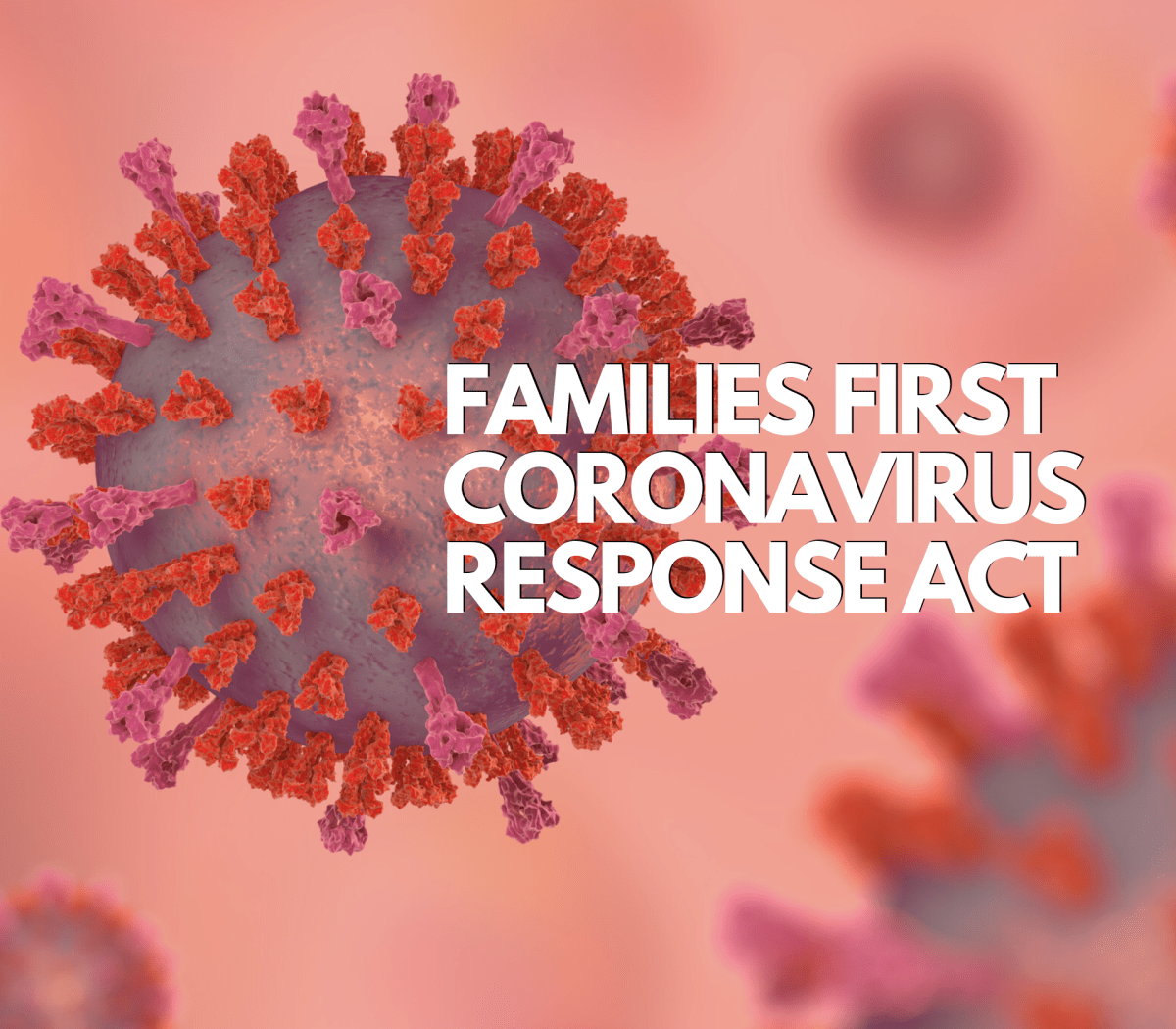
Employers are required to document employee requests for paid sick leave or expanded family and medical leave under the Families First Coronavirus Response Act, regardless of whether the request is granted or denied. Department of Labor FFCRA regulations specify the kind of information that employees must provide and that employers must document prior to commencing COVID-19 leave. According to the DOL, documentation for paid COVID-19 leave must include:

  • the employee’s name;
  • the dates for which leave is requested;
  • the reason for leave; and
  • an oral or written statement from the employee that he or she is unable to work because of the stated reason for leave.

Depending on the reason for paid leave, employees may need to provide additional information that must be documented by employers. An employee requesting paid sick leave because he or she is subject to a federal, state or local COVID-19 quarantine or isolation order must provide the name of the government entity that issued the order. An employee who has been advised by a health care provider to self-quarantine due to COVID-19 concerns must provide the name of the health care provider.

An employee requesting paid sick leave to care for an individual who is subject to quarantine or isolation order or who has been advised by a health care provider to self-quarantine must provide the employer with either the name of the government entity that issued the order or the name of the health care provider that advised the individual to self-quarantine. The “individual” requiring care must be an immediate family member, a person who regularly resides in the employee’s home, or a similar person with whom the employee has a relationship that creates an expectation of care.

An employee requesting paid sick leave or expanded family and medical leave to care for a minor son or daughter whose school or place of care is closed due to COVID-19 must provide:

  • school, place of care or child care provider that is closed or unavailable; and
  • a representation that no other suitable person will be caring for the child during the period for which the employee is requesting leave.

Employees must also provide any additional information required by the Internal Revenue Service for the employer to claim the tax credit for providing paid leave under the FFCRA. An employer is not required to provide FFCRA leave to an employee who fails to provide information or materials needed to support the employer’s claim for a tax credit.

Employers should proceed cautiously when presented with requests for COVID-19 leave to ensure compliance with the FFCRA’s requirements. This may include seeking counsel from a licensed professional. Please contact us for additional information about protecting your business during the COVID-19 pandemic.


How COVID-19 might change the Insurance Market

COVID-19 will change our world in many ways, some good and some bad. The same holds true for the insurance marketplace. While in the midst of the crisis, it is hard to predict, but the following considerations should be noted.

Property policy and the corresponding business interruption coverage terms will be more restrictive, with insurers making certain to exclude (or make clear) that certain triggers to loss will not be covered. These excluded triggers will be viruses, contagious diseases, pandemics, epidemics, bacteria, pollution and as many more terms as needed to make it terribly clear that the policies will not cover biological damages. While many policies have these exclusions now, there are efforts on the part of a few states and attorneys to void the terms of the current contract. While any action to void contract language on a wholesale basis will be met with challenges, the states that have taken this position might find that insurers retreat from those states and offer limited property protections.

Specialty markets are already launching virus insurance in the form of indemnity and parametrics protections. This type of insurance was offered years ago, but the price tag caused the failure of these insurers. They will certainly try to find a market. Premiums will be 1 to 5 percent of the limit sought. So, metropolitan areas would possibly pay $50,000 for a $1 million limit in coverage.

Workers compensation insurance, if certain COVID-19 cases are determined to be occupational in nature, could modify pricing for certain industries, such as healthcare and assisted living facilities.

Commercial general liability, directors and officers and employment practices may see pricing increases due to the possibility of increased litigation—employers now have additional laws to comply with and errors will certainly occur. Even in the absence of errors, certain segments of the workforce will seek to recover their economic losses by finding a soft target.

Health insurance should increase due to the COVID claims.

Certain classes of products liability will see additional scrutiny in the underwriting process, as many products that are being rushed to market may cause damages. While there is a new federal law that ‘holds harmless’ the organizations that are building these products, this law may not have the impact it needs, as these products will age in the system and insurers may be faced with future claims. Perhaps we will see insurance exclusions for such products.

America was heading into a hard market with most insurance lines were increasing in cost. With the new financial/investment troubles, combined with underwriting losses, and possible future decreases in demand for insurance, the market may become soft again, despite performance. In the longer term—two years plus—the market should significantly harden.

Businesses Planning Beyond COVID-19 Are Considering Epidemic-Specific Insurance Coverage

Coronavirus disease 2019 (COVID-19) has revealed that standard commercial insurance policies are not designed to protect against the financial impact of a global pandemic. Standard property policies, for example, do not cover business interruption claims in the absence of direct physical loss or damage to property. Policies that don’t already have broad virus exclusions soon will. To fill this coverage gap, insurers are offering new epidemic-specific insurance products that do not require physical property loss or damage to trigger coverage.

It is too late to purchase coverage for COVID-19 claims, but businesses struggling to survive this pandemic are looking for ways to protect against the next one. Epidemic-specific policies can be designed to meet the specific needs of various industries that are particularly vulnerable to pandemics, such as hospitality, tourism, manufacturing, retail, construction, healthcare and education. A number of coverage features are available, including:

  • business interruption coverage;
  • delay in start-up coverage;
  • modifiable claim triggers;
  • post-epidemic public relations;
  • epidemic expert consultation;
  • early prevention coverage;
  • temporary site closure coverage; and
  • event cancellation coverage.

Policies can be structured to pay claims on an indemnity or parametric basis. Unlike traditional indemnity policies that cover an insured’s actual losses, parametric policies pay a fixed sum upon the occurrence of an agreed-upon trigger, regardless of an insured’s actual losses. Epidemic-specific parametric policies use straightforward parameters or indexes, like infection or mortality rates in a defined area, to trigger coverage.

Given the unique nature of the risk and the customizable scope of coverage, the application and underwriting process for epidemic-specific policies is somewhat more involved than for standard policies. The process, however, is necessary to identify specific risks and modify coverages accordingly. Please contact us if you would like more information about epidemic-specific insurance coverage for your business.

Coronavirus Disease 2019 and Insurance Matters

The economic impact of coronavirus disease 2019 (COVID-19) is spreading like the virus itself. As the financial effects trickle down from global organizations to regional and local businesses, many are asking whether losses caused by COVID-19 are or will be covered by insurance. This isn’t an easy question because standard commercial insurance policies are not generally designed to protect against people getting sick. However, standard policies may provide limited coverage under the right circumstances.

Scenario 1: Employee contracts COVID-19

Workers’ Compensation Insurance generally covers occupational injuries and illnesses that arise out of work performed in the course and scope of employment. Employees contracting COVID-19 may be covered by workers’ compensation insurance if they were initially exposed to the virus in the workplace or while working. But, an employee’s employment, and the resulting exposure, must be the major contributing cause of contracting COVID-19.

Workers’ compensation coverage would likely turn on whether an employee could establish a causal link between their employment and their exposure to COVID-19. This may be harder for some employees than others. Those working in the healthcare industry, for example, may find it easier to establish the causal link than those whose employment does not clearly subject them to a greater risk of exposure than that to which the general public is exposed.

Scenario 2: Business operations interrupted due to COVID-19

Closed manufacturing facilities, quarantined workers, travel restrictions and the temporary suspension of imports and exports are just a few ways that a pandemic can disrupt crucial supply chains. The resulting disruption or interruption of operations poses perhaps the greatest financial risk to many businesses. Business Interruption Insurance, which replaces lost business income when a covered property loss causes a business to reduce or suspend its operations, may sound like the perfect solution, but it really isn’t.

Business interruption coverage is triggered when a covered peril causes damage to covered property. The damage must be sufficient to render the property unusable in its current state. A standard policy, for example, would cover lost business income if operations are interrupted because the manufacturing facility is destroyed by fire. Coronavirus-related claims are unlikely to cause the property damage needed to trigger business interruption coverage. Even if facilities (offices, warehouses) or inventory (raw materials, fish, produce) are rendered unusable by COVID-19 contamination, business interruption coverage would be unlikely because standard policies typically contain exclusions for bacteria, viruses and other pollutants.

Supply Chain Insurance is an option for businesses wanting broader business interruption coverage. Policies can be written to name specific suppliers, manufacturers, etc. and to cover negotiated perils, including pandemics. Unfortunately, the breadth of coverage provided by supply chain insurance comes at a cost. Policy premiums are often cost prohibitive, particularly for smaller businesses.

Scenario 3: Cancellation of business-related travel

Pandemics naturally stifle travel abroad, particularly to high-risk areas. Travel Insurance is designed to limit financial losses caused by various travel-related risks. Trip cancellation coverage, for example, reimburses pre-paid, non-refundable travel expenses if a trip is cancelled for a reason that is covered under the policy, such as an injury, illness or death involving you, a family member or a travel companion. Some insurers offer “cancel for any reason” coverage that should respond to pandemic-related cancellations. However, it’s important to note that travel insurance does not cover “disinclination to travel” cancellations caused by fear or concern over what might happen while travelling abroad.

Scenario 4: Cancellation of business function or special event

Event Cancellation Insurance, as its name implies, is designed to cover circumstances beyond your control that necessitate the interruption, abandonment or cancellation of a business-related function or event. Unfortunately, it’s too late now to purchase coverage for cancellations prompted by COVID-19. Policies issued prior to the outbreak, however, may cover cancellations, at least for now. Insurers are expected to add exclusions for pandemics and communicable disease as policies renew.

Scenario 5: Liability for negligently exposing others to COVID-19

Standard commercial general liability policies would likely respond to third-party claims regarding negligent release of or exposure to COVID-19.

Despite the potential for limited insurance coverage, it’s worth noting that standard commercial insurance policies are not designed to cover the spread of contagious diseases like COVID-19 or the flu. And, depending on the severity and duration of the COVID-19 outbreak, insurance companies are likely to add exclusions that eliminate the possibility of any coverage for COVID-19 claims. As a result, most businesses will not be able to rely on their standard insurance policies to adequately protect against coronavirus-related losses.