Florida employers may be paying less for workers’ compensation in 2023

By Anita Byer, Setnor Byer Insurance & Risk

Florida employers may be paying less for workers’ compensation insurance in 2023. The National Council on Compensation Insurance (NCCI) is recommending an overall average rate level decrease of 8.4 percent for next year. The proposed rate reduction filed with Florida’s Office of Insurance Regulation (OIR) would apply to new and renewal workers’ compensation policies in the voluntary market beginning January 1, 2023. If the OIR approves a rate reduction, it would be the seventh consecutive year workers’ compensation rates have gone down in Florida.

NCCI’s recommended rate reduction is based on claims experience data for the 2019 and 2020 policy years as of year-end 2021. According to NCCI:

  • favorable claims experience has been observed during these time periods;
  • Florida’s frequency of lost-time claims (injured employee receives wage replacement benefits) has generally declined over the most recent eight years; and
  • Florida’s average indemnity cost per case have been relatively consistent over time, while those for medical have been slightly more volatile from year-to-year.

NCCI’s recommendation was not influenced by the pandemic as its analysis did not include COVID-19 claims data. Nevertheless, NCCI’s assessment of possible pandemic-related impacts revealed that:

  • most COVID-19 claims are medical-only or indemnity-only and continue to be small (less than $1,500);
  • large claims (over $100,000) account for fewer than 2% of all COVID-19 claims, but more than 60% of total COVID-19 losses;
  • most claimants were employed in the healthcare industry;
  • the average age of workers with large claims is 55, which is 8-10 years older than that those with non-COVID claims; and
  • COVID-19 claims decreased significantly in 2021.

Despite recommending a rate reduction, NCCI cautions that inflation has the potential to influence the workers’ compensation system nationwide. Wage inflation is a concern as many workers, particularly those in leisure and hospitality, have seen significant pay increases recently. This directly impacts the cost of workers’ compensation insurance because payroll is used as the base to calculate premium. Rising medical claim costs (medical inflation) can also lead to higher premiums.

Remember, NCCI is only recommending an overall average rate level decrease of 8.4 percent in 2023. Florida’s Office of Insurance Regulation will analyze NCCI’s data and may request an adjustment to the current recommendation before holding a public hearing. Although optimism surrounds NCCI’s recommendation, next year’s workers’ compensation premium rates will not be known until Florida’s Office of Insurance Regulation issues a final order.

Please contact us about paying less for workers’ compensation insurance in 2023.

NOAA updates 2022 hurricane forecast; above-normal activity still expected

By Anita Byer, Setnor Byer Insurance & Risk

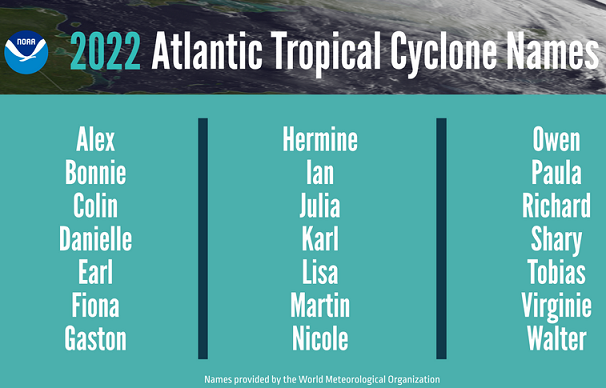
The National Oceanic and Atmospheric Administration recently updated its 2022 Atlantic hurricane season outlook. Despite relatively little storm activity so far, NOAA maintains that atmospheric and oceanic conditions still favor an above-normal 2022 hurricane season. “We’re just getting into the peak months of August through October for hurricane development,” cautions NOAA Administrator Rick Spinrad, Ph.D., “and we anticipate that more storms are on the way.” In other words, stay prepared and don’t let your guard down just yet.

NOAA initially forecast a 65 percent chance of an above-normal season, a 25 percent chance of a near-normal season and a 10 percent chance of a below-normal season. Since then, NOAA forecasters have slightly decreased the likelihood of an above-normal Atlantic hurricane season from 65 percent to 60 percent. The likelihood of near-normal activity increased from 25 percent to 30 percent, while the likelihood of a below-normal season remains unchanged at 10 percent.

NOAA’s updated outlook, which covers the entire six-month hurricane season, is also forecasting:

  • 14–20 Named Storms (was 14–21)
  • 6–10 Hurricanes (no change)
  • 3–5 Major Hurricanes (was 3–6)

According to NOAA, several atmospheric and oceanic conditions still favor an active hurricane season. La Niña conditions, which are predicted to remain in place for the rest of 2022, could allow the ongoing high-activity era conditions to dominate or slightly enhance hurricane activity. Weaker tropical trade winds, an active west African Monsoon and likely above-normal Atlantic sea-surface temperatures also set the stage for an active hurricane season consistent with the ongoing high-activity era for Atlantic hurricanes.

Hurricane season is long and maintaining preparations is hard, but the peak of tropical activity is not the time to let things slide. NOAA’s updated forecast should provide all the motivation you need to remain alert, prepared and ready to act if your home, business or boat is in the path of a storm. Remember, it only takes one hurricane making landfall to make it an active season for you. It’s better to be safe than sorry.

Please contact us about protecting your personal and business property against tropical storms and hurricanes.

New EEOC guidance limits employers’ ability to test employees for COVID-19

By Anita Byer, Setnor Byer Insurance & Risk

New guidance from the Equal Employment Opportunity Commission may limit an employer’s ability to test employees for COVID-19 going forward. This is a particularly significant development as COVID-19 transmission rates surge nationwide. On July 12, 2022, the EEOC updated a number of its Technical Assistance Questions and Answers, including those addressing reasonable accommodation, personal protective equipment and vaccinations. But what seems to be getting special attention is the EEOC’s new position regarding an employer’s ability to administer COVID-19 tests in the workplace under the Americans with Disabilities Act.

The EEOC addressed whether the ADA permits employers to administer a viral test (to detect the presence of COVID-19) when evaluating an employee’s presence in the workplace. Recall that the EEOC’s position at the outset of the pandemic was that the ADA standard for conducting medical examinations was always met for employers to conduct worksite COVID-19 viral testing. Today, the EEOC’s position is slightly different.

According to the EEOC, employers may still administer COVID-19 viral tests in the workplace, but only if the employer can show it is job-related and consistent with business necessity. Employers no longer have an absolute right to administer COVID-19 viral tests in the workplace. So, how does an employer establish business necessity?

Per the EEOC, employers use of viral testing will meet the business necessity standard when it is consistent with current guidance from the Centers for Disease Control and Prevention, the Food and Drug Administration or state/local public health authorities. According to the EEOC, possible considerations in making the business necessity assessment may include:

  • the level of community transmission,
  • the vaccination status of employees,
  • the accuracy and speed of processing for different types of COVID-19 viral tests,
  • the degree to which breakthrough infections are possible for employees who are “up to date” on vaccinations,
  • the ease of transmissibility of the current variant(s),
  • the possible severity of illness from the current variant,
  • what types of contacts employees may have with others in the workplace or elsewhere that they are required to work (e.g., working with medically vulnerable individuals), and
  • the potential impact on operations if an employee enters the workplace with COVID-19.

The EEOC also addressed antibody (serology) tests, which are used to determine prior infections. Unlike viral testing, the process for determining whether antibody testing is permissible in the workplace is much simpler. They aren’t.

According to the CDC, antibody testing may not show whether an employee has a current infection or has immunity from a prior infection or vaccination. Given these deficiencies, the EEOC has taken the position that antibody testing does not meet the ADA’s “business necessity” standard for medical examinations or inquiries. Therefore, requiring antibody testing before allowing employees to re-enter the workplace is not allowed under the ADA.

The EEOC’s updated business necessity assessment for viral testing introduces a new process for employers to follow. Those wanting to commence or continue viral testing of employees in the workplace should review their current policies and procedures to ensure compliance with the EEOC’s updated guidance. To reduce the likelihood of a testing-related ADA claim, employers should proceed cautiously and consult legal counsel if necessary. Employers should also carry Employment Practices Liability Insurance to cover the high cost of defending actual and alleged claims of unlawful conduct.

Please contact us for additional information about protecting your business against employment-related claims.

Florida condominiums preparing for initial structural integrity reserve study

By Anita Byer, Setnor Byer Insurance & Risk

Florida condominium associations are now required to complete a structural integrity reserve study for buildings that are three or more stories high. This new requirement was enacted during a special legislative session in response to last year’s Champlain Towers collapse in Surfside, Florida. The hope is that structural integrity reserve studies, coupled with Florida’s new milestone inspection requirement, will ensure aging buildings remain safe for continued use.

Structural integrity reserve studies must be completed at least every 10 years for each building on the condominium property that is three or more stories high. The deadline for existing associations to complete their initial structural integrity reserve study is December 31, 2024. The failure to complete the study as required by law is considered a breach of the board’s fiduciary duty.

So, what exactly is a structural integrity reserve study? It’s a study of the reserve funds that will be needed for future major repairs and replacement of the common areas based on a visual inspection. The visual inspection portion of the study must be performed by a Florida-licensed engineer or architect and must:

  • identify the common areas being visually inspected;
  • state the estimated remaining useful life and the estimated replacement cost or deferred maintenance expense of the common areas being visually inspected; and
  • provide a recommended annual reserve amount that achieves the estimated replacement cost or deferred maintenance expense of each common area being visually inspected by the end of the estimated remaining useful life of each common area.

The study must include the following items as they relate to the structural integrity and safety of the building.

  • Roof, floor, windows and foundation
  • Load-bearing walls or other primary structural members
  • Fireproofing and fire protection systems
  • Plumbing and electrical systems
  • Waterproofing and exterior painting
  • Any other item that has a deferred maintenance expense or replacement cost that exceeds $10,000 and the failure to replace or maintain such item negatively affects any of the foregoing items, as determined by the licensed engineer or architect performing the visual inspection portion of the study.

The new law makes it difficult for associations to avoid their obligation to maintain the structural integrity of buildings that are three or more stories high. For example, developers must complete a study before control of the association can be turned over to unit owners. And, beginning December 31, 2024, unit-owner controlled associations will not be able to vote to use reserve funds that are allocated to structural integrity for any other purpose.

Since this is a new requirement, condominium associations are strongly encouraged to consult with licensed professionals to avoid unintentional violations. Board members should also review their association’s Directors and Officers (D&O) insurance policy to confirm sufficient coverage. Setnor Byer Insurance & Risk can help condominium associations and board members identify, manage and insure their unique risks. Please contact our team to discuss the various risk management services we provide our condominium association clients, including our Division-Approved New Board Member Education.

What can employers do to help employees with surging inflation?

By Anita Byer, Setnor Byer Insurance & Risk

Inflation. Inflation. Inflation. That seems to be what everyone is talking about these days, and with good reason. According to the Bureau of Labor Statistics, the year-over-year consumer price index jumped 9.1 percent in June 2022. This is the largest 12-month increase in over 40 years, which is particularly significant for employers. You see, a substantial portion of today’s U.S. workforce has never experienced anything like this before. Many are expecting their employers to respond.

While employers aren’t necessarily required to respond to or otherwise address inflation with their employees, it may be something worth considering The Great Resignation has left many employers struggling to maintain adequate staffing levels, and employees concerned about money are more likely to leave in search of higher pay. So, addressing concerns about inflation may prevent defections from an already depleted workforce. Here are a few things employers have been doing.

Employee Benefits. Some employers are altering their benefits offerings to help mitigate the effects of rising inflation. For example, employers are offering options like daycare subsidies and student loan repayment assistance to help employees with budgeting and expenses at a time when prices are high and employees are looking for ways to cut costs.

Remote Work. Continuing to offer remote and hybrid work schedules is another way employers are coping with soaring inflation. Employees can repurpose cash that would otherwise be spent on gas or other travel-related expenses. It can also help decrease the cost of day-to-day things, like buying lunch or coffee at work.

Reevaluating Compensation. Though not always feasible, many employers are considering pay increases to offset record inflation rates. Bonuses are another option. Some employers are providing gift cards for food, gas or groceries to help employees make ends meet. Make sure any compensation changes comply with applicable wage and hour laws.

Maintaining Benefit Costs. Health care costs are also rising with inflation, but now may not be the best time to increase the employees’ share for health benefits. Employers looking to attract and retain top talent are avoiding raising copayments, deductibles and other out-of-pocket costs for employees. This allows employees to save money and allocate it to other essential needs.

Offering Retirement Benefits. Some employers are increasing education efforts surrounding retirement options. Retirement plans are often quick to be cut during times of financial difficulty, so employers who are promoting those benefits are likely to be viewed more favorably by current and future employees. Heightening the conversation around retirement options is a great way prove to employees that an employer cares.

In times of financial uncertainty, employees value employers that make an effort to ensure their stability. Responding to employees’ concerns about inflation can help employers retain their existing employees and even make it easier to recruit new employees.

5 things condominiums need to know about Florida’s new “milestone inspection” requirement

By Anita Byer, Setnor Byer Insurance & Risk

Florida enacted a new “milestone inspection” requirement for condominium associations to ensure aging buildings remain safe for continued use. The hope is that a statewide mandatory structural inspection requirement will prevent a repeat of last year’s tragic collapse in Surfside, Florida. Here are five things every condominium association board member needs to know about Florida’s new milestone inspection requirement.

1. What is a milestone inspection? A “milestone inspection” is a structural inspection of a building, including its load-bearing walls and primary structural systems, by a licensed architect or engineer. Its purpose is to confirm the life safety and adequacy of the building’s structural components and determine its general structural condition as it affects building safety. A milestone inspection should include, to the extent reasonably possible, a determination of any necessary maintenance, repair or replacement of any structural component of the building.

2. When is a milestone inspection required? Condominium associations must have milestone inspections performed for each building that is three stories or more in height by December 31 of the year in which the building reaches 30 years of age, and every 10 years thereafter. If the building is located within three miles of a coastline (direct contact with the open sea), a milestone inspection is required by December 31 of the year in which the building reaches 25 years of age, and every 10 years thereafter. A building’s age is based on the date the certificate of occupancy was issued.

Note that if a milestone inspection is required and the building’s certificate of occupancy was issued on or before July 1, 1992, the building’s initial milestone inspection must be performed before December 31, 2024.

3. What is a phase one milestone inspection? A milestone inspection consists of two phases. For phase one, a licensed architect or engineer performs a visual examination of a building, including its major structural components, and provides a qualitative assessment of the building’s structural condition. If no signs of substantial structural deterioration are found, then a phase two inspection is not required. “Substantial structural deterioration” means substantial structural distress that negatively affects a building’s general structural condition and integrity. It does not include surface imperfections (cracks, sagging, signs of leakage, peeling of finishes, etc.) unless they are a sign of substantial structural deterioration.

4. When is a phase two milestone inspection required? A phase two milestone inspection must be performed if any substantial structural deterioration is identified during phase one. The inspection may be as extensive or as limited as necessary to fully assess areas of structural distress in order to confirm that the building is structurally sound and safe for its intended use and to recommend a program for fully assessing and repairing distressed and damaged portions of the building. The phase two inspection may involve destructive testing at the inspector’s direction, though preference must be given to locations that are the least disruptive and most easily repairable.

5. What happens after a milestone inspection? Upon completion of a phase one or phase two milestone inspection, the architect or engineer must submit a sealed copy of the inspection report to the condominium association, along with a separate summary of material findings and recommendations. A copy must also be furnished to the appropriate local building authority. The inspection report must include all the information required by the statute. Condominium associations must then distribute the inspector’s summary to each unit owner and post a copy in a conspicuous place on the condominium property. Associations required to maintain a website must also make the full report and the inspector’s summary available online.

The new law makes each condominium association responsible for arranging milestone inspections and ensuring compliance with the law’s requirements. Associations are also responsible for all costs associated with the inspection. Since this is a new requirement, condominium associations are strongly encouraged to consult with licensed professionals to avoid unintentional violations. Board members should also review their association’s Directors and Officers (D&O) insurance policy to confirm sufficient coverage. Because when it comes to safety, there’s no room for error.

Setnor Byer Insurance & Risk can help condominium associations and board members identify, manage and insure their unique risks. Please contact our team to discuss the various risk management services we provide our condominium association clients, including our Division-Approved New Board Member Education.

New reporting requirement for Florida condominium associations

By Anita Byer, Setnor Byer Insurance & Risk

Did you know that a new reporting requirement for Florida condominium associations recently became law? It was enacted during a special legislative session in response to last year’s Champlain Towers collapse in Surfside, Florida. As a result, condominiums are now required to provide specific information about the buildings located on association property to the Division of Florida Condominiums, Timeshares and Mobile Homes. This must be done on or before January 1, 2023.

This information reporting requirement dovetails with Florida’s new mandatory structural inspection requirement for condominium buildings that are three or more stories high. According to the Florida Legislature, the imposition of a statewide structural inspection program for aging condominium buildings is necessary to ensure they remain safe for continued use. To further this goal, condominium associations must provide the following information to the Division.

  • The number of buildings on the condominium property that are three stories or higher in height.
  • The total number of units in all such buildings.
  • The addresses of all such buildings.
  • The counties in which all such buildings are located.

In addition to providing this information to the Division on or before January 1, 2023, condominium associations must also notify the Division of any changes within six months. This information, which must be provided in the form and manner set forth by the Division, will be used to create a list of condominium associations with buildings that are three stories or higher in height. The resulting list must be searchable by county and posted on the Division’s website.

Since this is a new requirement, condominium associations may want to consult with a licensed professional prior to the reporting deadline. Board members should also review their association’s Directors and Officers (D&O) insurance policy to confirm sufficient coverage. Mistakes are more likely to happen whenever you are doing something for the first time.

Setnor Byer Insurance & Risk can help condominium associations and board members identify, manage and insure their unique risks. Please contact our team to discuss the various risk management services we provide our condominium association clients, including our Division-Approved New Board Member Education.

Risk of workplace injuries higher among first-year employees

By Anita Byer, Setnor Byer Insurance & Risk

Did you know that the risk of workplace injuries is higher among first-year employees? A recent analysis of workers’ compensation claims by Travelers revealed that an employee’s first year on the job is often the most dangerous. Thirty-five percent of workplace injuries occurred during an employee’s first year. Thirty-seven percent of all workdays missed due to injury were taken by first-year employees. This obviously isn’t welcome news, but the resulting awareness is crucial to reversing this disturbing trend. Now, employers know to implement additional safety policies and procedures designed to reduce the risk of injury among first-year employees.

The first step to developing an effective safety program is to identify the most common causes of workplace injuries. According to Travelers’ analysis of more than 1.5 million workers’ compensation claims, the most common causes of first-year injuries were:

  • Overexertion (27%)
  • Slips, trips and falls (22%)
  • Struck by an object (14%)
  • Cuts and punctures (6%)
  • Caught-in or -between hazards (6%)
  • Motor vehicle accidents (6%)

The most common injuries suffered by first-year employees were:

  • Strains and sprains (38%)
  • Fractures (13%)
  • Contusions (95)
  • Cuts and puncture wounds (6%)
  • Inflammation (6%)
  • Dislocations (6%)

Though workplace injuries can and do happen anywhere and everywhere, the heightened risk of injury to first-year employees is more pronounced in specific industries. According to Travelers, the industries most affected by first-year injuries were:

  • Restaurants (53% of claims and 47% of claim costs)
  • Construction (48% of claims and 52% of claim costs)
  • Services (43% of claims and 38% of claim costs)
  • Transportation (39% of claims and 41% of claim costs)

Employers can do a number of things to reduce the risk of injury among first-year employees. Integrating safety into the hiring process, for example, makes employees aware of the risks and the organization’s emphasis on workplace safety. Employers can also perform a job-safety analysis or implement an accident analysis program to better understand the risks associated with specific jobs and tasks. The kinds of preventative measures may vary depending on the circumstances, but every workplace safety program must include regular safety training for all employees, beginning day one.

Workplace safety, for better or worse, begins at the top. Knowing how and why workplace injuries occur puts employers in a better position to prevent them. With an effective workplace safety program, employers can reduce the risk of workplace injuries and may even end up paying less for workers’ compensation insurance.

Please contact us to find out how an effective workplace safety program can reduce the cost of workers’ compensation insurance.

NOAA predicts above-average hurricane activity for seventh consecutive year

By Anita Byer, Setnor Byer Insurance & Risk

The National Oceanic and Atmospheric Administration released its predictions for the 2022 Atlantic hurricane season. For the seventh consecutive year, forecasters are predicting above-average storm activity. More specifically, NOAA predicts a 65 percent chance of an above-normal season, a 25 percent chance of a near-normal season and a 10 percent chance of a below-normal season. The Atlantic hurricane season runs from June 1 to November 30.

This year, NOAA is forecasting (with 70 percent confidence) a likely range of:

  • 14 – 21 Named Storms (winds of 39 mph or higher)
  • 6 – 10 Hurricanes (winds of 74 mph or higher)
  • 3 – 6 Major Hurricanes (winds of 111 mph or higher)

Forecasters at Colorado State University’s Tropical Meteorology Project are similarly predicting an active 2022 Atlantic hurricane season. They are forecasting 19 named storms, including 9 hurricanes and 4 major hurricanes. The probability of a major hurricane (Category 3-4-5) making landfall somewhere along the east coast of the United States (including Florida) is 47 percent. The probability of a Gulf Coast landfall (from the Florida Panhandle westward to Brownsville, Texas) is 46 percent.

The likelihood of increased activity is attributed to several climate factors, including the ongoing La Niña that is likely to persist, warmer-than-average sea surface temperatures and weaker tropical trade winds. An enhanced west African monsoon also supports stronger African Easterly Waves, which seed many of the strongest and longest-lived hurricanes during most seasons. In light of these factors, NOAA is urging everyone to understand their risk and to start preparing for what is expected to be an active hurricane season.

A lot is made of these annual predictions, but it only takes one storm to make it an active hurricane season for you. Start preparing now with Setnor Byer Insurance & Risk’s 2022 Hurricane Checklist. Our team of experienced and responsive professionals can help you find affordable options to protect your home and your business in the event of a hurricane.

Please contact us to discuss affordable insurance options to protect your personal and business property during the 2022 Hurricane Season.

DHS proposes Form I-9 overhaul and extends pandemic-related compliance flexibilities

By Anita Byer, Setnor Byer Insurance & Risk

The Department of Homeland Security is proposing an overhaul of its Employment Eligibility Verification form a/k/a Form I-9. This form is used by employers to verify the identity and employment authorization of every employee hired in the United States, regardless of citizenship. According to the Bureau of Labor Statistics, 78 million people were hired over the past twelve months, so any changes to Form I-9 will affect millions of employers and employees alike.

DHS is proposing the following changes to Form I-9 before the current version expires October 31, 2022. The public is invited to submit comments about the proposed revisions until May 31, 2022.

  • Compress Sections 1 and 2 from two pages to one page to reduce paper use and storage burden on employers. Section 1 (Information and Attestation) is completed by the employee. Section 2 (Review and Verification) is completed by the employer or its authorized representative.
  • Change Section 3 (Reverification and Rehires) to a supplement that provides three separate areas to enter reverifications and rehires within 3 years of the date of the initial execution of an employee’s Form I-9. Employers would only print and use the supplement as needed, further reducing paper use and storage burdens on employers.
  • Update the List of Acceptable Documents to include a link to List C documents issued by DHS and acceptable receipts that may be presented in lieu of a listed document for a temporary period.
  • Reduce and simplify the instructions from 15 pages to 7 pages, further reducing paper usage.
  • Remove electronic PDF enhancements to ensure that it can be completed on all electronic devices and is not software dependent.

DHS also extended the pandemic-related Form I-9 flexibilities until October 31, 2022. Per the initial flexibility announcement in March 2020, the requirement that employers inspect employees’ Form I-9 identity and employment eligibility documentation in-person applies only to those employees who physically report to work at a company location on any regular, consistent or predictable basis. An employee working exclusively in a remote setting due to COVID-19 are temporarily exempt from the physical inspection requirements until they undertake non-remote employment on a regular, consistent or predictable basis, or the extension of the flexibilities related to such requirements is terminated, whichever is earlier.

The broad use of Form I-9 means that any changes will affect all employers. Though transitioning to a new Form I-9 should not be too disruptive, employers need to recognize that confusion and error typically accompany change. Since the failure to ensure proper Form I-9 procedures may expose an employer to civil and possibly criminal penalties, steps must be taken to ensure a smooth and effective transition to the new Form I-9. Employers also need employment practices liability insurance (EPLI) to protect against the uncertainty that accompanies the enactment of any new law.

Please contact us to learn more about protecting your business with Employment Practices Liability Insurance.