Is Your Self Storage Facility Prepared for the Next Disaster?

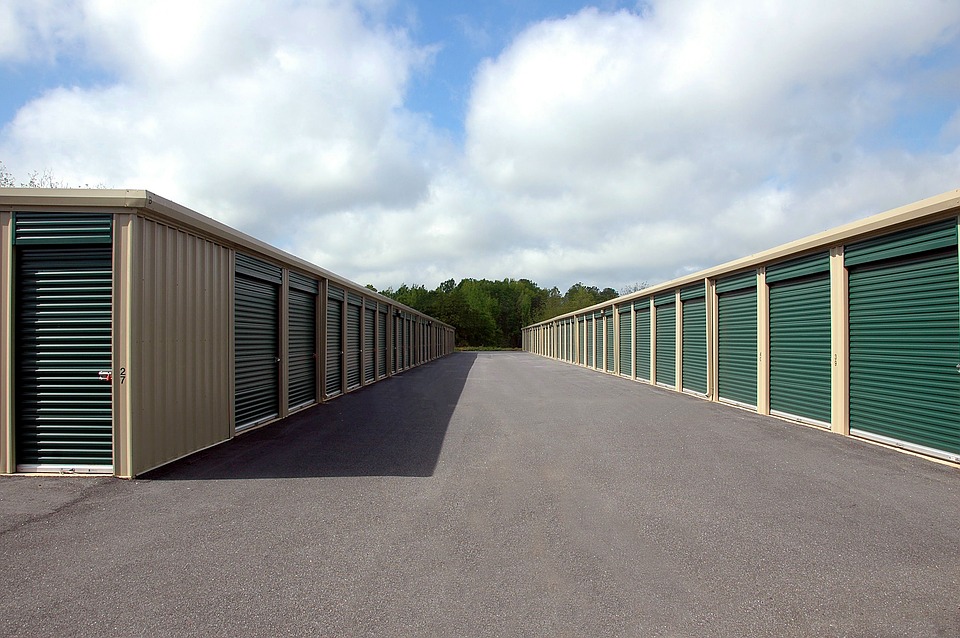
Preparation is the key to surviving a natural or human-caused disaster. Nevertheless, a survey by the Ad Council found that 62% of respondents did not have an emergency plan in place for their business. Since up to 40% of businesses affected by a natural or human-caused disaster never reopen, self storage facilities intent on surviving the next disaster must be prepared.

Natural or human-caused disasters can affect a self storage facility’s operations and finances by disrupting critical business functions and processes. During and after a disaster, a self storage facility may experience:

  • Lost or delayed sales and income
  • Increased expenses
  • Customer dissatisfaction
  • Repair and replacement costs

To prevent or limit the damage from a disaster, the Federal Emergency Management Agency (FEMA) recommends developing a preparedness program using these five steps.

Program Management. An effective preparedness program requires leadership, commitment and financial support. Beyond any applicable laws or regulations that may establish minimum standards, each self storage facility must determine how much risk it can tolerate and take steps to minimize the likelihood of exceeding that risk.

A preparedness policy should be developed by management and distributed to staff. The policy should define roles and responsibilities. Select employees should be given the authority to develop the program and keep it current. The policy should also define the general goals and objectives of the preparedness program, such as:

  • Protecting the life and safety of employees, tenants, visitors, etc.
  • Protecting facilities, physical assets and electronic information
  • Minimizing interruptions or disruptions of business operations
  • Protecting the facility’s brand, image and reputation

Planning. Preparing for a disaster requires planning. During the planning process, self-storage facilities should consider all threats, not just those that are most likely to occur. Special attention should be given to threats that are classified as probable and threats that could cause injury, property damage or business disruption.

Implementation. Implementation of a preparedness program includes identifying and assessing resources, writing plans and developing a system to manage incidents. An effective preparedness program should address:

  • Resource and incident management
  • Emergency response
  • Crisis communications
  • Business continuity
  • Information technology
  • Training

Testing and Exercises. An effective preparedness program requires testing and exercises to:

  • Train personnel
  • Reinforce knowledge of procedures, facilities, systems and equipment
  • Improve individual and organizational performance
  • Identify strengths
  • Reveal weaknesses and gaps

Program Improvement. Self storage facilities must take advantage of every opportunity to improve their preparedness program. After an actual incident, a critique should be conducted to assess effectiveness. Lessons should also be learned from incidents occurring elsewhere.

An effective preparedness program can control a number of risks associated with natural or human-caused disasters. An effective insurance program is needed to protect against those risks that cannot be controlled. Since self storage facilities face unique risks, it helps to have an insurance program that is specifically designed for the self storage industry.

If you would like more information about protecting your self storage facility, please contact.

Loss of Business Income Caused by Civil Authority Action

Public safety concerns may prompt civil authorities to take action to protect people and property. For example, a governor can issue a mandatory hurricane evacuation, a mayor can close roads during inclement weather, the police can enforce curfews during riots, or a fire department can restrict access to a neighborhood during a gas leak. Though these actions may be good for public safety, they may be bad for business.

In some cases, a Business Interruption policy’s Civil Authority coverage may offset income losses suffered during a civil authority action. Business Interruption, also known as Business Income, is a type of commercial insurance that protects against loss of income when a covered loss causes a business to reduce or suspend its operations. Civil Authority coverage is an additional protection that may be included in a Business Interruption policy.

A typical Civil Authority clause states: We will pay for the actual loss of Business Income you sustain and necessary Extra Expense caused by action of civil authority that prohibits access to the described premises due to direct physical loss of or damage to property, other than at the described premises, caused by or resulting from any Covered Cause of Loss.

Under this framework, the Civil Authority provision will not provide coverage unless all four of the following conditions are met.

  • The loss of business income must be caused by the civil authority action. There must be a direct relation between a civil authority action and a loss of income.
  • The civil authority action must prohibit access to the insured business. Courts have held that access must be completely prohibited in order to satisfy this requirement. A civil authority action that makes travel to an insured’s business difficult or inconvenient is not enough to trigger Civil Authority coverage.
  • The civil authority action must be caused by direct physical loss of or damage to property away from the insured’s premises. Unlike Business Interruption coverage, which requires loss or damage to the insured’s property, Civil Authority coverage requires loss or damage to property somewhere else. For example, an explosion at a nearby warehouse causes the fire department to shut down the area surrounding an insured business for two weeks.
  • It’s worth noting that claims for Civil Authority coverage often fail to meet this requirement because the decision to take civil authority action is not caused by direct property damage, but by the desire to prevent it. Courts have denied coverage for losses caused by civil authority actions that were designed to prevent future damage rather than address existing property damage, such as pre-hurricane evacuation orders and curfews imposed to prevent looting and rioting. According to one court, Civil Authority coverage is designed to address situations involving civil authority action that is taken after damage occurs.
  • The loss or damage to property away from the insured’s premises must be caused by or result from a loss that is covered under the insured’s policy. A business without hurricane insurance, for example, would not be covered if a civil authority action was caused by hurricane wind damage.

Though many aspects of Civil Authority coverage are relatively standard, there are some variations among insurers and policy forms. For example, some policies provide that coverage will not begin until 24 hours after the civil authority action was taken, and others require 72 hours. The duration of Civil Authority coverage may also be different.

Given the complexity of Civil Authority coverage under a Business Interruption policy, an experienced and reputable insurance agent should be consulted to help identify needs and evaluate options.

If you have any questions or would like to speak with one of our Risk Management Professionals, please contact us.

If you would like to subscribe to our newsletters please click here.

Are You Ready for the 2014 Hurricane Season?

For those living or working in the Atlantic hurricane region, June 1st rarely passes unnoticed. At Setnor Byer Insurance & Risk, we understand that preparing for hurricane season is rarely easy and often stressful. We also understand that a lack of awareness and preparation can lead to disaster, and that the best way to limit the risks posed by hurricanes is to take preventative steps.

The National Oceanic and Atmospheric Administration’s 2014 Atlantic Hurricane Outlook predicts a 50% chance of a below-normal season, a 40% chance of a near-normal season and only a 10% chance of an above-normal season. According to NOAA, the 2014 hurricane season will bring:

  • 8 – 13 Named Storms (winds of 39 mph or higher)
  • 3 – 6 Hurricanes (winds of 74 mph or higher)
  • 1 – 2 Major Hurricanes (winds of 111 mph or higher)

These numbers are near or below the 1981 to 2010 seasonal averages of 12 named storms, six hurricanes and three major hurricanes. “Though we expect El Niño to suppress the number of storms this season,” NOAA administrator, Dr. Kathryn Sullivan, reminds us that, “it’s important to remember it takes only one land falling storm to cause a disaster.”

The 2014 hurricane season will also see changes in the information provided by the National Hurricane Center, including:

  • A smaller tropical cyclone forecast cone
  • The addition of a Potential Storm Surge Flooding Map, which will highlight areas where storm surge inundation could occur and the height above ground level that the water could reach
  • The elimination of the Intensity Probability Table due to misleading estimates of landfall intensity and excessive reliance on these estimates by the public

Though different situations call for different measures, here are some tips that can help you weather a storm.

Before the Storm

  • Monitor the news to allow time to prepare.
  • Identify all tools and equipment that will be needed to secure property before a storm and limit the damage after the storm (flashlights, batteries, caulking, tarpaulins, sandbags, cutting and fastening equipment, etc.).
  • Clear drains and downspouts to minimize the risk of flooding.
  • Move items inside.
  • Unplug electrical equipment and move property away from windows.
  • Check and secure all documents and records.
  • Take or update photographs of real and personal property.
  • Gather insurance policies and agent/insurer contact information.

After the Storm

  • Only after it has been declared safe to do so, take reasonably necessary steps to protect against any further property damage.
  • Report fallen power lines to power company immediately—stay away from them!
  • Check exterior walls and roof for damage from wind, rain, flying objects and rising waters (flood insurance).
  • Check all interior perimeter walls, floors and roof for leaks and water damage.
  • Document all damage with photographs and video.
  • Prepare detailed damage reports.
  • Call your insurer or agent as soon as possible to report damage.

While preparing for Hurricane Season is never easy, our team of experienced and responsive professionals can work with you to make sure that your personal and business property are protected in the event of a hurricane. With over 30 years of experience dealing with tropical storms and hurricanes, Setnor Byer Insurance & Risk has a long history of helping our clients prepare before the storm and, more importantly, providing support through the process of rebuilding after the storm.

If you would like more information about protecting your personal and business property during the 2014 Hurricane Season, please contact us.

If you’d like to subscribe to our weekly newsletters please click here.

Condominium Association 2013 Legislative Update

The 2013 legislative session saw relatively little activity involving Florida’s Condominium Act. Nevertheless, laws have changed, and that’s always important. Here is a brief summary of some of the statutory amendments.

Insurance

The Condominium Act identifies property that must be insured by the association and property that is the responsibility of each unit owner. Unfortunately, the statute was not clear in distinguishing insurance obligations from regular maintenance and repair obligations. As a result, unit owners often believed that their association had an obligation to repair property (usually air conditioning units) because it was covered by the association’s insurance.

The 2013 amendment clarifies that the association is responsible for property covered by the association’s insurance policy if it was damaged by an insurable event, as opposed to regular wear and tear.

Financial Reporting

Condominium associations have annual financial reporting requirements. The type of financial statement an association must prepare depends on its total annual revenues. The 2013 amendment made the following changes to the statutory revenue thresholds used to determine an association’s financial reporting requirement:

  • Report of Cash Receipts and Expenditures: total annual revenues are less than $150,000 (was $100,000)
  • Compiled Financial Statement: total annual revenues are $150,000 or more, but less than $300,000 (was $100,000 – $200,000)
  • Reviewed Financial Statement: total annual revenues are $300,000 or more, but less than $500,000 (was $200,000 – $400,000)
  • Audited Financial Statement: total annual revenues are $500,000 or more (was $400,000)

Associations operating fewer than 50 units, regardless of annual revenues, must prepare a report of cash receipts and expenditures. Under the old law, this requirement applied to associations operating fewer than 75 units.

Official Records

Unit owners have a right to inspect and copy the association’s official records. Associations are now required to let unit owners make electronic copies of these records with portable devices, including smartphones, tablets, portable scanners or any other technology capable of scanning or taking photographs.

Member Directories

The Condominium Act prohibits associations from disclosing unit owners’ personally identifying information. However, associations are now allowed to publish and distribute to unit owners a directory containing the name, address and telephone number of each unit owner. Unit owners can exclude their telephone number from the directory by making a written request to the association.

Elevator Safety

Condominiums covered by Florida’s Elevator Safety Act were exempt from having to comply with Elevator Safety Code updates until either July 1, 2015 or until the elevator is replaced or requires major modification, whichever occurs first. The 2013 amendment removed the July 1, 2015 deadline. Accordingly, covered condominiums will not have to comply with all updated provisions of the Elevator Safety Code until their elevators require major modification or are replaced.

Some of the other 2013 amendments address board member terms, suspensions from using common elements and board member recalls. It is important for those serving on their condominium board to become familiar with all of the 2013 statutory amendments.

To learn more about your obligations as a board member, take our affiliate’s recently updated online course Condominium Operations: A Primer for Board Members, which has been approved by the Division of Florida Condominiums, Timeshares, and Mobile Homes.

If you would like to discuss how Setnor Byer Insurance & Risk can serve you and your association, please contact us. Clients of Setnor Byer’s Condominium Program enjoy access to various risk management services, such as Setnor Byer’s Risk Management Group and Unit Owners’ Report Line, as well as our affiliate’s Board Member Education Certification,

If you’d like to subscribe to our weekly newsletters please click here.

Are You Ready for the 2013 Hurricane Season?

For those living or working in areas at risk of experiencing a tropical storm or hurricane, June 1st rarely passes unnoticed. At Setnor Byer Insurance & Risk, we understand that preparing for Hurricane Season is rarely easy and often stressful. We also understand that a lack of awareness and preparation can make a bad situation worse, and that the best way to limit the risk is to take preventative steps now.

The National Oceanic and Atmospheric Administration (NOAA) estimates a 70 percent probability that the 2013 Hurricane Season will bring:

  • 12 – 18 Named Storms (winds of 39 mph or higher)
  • 6 – 10 Hurricanes (winds of 74 mph or higher)
  • 3 – 6 Major Hurricanes (winds of 111 mph or higher)

These estimates indicate that activity will exceed the seasonal average of 11 named storms, six hurricanes and two major hurricanes.

According to NOAA administrator Jane Lubchenco, Ph.D., “the United States was fortunate last year. Winds steered most of the season’s tropical storms and all hurricanes away from our coastlines…However we can’t count on luck to get us through this season. We need to be prepared, especially with this above-normal outlook.”

Though different situations call for different measures, the following tips can assist you in developing your own plan for dealing with the 2013 Hurricane Season.

Before the Storm

  • Monitor the news to allow time to prepare.
  • Identify all tools and equipment that will be needed to secure property before a storm and limit the damage after the storm (flashlights, batteries, caulking, tarpaulins, sandbags, cutting and fastening equipment, etc.).
  • Clear drains and downspouts to minimize the risk of flooding.
  • Move items inside.
  • Unplug electrical equipment and move property away from windows.
  • Check and secure all documents and records.
  • Take or update photographs of real and personal property.
  • Gather insurance policies and agent/insurer contact information.

After the Storm

  • Only after it has been declared safe to do so, look for any property damage and take reasonably necessary steps to protect against any further damage.
  • Report fallen power lines to power company immediately–stay away from them!
  • Check exterior walls and roof for damage from wind, rain, flying objects and rising waters (flood insurance).
  • Check all interior perimeter walls, floors, and roof for leaks and water damage.
  • Document all damage with photographs and video.
  • Prepare detailed damage reports.
  • Call your insurer or agent as soon as possible to report damage.

While preparing for Hurricane Season is never easy, our team of experienced and responsive professionals can work with you to make sure that your home, cars and property are protected.

For over 30 years, Setnor Byer Insurance & Risk has been helping our clients prepare before the storm and rebuild after. Our clients benefit from a Hurricane Insurance Program that includes an emergency and after hours claims service hotline in addition to guidance for disaster planning.

If you would like more information about how Setnor Byer Insurance & Risk can help you prepare for the 2013 Hurricane Season, contact us.

If you would like to subscribe to our newsletters please click here.

Lowering Your Hurricane Insurance Premium

Many homeowners believe that switching insurance companies is the only way to save on their windstorm (hurricane) insurance premiums. Unfortunately, companies with the lowest premiums may not have enough money to pay claims after a storm. Rather than buy insurance from an insurance company without the capital to pay losses, homeowners can reduce their premiums by taking advantage of wind mitigation credits.

Wind mitigation credits are premium discounts based on the ability of a home to tolerate strong winds without experiencing damage. According to one estimate, if homes were constructed in a manner beyond that which is currently required by building codes, the average losses per year would be reduced by over 70%. This is why increasing a structure’s wind resistance, or hardening, allows homeowners to save on their windstorm insurance premiums.

Homes built or retrofitted to incorporate specific mitigation features designed to increase wind resistance may qualify for wind mitigation credits. Insurance companies consider numerous factors when determining the availability and amount of wind mitigation credits, such as:

  • Roof Covering: Is the roof covered by shingles, clay tiles, metal, built-up tar, membrane, gravel or other material that meets or exceeds building codes?
  • Secondary Water Resistance (SWR): Is there a layer of protection between the roof covering and the roof decking (plywood, metal panels, etc.) that protects the home if the roof covering blows off?
  • Roof Deck Attachment: How is the roof decking connected to the roof trusses or rafters?
  • Roof-to-Wall Attachment: How are the walls connected to the roof trusses or rafters (toe nails, clips, single or double wraps, etc.)?
  • Roof Geometry: What is the shape of the roof (hip roof, flat roof, etc.)?
  • Opening Protection: How are openings, such as windows, doors and skylights protected against flying debris (shutters, hurricane glass, etc.)?

Mitigations features must meet very specific guidelines to qualify for credits. For example, the availability of a wind mitigation credit can depend on the size, spacing and number of nails used in the roof deck or roof-to-wall attachment. Credits will not be awarded unless there is strict compliance with applicable building codes, laws, regulations or standards.

The first step to getting a wind mitigation credit is to get the home inspected. Wind mitigation inspections, which typically cost less than $250 and take about an hour, are often done by licensed building inspectors, contractors, architects and engineers. However, since state laws and specific insurance company requirements may dictate who is qualified to perform wind mitigation inspections, be sure to confirm licenses and check references before hiring an inspector.

Those who do not qualify for one or more wind mitigation credits should consider the cost of hardening their homes and the anticipated savings. Since the amount of wind mitigation credit typically depends on various factors, including state laws and specific insurance company requirements, the assistance of a qualified insurance agent may be needed to estimate premium savings. If the math does not justify retrofitting, homeowners should keep wind mitigation credits in mind the next time general repairs are being done, such as roof and window repair or replacement.

If you would like to learn more about wind mitigation credits or windstorm insurance, contact us.

If you would like to subscribe to our newsletters please click here.

Insurance Agent Experiences the Need of Insurance Firsthand

One of the most common phrases you’ll hear from an insurance agent is don’t wait until it happens to you to get coverage.

On Sunday, February 3rd our very own agent, Pamela Malfavon, noticed smoke coming from the balcony below her 6th floor apartment at Midtown 24. When she looked down and saw that there was a fire, she immediately called 911 to report it. Afterward, she went downstairs to alert a Midtown 24 employee that there was a fire in the building.

The fire was put out before causing any severe damage, and fire fighters speculated that it may have been caused by a cigarette or a candle. Even more of a mystery to all tenants is who will pay for the damage to the building and is the property that was lost in the fire covered?

The damage to the exterior of the building would be covered by Midtown 24’s Property Insurance. However, this policy does not cover any damage to an individual’s property. That would have to be covered under a tenant’s insurance policy IF they opted-in for coverage.

Most apartment complexes require their tenants to purchase renter’s insurance to protect the landlord against injuries to visitors and guests. Additionally, these policies will reimburse the landlord for damages sustained to the interior structure of the tenant’s unit. Let’s hope Midtown 24 secured appropriate proof of insurance for the tenant on the 4th floor!

This still leaves the question of the property lost in the fire. Many tenants overlook or minimize the value of their personal belongings, such as furniture and electronics, and decline the option to protect their contents. These belongings, if insured, will be protected against:

  • Water Damage
  • Fire Damage
  • Vandalism or Theft
  • Falling Objects
  • And many more


Contact us. 

If you’d like to subscribe to our weekly newsletters please click here.

Hurricane Season 2008: Insureds Hope for the Best, Prepare for the Worst

With two catastrophic hurricane seasons behind us, we’ve all learned that insurance is not something that should be taken lightly. In fact, with the repeating cycle of hurricane seasons, concern over a repeat of 2005’s Wilma has become foremost in our minds, prompting discussion regarding property valuations, the meaning of certain language in policies, the application of deductibles and coinsurance, and a host of other issues.

Hurricane preparation is not unlike the sports philosophy of “the best offense is a good defense,” and Setnor Byer Insurance & Risk is available to assist insureds in their hurricane preparation.

A critical priority of each insured should be an analysis of their real and personal property values, and discussion of level of protection they need or want. The price of materials and labor has increased dramatically in the past few years, and many insureds are finding that their properties are significantly under-insured. Furthermore, due to a common clause in policies known as coinsurance, which restricts reimbursement for property that is underinsured, it is critical that real property be properly valued.

Commercial insureds need to develop mechanisms to recover or avert business interruptions due to storms and other catastrophic events. Clearly, insurance can be prohibitively expensive if an insured looks to transfer all such risks to its carrier. While interruptions attributed to direct damage to insured property are insurable and generally affordable, the cessation of business from damage to other properties (including overhead transmission lines or water and communications systems) are often uninsurable at a reasonable cost.

Deductibles should also be given some attention, particularly deductibles that are expressed as a percentage of Total Insured Values (TIV), which can cause the multiplication of the percentage by anything from all insured locations, whether damaged or not, to a more limited approach of multiplication by the TIV of a particular building or coverage line.

Debris removal, increased costs of construction due to ordinances, and demolition of undamaged premises is not necessarily standard within insurance contracts. These items need to be discussed more fully. Power surges, spoilage of food, and damage to property due to changes in temperature are all risks that need to be addressed, whether insured or not.

And, what about Flood Insurance? There are some insureds that are falsely lulled into a sense of comfort that their property is not prone to flooding, relying on a federal mapping system that is flawed. Although FEMA has undertaken a massive effort to identify and map high flood zones, the existing mapping system is aged and may not accurately reflect flood hazard conditions. Not only does this potentially create a false sense of security but it also places buildings, infrastructures, and individuals at risk because flood hazards are dynamic and may change rapidly due to community development and natural processes in the watershed. Thus, the peril of flood should be seriously considered.

Insureds who fair well after a catastrophe are those that are prepared, understanding when and to what degree insurance can be a reliable instrument, and what other alternatives are available to finance or limit loss. Here at Setnor Byer we are committed to helping you work past what may be another tumultuous hurricane season.

“After Hurricane Wilma, serious thought and numerous sessions with our service staff and clients revealed a few flaws in our catastrophe response, even with a detailed contingency plan that included satellite communication, remote technology systems, and a 24/7 emergency claims facility in Arkansas. For this reason, we’ve dedicated resources to building an alternative response system in our new Baldwin Park, Orlando facility. Now, more than ever, we are prepared to be there after the storm.”

An Independent Agent’s Role In The Aftermath Of Hurricane Wilma

We are an Independent Insurance Agency, and not unlike most of our South Florida neighbors, suffered during the aftermath of Hurricane Wilma. We were left with damaged property, no electricity, an interrupted business, and employees that, each, suffered similar consequences. Yet, we were not permitted the freedom to be unprepared and the time to recover; after all, we were Insurance Agents, and assumed a duty, when we took our client’s premiums, to be there After the Storm.

Our Catastrophe Recovery Plan (CAT Plan), while not perfect, contained elements that served our employees and community, well. Even with our failures, we managed to be available to our community before the storm and after, to discuss recovery and manage claims. This commitment required that we, first, take care of our own so that they, in turn, would be available to take care of our clients.

Our CAT Plan, a sixty page document, included, among other things, strategies for preserving property, redundant resources, data preservation, communications (with satellite telephones), and access to client data. It included systems and methods to reach all personnel, confirm their status and offer assistance, if needed. The Plan included:

  • Continuity of pay, and provided for flexible work schedules to help each employee cope with their personal “home and health” emergencies;
  • Gas allowances for anticipated gas shortages;
  • emergency “cash” loans;
  • A 24-hour Emergency Claims and Service Line located out of state for service during periods of interruption;
  • An on-call mobile office with generators, computers, Internet services, and satellite communications;
  • A 24-hour Employee Resource Line to communicate news and status to employees, including anticipated recovery dates, as well as status of operations and co-workers.

In the days after Hurricane Wilma hit on October 24, 2005, these strategies served us well; however, days of coping turned into weeks. Wilma had slashed across Florida as a Category Two storm, causing 35 deaths, widespread damage estimated in the range of 25 billion and massive devastation to critical infrastructure.

Thanks to our CAT Planning team, however, and a wonderful group of loyal employees, our client services were fully operational. As Independent Agents, we not only insure our clients’ properties and business continuity, but assist them in the development of their own catastrophic recovery planning. We are experts at this, correct? Didn’t our industry, after Hurricane Andrew, develop insight into effective (and ineffective) catastrophe planning and recovery? Well, yes and no. With all our preparation, the greatest value derived was from what went wrong, and the lessons we learned from our failures – lessons we shared with our employees, our clients and our community.

After debriefing, we realized that even though we had taken great steps to prepare for catastrophic situations, more planning was still needed. After discussion, we understood that full (effective) redundancy required a fully staffed facility in another part of Florida (or, was that New Mexico?). We’ve built one in Orange County, Florida. We now operate, solely, with digital data. Our data is contained in-house, and backed up (via the internet) to a secured, off-premises site. Our phone systems are networked, our paper is scanned…

At the threat of another storm, and each storm thereafter, members of our senior staff are prepared to travel to our Orange County location, wait it out, and respond, if needed, on behalf of our South Florida community. We plan to do our part during and after the next storm, share our successes and lessons, and be around to honor our commitments.

Will it Ever End?: An Insurance Perspective on the 2004 Hurricane Season

Charley, Frances, Ivan, Jeanne- Floridians have had to indulge a few unwelcome guests as Mother Nature unleashed one hurricane after another within a two month period. The Sunshine State, to some, has been aptly renamed the Hurricane State. The Hurricane Season has yet to end, and Florida has already seen unprecedented activity and direct insured losses that may very well exceed 20 billion dollars.

Prior to this season, Andrew was the last major hurricane to hit Florida. The costliest natural disaster in U.S. history, Andrew caused $26.5 billion1 in damages, but this season’s hurricanes, adjusting for the time value of money, may get close to that figure. After all, hurricane season is not over yet, and already there are estimates that more than one in five homes in the State have been damaged. The number of claims are expected to hit 2 million, far surpassing Andrew’s 700,000.

Now, new questions arise from within the industry and Insureds, including concerns about the impact on future premiums and market capacity. There is also some uneasiness regarding carrier insolvency. And, most importantly, there is the ultimate uncertainty as to whether our State and citizens can “weather the next storm.”

While there are many issues to contend with, Tom Gallagher, Chief Financial Officer of Florida’s Department of Financial Services, says that the Department is ready to assist residents. “To help Floridians with these disasters, we have ordered insurance companies not to cancel or non-renew homeowners policies through the hurricane season. In addition, no insurance policy may be cancelled solely as a result of claims filed because of these storms.” This is very good news to Florida policyholders. Gallagher further asserts that insurance rates should not go up just because of the storms. He says, “Rates gone up just for rates’ sake because of storms? That is not going to happen.”

Still, others disagree. Bob Hartwig, Chief Economist for the Insurance Information Institute, predicts “there’s going to be pressure on rates in Florida. The industry’s resources need to be bolstered.” Industry experts report, though, that effective and aggressive catastrophic modeling and financing throughout the past decade will leave most of Florida’s insurers financially sound, even after the final numbers are in. Rate increases should be moderate and will largely be due to price increases within the reinsurance marketplace, which offers insurance products to primary insurers to fund losses in excess of specified retained amounts. “Hurricane Andrew was a great industry lesson,” said Karlene Lawrence of Setnor Byer Insurance & Risk, “after 1992, insurers increased rates to rebuild surplus and fund future losses, developed stringent underwriting standards, and built reliable and affordable risk financing programs, in part, due to the formation of the Florida Hurricane Catastrophe Fund, which reimburses insurers for a portion of their hurricane losses.”

It also should be noted that the property and casualty industry has had record performance in the most recent quarters, with a growth in surplus, and 15% return on equity. This recent financial performance is, in part, why the industry has the capacity to pay the losses caused by the storms.

So far, it seems that the insurance companies, although overwhelmed by the volume of losses, are doing their part in financing our State’s recovery. Of course, there are also costs associated with the four disasters and recovery that are either uninsured, or not necessarily a subject of insurance, such as the downturn in a local economy.

The question arises, often, however, as to whether insurance can or should finance a larger percentage of losses. In fact, many insureds are questioning the policies they’ve purchased, concerned with either an uninsured loss, or for those not damaged by the storm, questioning the extent to which their coverage would have responded. Commercial policies are a cumbersome and complicated reading, at best, but a reasonable perspective to advance regarding the extent to which an Insured should rely on insurance for funding a loss, is that if insurance is available, and affordable, it should be considered, and weighed against the probability and severity of a potential loss.

Now, after the storm, people should consider reviewing their insurance choices, and along with their Agent or Consultant, revisit their financing options, and seriously consider alternatives for financing certain risks. For some, affordable alternatives to insurance to finance loss may be a month’s worth of income in reserve. For others, it may be a satellite back-up for communications systems, generators to maintain power, alternative premises to operate from, or redundancy in suppliers or vendors.

Unfortunately, many events, whether precipitated by a storm or other catastrophe, are not covered within the basic structure of most policies, particularly, commercial property policies; and the insurance, if available, is often cost prohibitive, particularly when one considers the number of years of increased premiums one would have to expend for an unknown loss of some unknown magnitude, triggered by any potential number of events.

Although not a comprehensive list, a brief overview of a standard commercial property policy reveals that none of the following are guaranteed, automatic offerings, and each insured should take the time to address recovery systems for dealing with potential loss resulting from : spoilage of perishable stock, whether from off-premises power or water failures, or a machinery accident; profits in finished stock; rising waters (flood); electrical surge; reproduction of electronic data; order by civil authorities that interrupt business when adjacent properties are not damaged; foundations, underground pipes; outdoor or detached properties; demolition; debris removal; and ordinances or laws that direct the destruction of a property or requires a reconstruction to newer code.

Business Interruption Insurance, often viewed as a panacea for income replacement, is actually quite restrictive in most offerings, and when broadened to extend to respond to a broader set of occurrences, can actually become unaffordable. This insurance, in the form generally provided under standard industry policies, requires damage to an insured location or property. Damage to other properties, whether the property of a vendor upon which the insured relies on for supplies, or off-premises utilities, are not automatically included. Additionally, the business interruption form, as generally purchased, provides for little if any payment after a business is repaired. What of the weeks and months to rebuild a customer base? Business Interruption from the breakdown of equipment, whether the breakdown emanates from the machine or an off-premises utility, is not an automatic offering, nor is business interruption from damage to electronic data. A bit overwhelming, yes?

So, before the next Hurricane Season, each Insured should consider requesting a clarification of their policy language, and what operating and recovery alternatives or redundancies they should build into their enterprise in order to guarantee their survival in the event of a catastrophe. For an in-depth analysis of the risks that affect you and your business, whether an Insured or friend of Setnor Byer Insurance & Risk, call our offices at 1-888-253-8498.