Gender Identity and Sex Stereotyping Under the Affordable Care Act

Did you know that the Affordable Care Act (ACA) contains a civil rights provision? The ACA prohibits discrimination on the basis of race, color, national origin, sex, age or disability in certain health programs and activities. Despite becoming law in 2010, final implementation rules were not issued by the Department of Health and Human Services (HHS) until May 2016. On July 18, 2016, the Nondiscrimination in Health Programs and Activities final rule went into effect.

Under the ACA, individuals cannot be excluded from participation in, be denied the benefits of, or otherwise be subjected to discrimination under any covered health program or activity on the basis of race, color, national origin, sex, age or disability. Though the final rule generally incorporates existing federal nondiscrimination laws and policies , provisions dealing with sex discrimination, primarily gender identity and sex stereotyping, are getting the most attention.

The final rule states that sex discrimination includes discrimination based on sex, pregnancy, childbirth and related medical conditions. Individuals cannot be denied health care based on their sex and women and men must be treated equally in terms of health care and insurance coverage. However, the final rule also prohibits discrimination on the basis of gender identity and sex stereotyping.

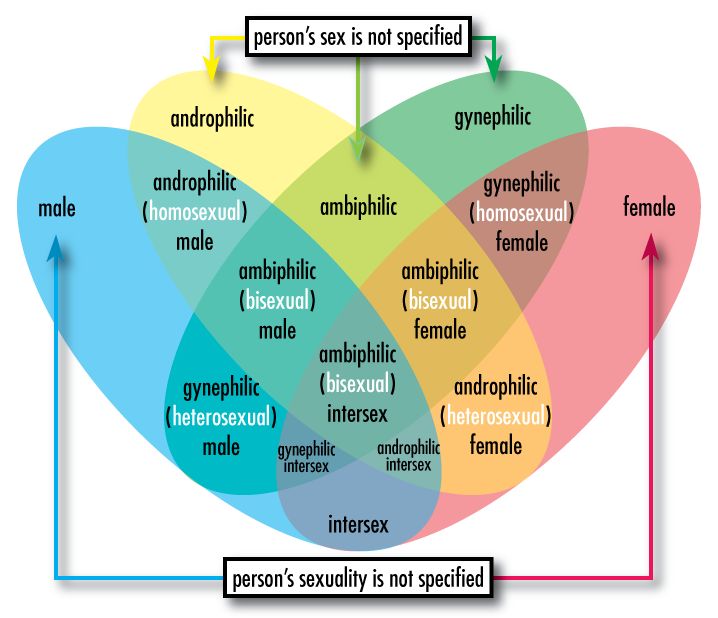
Gender identity is an individual’s internal sense of gender. It may be male, female, neither, or a combination of both. An individual’s gender identity may be different from the sex they were assigned at birth. A transgender individual is an individual whose gender identity is different from the sex assigned to that person at birth.

Sex stereotypes are stereotypical notions of masculinity or femininity. They include expectations of how individuals represent or communicate their gender to others and that individuals will consistently identify with and conform to stereotypes associated with their assigned gender. Sex stereotypes also include gendered expectations related to the appropriate roles of a certain sex.

According to HHS, categorical coverage exclusions or limitations for all health care services related to gender transition are discriminatory. Individuals must be treated in a manner consistent with their gender identity. Providers may not deny or limit treatment that is ordinarily or exclusively available to individuals of one gender because the person seeking treatment identifies as belonging to another gender.

The manner in which the final rule expanded the traditional scope of sex discrimination to include gender identity and sex stereotyping represents a fairly significant policy shift. However, HHS admits that the final rule does not resolve whether discrimination on the basis of an individual’s sexual orientation alone violates the ACA’s nondiscrimination provision. Nevertheless, HHS states that allegations of sexual orientation discrimination will be evaluated by the Office for Civil Rights to determine whether they involve the sorts of stereotyping that violate the ACA’s nondiscrimination provision.

Despite not being directly covered by the ACA’s nondiscrimination rules, many employers will be affected indirectly. Employers providing fully insured group health plans may be affected because their insurance companies are covered by the rule. Employers using a covered third-party administrator to manage their self-fund group plan may also be affected by the rule. Consequently, employers should have at least a basic understanding of the ACA’s nondiscrimination rules.

At Setnor Byer Insurance & Risk, we are committed to guiding you through the constantly changing health care landscape and offer a number of valuable risk management solutions to help you properly and efficiently manage your employee benefits, group health and business insurance programs.

Please contact us if you would like more information about complying with the Affordable Care Act or subscribe to our weekly risk mangement newsletter.


Is Your Group Health Plan Considered ‘Affordable’ under the ACA?

Applicable Large Employers (ALEs) are generally employers that average at least 50 full-time and full-time equivalent employees. Under the Affordable Care Act, ALEs can either provide health insurance coverage to employees or pay a penalty. To avoid a penalty, ALEs must offer health coverage to at least 95% (70% in 2015) of its full-time employees and their dependents. But, not any old group health insurance coverage will do.

Coverage that is offered must provide minimum value and must be affordable. The minimum value requirement is generally met if the plan covers at least 60% of the costs of benefits. To be affordable, the employee’s share of the premium cannot be more than 9.5% of that employee’s annual household income.

Since employers generally will not know each full-time employee’s household income, employers may use one or more of the ACA’s three affordability safe harbors. If an employer satisfies one or more of these safe harbors, coverage will be considered affordable even if it costs more than 9.5% of a particular employee’s annual household income.

Form W-2. Coverage will generally be considered affordable if the employee’s required calendar year contribution for the employer’s lowest cost self-only coverage does not exceed 9.5 percent of that employee’s Form W-2 wages.

  • Calculated on an employee-by-employee basis at the end of the calendar year.
  • Employee’s required contribution amount or percentage must be consistent throughout the calendar year, so discretionary adjustments to employee contribution requirements for a pay period are not allowed.
  • Wages are adjusted if coverage is not offered for an entire calendar year.
  • Generally produces the highest ‘affordable’ monthly contribution because the calculation is based on wages for all hours worked and paid time off wages (sick, vacation, etc.).
  • Optimal for employers with a relatively stable workforce that are unlikely to reduce compensation levels during the year.


Rate of Pay. Coverage will generally be considered affordable if the employee’s required monthly contribution for the lowest cost self-only coverage does not exceed 9.5% of an amount equal to 130 multiplied by the employee’s lowest hourly rate of pay during the calendar month or the hourly rate on the first day of the coverage period (generally the first day of the plan year), whichever is lower. Monthly salaries are used for non-hourly employees.

  • Calculated monthly on an employee-by-employee basis.
  • Employees credited with 130 hours of work per month, regardless of hours actually worked.
  • Generally produces a lower ‘affordable’ monthly contribution than the Form W-2 safe harbor because the calculation is based on wages for 130 hours of work per month (30 hours per week).
  • The maximum monthly ‘affordable’ contribution for an employee making the federal minimum wage of $7.25 per hour is $89.54 ($7.25 x 130 = $942.50 x .095 = $89.54). The monthly maximum would be $123.50 for an employee making $10 per hour and $148.20 for an employee making $12 per hour.


Federal Poverty Line. Coverage will generally be considered affordable if the employee’s required monthly contribution for the lowest cost self-only coverage does not exceed 9.5% of the applicable calendar year’s federal poverty line (FPL) for a single individual, divided by 12.

  • The 48 contiguous states are given a single FPL; Alaska and Hawaii each have their own FPL.
  • The 2015 FPL for the 48 contiguous states is $11,770, so the maximum monthly ‘affordable’ contribution would be $93.18.
  • Generally produces the lowest ‘affordable’ monthly contribution of all the safe harbors.


These safe harbors are optional. ALEs may use one or more of these safe harbors and can apply them to any reasonable category of employees, but they must be applied uniformly and consistently to all employees in a category. Reasonable categories can be based on specified job categories, compensation type (hourly or salary), geographic location or other similar bona fide business criteria.

At Setnor Byer Insurance & Risk, we are committed to guiding you through the constantly changing health care landscape. In addition to our other valuable risk management solutions, Setnor Byer Insurance & Risk has an online tool to help clients complete their ACA information reports.

Please contact us if you have any questions or would like to discuss how we can help you comply with health care reform.

Is Telemedicine Right For You?

Telemedicine generally refers to the practice of using telecommunications technologies (phone, Internet, etc.) to diagnose and treat patients, and in case you haven’t noticed, it’s come a long way. Consider this:

  • The Centers for Medicare & Medicaid Services describes telemedicine as a cost-effective alternative to providing medical care.
  • The American Medical Association says telemedicine is a key innovation that can maintain patient safety, improve access to health care and control costs.
  • Industry analysts expect significant growth in the telemedicine market over the next few years.

Employers are taking notice of the benefits of telemedicine. According to a recent survey, 22% of large U.S. employers currently offer telemedicine services to employees as a low-cost alternative to doctor office visits for non-serious medical issues; 37% expect to begin doing so in 2015.

A primary benefit of telemedicine is fewer unscheduled absences by employees needing to see or take their child to a doctor for non-serious medical issues. Research shows that a majority of doctor visits are unnecessary. A cough, for example, can often be treated safely and effectively with telemedicine. (According to the Centers for Disease Control and Prevention, the most frequent reason for going to the doctor is…a cough.)

Employers offering telemedicine services also benefit from:

  • Healthier employees
  • Fewer employee sick days
  • Increased productivity
  • Measureable reduction in health care (insurance) costs

Telemedicine service plans are typically structured as discount card programs. These plans are not insurance and should not be considered a substitute for health insurance. Employers considering a telemedicine program should work with a reputable broker to find the right plan and avoid those trying to take advantage of a rapidly growing market.

At Setnor Byer Insurance & Risk, we make it easy to:

  • Evaluate options
  • Find the best solution
  • Obtain competitive pricing
  • Implement and integrate a new plan into existing benefit programs

If you would like more information, please contact us.

Are You Ready for the New Affordable Care Act Reporting Requirements?

The Affordable Care Act (ACA) requires Applicable Large Employers (ALEs) with 50 or more full-time or full-time equivalent employees to file information returns with the Internal Revenue Service and provide statements to their full-time employees about employer-offered health insurance coverage. This information will be used to administer the ACA’s employer shared responsibility provisions (employer mandate) and to determine whether an employee is eligible for the premium tax credit.

Filing Forms (Drafts)

In 2014, the IRS released non-final draft versions of two forms that ALEs can use to satisfy these reporting requirements.

  • Form 1095-C (Employer-Provided Health Insurance Offer and Coverage)
  • Form 1094-C (Transmittal of Employer-Provided Health Insurance Offer and Coverage Information Returns)

Filing Deadlines

ALEs must file these forms with the IRS on or before February 28 (March 31 if filed electronically) of the year immediately following the calendar year for which the offer of coverage information is reported. For calendar year 2014, there is no filing requirement. For calendar year 2015, these forms must be filed by February 29, 2016 (or March 31, 2016 if filed electronically).

ALEs must also furnish a Form 1095-C to each full-time employee by January 31 of the following year. The first Forms 1095-C are due to these individuals by February 1, 2016.

Form 1095-C

ALEs must file a Form 1095-C (or a substitute form) for each employee who was a full-time employee for any month of the calendar year. This form is used to report specific health insurance coverage information for each full-time employee to the IRS, such as:

  • which months the employee was a full-time employee
  • any offers of health coverage that meet the minimum value standard made to the employee and family members each month
  • the employee’s share of the monthly premium for the lowest-cost insurance that offers minimum value health coverage
  • whether any safe harbors are applicable to the employee
  • whether the employee was enrolled in the plan

Form 1094-C

ALEs must use Form 1094-C to transmit its Forms 1095-C to the IRS. A Form 1094-C must be attached to any Forms 1095-C filed by an ALE. One transmittal form can be used to cover all Forms 1095-C filed by an ALE or multiple transmittal forms can be used. The information reported with this form includes:

  • the total number of Forms 1095-C submitted with this particular transmittal
  • the total number of Forms 1095-C that will be filed by the ALE
  • whether the ALE is a member of an aggregate group (multiple employers treated as a single employer)
  • whether special rules or transition relief apply to the ALE

Though these ACA reporting forms are not due until 2016, large employers cannot wait until the last minute. Given the technical nature and complexity of the new ACA reporting requirements, legal and tax professionals should be consulted when preparing any forms filed with the IRS.

At Setnor Byer Insurance & Risk, we are committed to guiding you through the health care reform process. Check back with us periodically for future informational updates about the Affordable Care Act. If you have specific questions about the Act or if you are ready to take action and would like to see how Setnor Byer Insurance & Risk can help, contact us.

If you’d like to subscribe to our weekly newsletters please click here.

Summary Plan Descriptions under ERISA

The Employee Retirement Income Security Act (ERISA) is a federal law that sets minimum standards for most voluntarily established employee pension and welfare plans in the private sector. To protect individuals in these plans, ERISA requires plan administrators, which are oftentimes the employers, to provide plan participants and their beneficiaries with a Summary Plan Description (SPD).

SPDs are used to give plan participants and beneficiaries important information about pension plans, like 401(k) and profit sharing plans, and welfare plans, like group health, disability and pre-paid legal plans. SPDs provide information about the plan, what benefits are available under the plan, the rights of participants and beneficiaries under the plan, and how the plan works.

SPDs must generally be given to each plan participant and each beneficiary receiving benefits under the plan within 90 days after first becoming covered by the plan. Under ERISA, SPDs must generally:

  • Identify the plan name, plan number and employer identification number (EIN)
  • Describe the type of plan (ex. 401(k), profit sharing, group health, disability)
  • Describe the type of plan administration
  • Provide contact information for the plan administrator and service of process
  • Describe the plan’s eligibility requirements
  • Describe circumstances which may result in disqualification, ineligibility, denial, loss, forfeiture, suspension or reduction of benefits
  • State the date of the plan’s fiscal year
  • Describe the procedures governing claims for benefits, applicable time limits and remedies if claims are denied
  • Describe provisions governing termination of the plan
  • A statement of rights available to plan participants under ERISA

SPDs for employee pension plans must include additional information, such as:

  • The plan’s normal retirement age
  • A description of benefits, eligibility, vesting and accrual
  • A statement about whether the plan is covered by termination insurance from the Pension Benefit Guaranty Corporation
  • Source of contributions to the plan and the methods used to calculate contributions amounts

Similarly, SPDs for employee welfare plans must also include additional information, such as information about:

  • Cost-sharing provisions, including costs of premiums, deductibles, coinsurance and copayment requirements
  • Annual or lifetime caps or limits on benefits
  • Coverage for preventive services
  • Coverage for drugs, medical tests, devices and procedures
  • The use of network providers, the composition of provider networks and whether, and under what circumstances, coverage is provided for out-of-network services
  • Conditions or limits on the selection of primary care providers or providers of specialty medical care
  • Conditions or limits applicable to obtaining emergency medical care
  • Preauthorization requirements or utilization review as a condition to obtaining a benefit or service

Since comprehension is the key, SPDs must follow strict style and formatting requirements. For example:

  • SPDs must be written in a manner calculated to be understood by the average plan participant
  • SPDs must be sufficiently comprehensive to apprise the plan’s participants and beneficiaries of their rights and obligations under the plan
  • SPDs must not be formatted in a way that misleads, misinforms or fails to inform participants and beneficiaries
  • Advantages and disadvantages of the plan must be presented without either exaggerating the benefits or minimizing the limitations
  • Exceptions, limitations, reductions, and restrictions of plan benefits cannot be minimized, rendered obscure or otherwise made to appear unimportant (style, caption, printing type and prominence must be the same as that used to describe plan benefits)

In fulfilling these requirements, plan administrators must consider the level of comprehension and education of typical participants in the plan and the complexity of the terms of the plan. In most cases, this will usually require limiting or eliminating technical jargon and long, complex sentences, and using clarifying examples, illustrations, clear cross references and a table of contents.

Unlike the general descriptions provided in this article, the SPD requirements are highly technical and very specific. To avoid violations, employers must confirm strict compliance with ERISA’s SPD requirement. If you have questions about your employee welfare plans, or if you would like to see how Setnor Byer Insurance & Risk can help, contact us.

If you’d like to subscribe to our weekly newsletters please click here.

The Affordable Care Act’s Summary of Benefits and Coverage

The complexity of group health insurance makes it difficult for employers to shop for health plans and for employees to choose among several employer-provided options. Unfortunately, helpful consumer information is not typically found in the patchwork of various non-uniform and intricate consumer disclosures, such as the Summary Plan Description required by ERISA. To help consumers make informed decisions about health care coverage, the Affordable Care Act created the Summary of Benefits and Coverage and Uniform Glossary requirement.

Under this requirement, insurers and employers are required to give group health plan participants and beneficiaries, which are generally employees and their dependents, a short, plain-language Summary of Benefits and Coverage (SBC). A Uniform Glossary of terms used in health coverage and medical care must also be made available to plan participants and beneficiaries.

Insurers must provide the SBC to employers:

  • Upon Application (no later than 7 business days following receipt of the application)
  • By 1st Day of Coverage (if any changes to the initial SBC were made)
  • Upon Renewal (if renewal is automatic, no later than 30 days before the new plan year; if renewal applications are required, no later than the date application materials are distributed)
  • Upon Request (no later than 7 business days following receipt the request)

Plan participants and beneficiaries must also receive the SBC:

  • Upon Application (at the same time written application materials are distributed)
  • By 1st Day of Coverage (if any changes to the initial SBC were made)
  • Upon Renewal (if renewal is automatic, no later than 30 days before the new plan year, or within 7 business days after the new policy is issued; if renewal applications are required, no later than the date applications are distributed to participants)
  • Upon Request (no later than 7 business days following receipt the request)

Though insurers and employers are both responsible for providing the SBC to plan participants and beneficiaries, only one SBC is required. Under the regulations, the obligation of one is satisfied if the other provides the required SBC in a timely manner. To avoid violations, employers must confirm, not assume, that the insurer is providing the required SBCs to plan participants and beneficiaries.

The SBC must include the following:

  • Uniform definitions of standard insurance and medical terms
  • Descriptions of coverage, including cost sharing, for each category of benefits
  • Exceptions, reductions and limitations of coverages
  • Cost-sharing provisions, including deductible, coinsurance and copayment obligations
  • Renewability and continuation of coverage
  • Coverage examples
  • A statement about whether the plan or coverage provides minimum essential coverage and whether the share of the total allowed costs meets applicable requirements
  • A statement that the SBC is only a summary of coverage
  • contact information (telephone number, Internet address) for asking questions or requesting copies of plan or policy documents
  • An Internet address (or similar contact information) for obtaining a list of network providers (for plans with one or more networks of providers)
  • An Internet address (or similar contact information) for obtaining coverage information (for plans that use a formulary for prescription drug coverage)

The SBC must also provide an Internet address and phone number that plan participants and beneficiaries can use to obtain the Uniform Glossary, which provides definitions for a number of health-coverage-related and medical terms. Insurers and employers must provide the Uniform Glossary, in either paper or electronic form, no later than 7 business days after receiving a request from a plan participant or beneficiary.

The SBC and Uniform Glossary requirements, which also apply to grandfathered plans, became effective on September 23, 2012. However, the administration extended various safe harbors and enforcement relief through the end of the second year of applicability, so penalties will not be imposed on those working diligently and in good faith to meet the requirements.

Unlike the general descriptions provided in this article, the regulations are highly technical and very specific. For example, the SBC cannot be more than 4 double-sided pages in length and cannot use print smaller than 12-point font. Paying attention to the details is critical. Since a willful failure to provide the required information can result in a $1,000 fine for each plan participant or beneficiary, employers cannot afford a casual approach to SBCs.

At Setnor Byer Insurance & Risk, we are committed to serving as a resource for Affordable Care Act compliance. If you have specific questions about the Act or if you are ready to take action and would like to see how Setnor Byer Insurance & Risk can help, contact us.

If you’d like to subscribe to our weekly newsletters please click here.

Affordable Care Act Update

Despite becoming law over four years ago, the Affordable Care Act continues to make headlines. Since it’s not easy to keep track of all the changes, let’s take a look at some of the more significant recent developments.

Elimination of Small Group Deductible Limits

A significant ACA change scheduled to take effect in 2014 involves annual deductible limits for small groups. Under this provision, small group health plan deductibles could not be more than $2,000 for individuals or $4,000 for families. Those who were concerned about the lack of flexibility caused by these deductible limits no longer have to worry.

The small group deductible limits were rather unceremoniously eliminated by the Protecting Access to Medicare Act, which was signed into law on April 1, 2014. Since these limits were retroactively eliminated back to the day the ACA was originally enacted, it’s almost like they never existed. This is welcome news for many small groups, which are typically those employers with up to 50 employees, but which may be employers with up to 100 employees.

However, it is important to note that the ACA’s annual out-of-pocket cost-sharing limits have not changed. Since these cost-sharing limits specifically apply to deductibles, among other things, employers must still be aware of indirect deductible limitations. The 2014 annual out-of-pocket limit is $6,350 for individuals and $12,700 for families.

Updated Model COBRA Notices

Under the Consolidated Omnibus Budget Reconciliation Act (COBRA), employees and their families may have the option of staying on their former employer’s health insurance plan for a limited period of time after their employment ends. Despite having to pay the entire premium, including any portion previously paid by their employer, COBRA coverage has typically been cheaper than individual or family coverage because the premiums are based on the employer’s group rates. However, with the new Health Insurance Marketplace created by the ACA, this may no longer be the case.

Phyllis C. Borzi, Assistant Secretary of Labor for Employee Benefits Security, said that, “in many cases, workers eligible for COBRA continuation coverage can save significant sums of money by instead purchasing health insurance through the Marketplace…It is important that workers know that in some cases there is a Marketplace option as well.”

To let employees know they may have an alternative to continuing their health care coverage under COBRA, the Department of Labor updated its Model COBRA General Notice and Model COBRA Election Notice. According to the Department of Labor, these updated notices make it clear to workers that if they are eligible for COBRA continuation coverage when leaving a job, they may choose to instead purchase coverage through the Health Insurance Marketplace.

Employer Mandate

In February 2014, the Internal Revenue Service provided transition relief from the ACA’s employer responsibility provisions. Employers with 100 or more employees wanting to avoid the penalty must offer coverage to 70% of their full-time employees in 2015, and 95% in 2016 and beyond. Large employers that do not meet these standards will have to make employer responsibility payments beginning in 2015. Employers with 50 to 99 full time employees will not be subject to a penalty until 2016, provided they meet certain conditions.

At Setnor Byer Insurance & Risk, we are committed to guiding you through the changes coming in 2014. Check back with us periodically for future informational updates about the Affordable Care Act. If you have specific questions about the Act or if you are ready to take action and would like to see how Setnor Byer Insurance & Risk can help, contact us.

If you’d like to subscribe to our weekly newsletters please click here.

Offering Health Insurance to Same-Sex Spouses

Under the Affordable Care Act, health insurance issuers in the individual and group markets are generally required to guarantee insurance coverage to every employer and individual that applies. Beginning in 2015, this guarantee will extend to same-sex spouses.

On March 14, 2014, the Department of Health & Human Services (HHS) announced that insurance companies offering non-grandfathered health insurance plans can no longer refuse to offer health insurance coverage to same-sex spouses. In taking this position, the HHS relied on federal regulations prohibiting health insurance issuers from employing marketing practices or benefit designs that discriminate on the basis of, among other things, an individual’s sexual orientation.

According to HHS, an issuer is considered to employ discriminatory marketing practices or benefit designs if the issuer:

  • Offers health insurance coverage to a spouse in an opposite-sex marriage; and
  • Does not offer the same coverage to a spouse in a same-sex marriage that was validly consummated in a jurisdiction where the law authorizes same-sex marriages.

Importantly, the prohibition against discriminating against same-sex spouses applies regardless of the jurisdiction in which the insurance policy is offered, sold, issued, renewed, in effect, or operated, and regardless of where the policyholder resides. This means that insurance companies must offer coverage to legally married same-sex spouses even if they live in a state that does not allow same-sex marriages.

HHS noted that its position regarding coverage for same-sex spouses does not require a group health plan to provide coverage that is inconsistent with the terms of eligibility for coverage under the plan, or that otherwise interferes with the ability of a plan sponsor to define a dependent spouse for purposes of eligibility for coverage under the plan. It only prohibits an issuer from refusing to offer the option to cover same-sex spouses on the same terms and conditions as opposite sex-spouses.

According to HHS, it is only clarifying the current regulations’ prohibition against discrimination based on sexual orientation in a manner that is consistent with the policy of ensuring that all individuals have access to health coverage. However, since “some issuers may not have understood the prohibition,” HHS is not requiring immediate compliance. Rather, health insurance issuers must implement changes for plans or policies years beginning on or after January 1, 2015.

Though fewer than half the states allow same-sex marriages, employers in every state need to be aware of health insurance requirements for same-sex spouses. Beginning in 2015, the focus will need to be on the legality of the marriage rather than the gender of the spouses.

Recent developments with the Affordable Care Act suggest that change rather than stability should be expected. At Setnor Byer Insurance & Risk, we are committed to guiding you through the changes coming in 2014 and beyond. Check back with us periodically for future informational updates about the Affordable Care Act.

If you have specific questions about the Act or if you are ready to take action and would like to see how Setnor Byer Insurance & Risk can help, contact us.

If you would like to subscribe to our newsletters please click here.

Affordable Care Act’s Employer Mandate Delayed…Again

On February 10, 2014, the U.S. Department of the Treasury and the Internal Revenue Service (IRS) issued final regulations implementing the employer responsibility provisions under the Affordable Care Act (ACA). Despite being previously delayed, the final regulations provide transition relief to employers with 50 or more employees, which, according to the administration, should ensure a gradual phase-in of the employer mandate.

Since the employer mandate does not apply to employers with fewer than 50 employees, small employers are not required to provide coverage or fill out any forms in 2015, or in any year, under the ACA. For employers with 50 or more full-time employees, the final regulations provide the following transition relief.

Large Employers (100 or more employees): The final regulations reduce the percentage of full-time employees that must be offered health coverage. To avoid paying a penalty, large employers must offer coverage to 70% of their full-time employees in 2015, and 95% in 2016 and beyond. Large employers that do not meet these standards will have to make employer responsibility payments beginning in 2015.

Medium Employers (50 to 99 employees): The employer responsibility provisions will not apply to employers with 50 to 99 full-time employees until 2016. However, to be eligible for this transition relief, employers must certify that they meet the following conditions:

  • Limited Workforce Size. The employer must employ an average of at least 50 but fewer than 100 full-time employees (including full-time equivalents) on business days during 2014. The number of full-time employees (including full-time equivalents) is determined in accordance with the otherwise applicable rules in the final regulations for determining status as an applicable large employer.
  • Maintenance of Workforce and Aggregate Hours of Service. From February 9, 2014 to December 31, 2014, the employer may not reduce the size of its workforce or the overall hours of service of its employees in order to qualify for the transition relief. However, an employer that reduces workforce size or overall hours of service for bona fide business reasons is still eligible for the relief.
  • Maintenance of Previously Offered Health Coverage. From February 9, 2014 to December 31, 2015 (or, for employers with non-calendar-year plans, the last day of the 2015 plan year), the employer does not eliminate or materially reduce the health coverage, if any, it offered as of February 9, 2014. An employer will generally not be treated as eliminating or materially reducing health coverage if: (i) the employer contributes at least 95 percent of the dollar amount or at least the same percentage of the cost of coverage that was offered on February 9, 2014; (ii) any changes in benefits to employee-only coverage continue to provide minimum value; and (iii) the employer does not narrow or reduce the classes of employees (or the employees’ dependents) to whom coverage under was offered on February 9, 2014.

Since the final regulations cover a number of different topics and are highly technical, employers looking to take advantage of the transition relief should consult with a licensed professional.

Though many welcome the transition relief provided in the final regulations, it doesn’t look like 2014 will bring stability and predictability to health care under the Affordable Care Act. At Setnor Byer Insurance & Risk, we are committed to guiding you through the changes coming in 2014. Check back with us periodically for future informational updates about the Affordable Care Act. If you have specific questions about the Act or if you are ready to take action and would like to see how Setnor Byer Insurance & Risk can help, contact us.

If you’d like to subscribe to our weekly newsletters please click here.

Final Rules Issued for Mental Health Parity and Addiction Equity Act

The Departments of Labor, Health and Human Services and the Treasury issued final rules implementing the Paul Wellstone and Pete Domenici Mental Health Parity and Addiction Equity Act of 2008 (Act). Though interim final rules implementing the Act were published and became effective in 2010, these final rules will become effective 60 days after their November 13, 2013 publication date.

Under the Act, group health plans and group and individual health insurance coverage are required to treat mental health and substance use disorder benefits on par with medical/surgical benefits. Though the Act does not require group health plans to provide mental health benefits or substance use disorder benefits, if they are provided, financial requirements and treatment limitations cannot be more restrictive for mental health and substance use disorders than they are for medical/surgical benefits.

Financial requirements include deductibles, copayments, coinsurance and out-of-pocket maximums, but do not include aggregate lifetime or annual dollar limits. Treatment limitations include limits on the frequency of treatment, number of visits, days of coverage, days in a waiting period, and other similar limits on the scope or duration of treatment.

According to a press release issued by the administration, the final rules include specific consumer protections, such as:

  • Ensuring that parity applies to intermediate levels of care received in residential treatment or intensive outpatient settings;
  • Clarifying the scope of transparency required by health plans, including the disclosure rights of plan participants, to ensure compliance with the law;
  • Clarifying that parity applies to all plan standards, including geographic limits, facility-type limits and network adequacy; and
  • Eliminating an exception to the existing parity rule that was determined to be confusing, unnecessary and open to abuse.

Health and Human Services Secretary Kathleen Sebelius said, “This final rule breaks down barriers that stand in the way of treatment and recovery services for millions of Americans. Building on these rules, the Affordable Care Act is expanding mental health and substance use disorder benefits and parity protections to 62 million Americans. This historic expansion will help make treatment more affordable and accessible.”

The final rules generally apply to group health plans and health insurance issuers offering group health insurance coverage for plan years beginning on or after July 1, 2014; however, they do not apply to small employers with between 2 and 50 employees. Since the Affordable Care Act extended the Act to grandfathered and non-grandfathered individual health insurance coverage, the final rules apply to individual coverage with policy years beginning on or after July 1, 2014.

At Setnor Byer Insurance & Risk, we are committed to guiding you through the constantly changing health care reform landscape. Check back with us periodically for future informational updates.

If you have specific questions about the Mental Health Parity and Addiction Equity Act or the Affordable Care Act or if you are ready to take action and would like to see how Setnor Byer Insurance & Risk can help, contact us.

If you would like to subscribe to our newsletters please click here.