The Risk of Fire Facing Homeowners

Though often overshadowed by hurricanes and earthquakes, fire remains one of the greatest risks facing homeowners. Consider the following:

  • U.S. fire departments responded to an estimated 1,375,000 fires in 2012
  • Residential fires caused 2,450 deaths and 13,900 injuries in 2011
  • On average, 7 people per day die in U.S. home fires
  • Home fires occur more frequently in the winter and on the weekends
  • Cooking is the leading cause of residential fires, followed by heating, electrical malfunction, unintentional/careless conduct, intentional and open flame

Statistics show that residential fires are not only becoming more frequent, but more expensive. According to FEMA’s U.S. Fire Administration, there were 364,500 residential fires in 2011 that caused over $6.5 billion in losses. To avoid becoming another statistic, homeowners must take effective protective measures, such as:

  • Installing smoke alarms, preferably those with both photoelectric and ionization sensors, on every level of your homeIand outside bedrooms, testing them monthly, replacing batteries yearly, and teaching children what they sound like and what to do when they hear it
  • Placing properly maintained fire extinguishers strategically throughout the home, and making sure children know where they are and how to use them
  • Maintaining and repairing electrical systems, such as wiring and outlets
  • Inspecting and cleaning chimneys, fireplaces, furnaces, etc. annually
  • Using appliances, especially space heaters properly
  • Cooking safely
  • Properly using and storing flammable materials

Since it is impossible to completely eliminate the risk, homeowners and renters should check with their insurance agent to make sure they are adequately insured in the event of a fire. In some cases, a personal property floater or ordinance and law coverage may be necessary.

If you would like more information about homeowners’ insurance or would like to discuss your insurance needs, please contact us.

If you would like to subscribe to our newsletters please click here.

Are You Ready for Halloween’s Scary Treats?

Halloween is here! Get ready for the costumes, parties, pranks, trick-or-treaters, candy and…the risk. Every year we are reminded how quickly Halloween celebrations can go wrong. Since cancelling Halloween is not an option, it is important to identify risks that can be controlled and insure against those that cannot.

Vehicle-Pedestrian Accidents

A study by the Centers for Disease Control and Prevention found that the number of childhood pedestrian deaths increased fourfold among children on Halloween. The following tips can limit the likelihood of being involved in a vehicle-pedestrian accident.

  • Slow down and be alert. Children may move in unpredictable and unsafe ways.
  • Take extra time at intersections. Pay attention to medians and curbs.
  • Enter and exit driveways slowly and carefully.
  • Eliminate distractions, such as cell phones and music.
  • Turn headlights on earlier in the day

Standard auto insurance policies would typically provide coverage for damage and liability resulting from a vehicle-pedestrian accident, subject to any policy exclusions.

Slips, Trips and Falls

Whether they are trick-or-treaters or party guests, people typically have more visitors than usual on Halloween. This means a higher risk of slip, trip and fall accidents and liability. To prevent accidents:

  • Keep areas well-lit.
  • Remove all objects that could cause children or guests to slip, trip or fall.
  • Make sure Halloween decorations don’t create a hazard.
  • Repair any broken walkways, sidewalks, driveways, paths and steps.
  • Warn visitors of, and clearly mark, any hazards that cannot be removed or repaired.
  • Keep pets inside and away from guests and trick-or-treaters.

If a guest is injured, standard homeowners’ and renters’ policies will typically provide coverage in the event of a lawsuit. These policies may also provide an injured guest with medical coverage, which may help avoid a lawsuit.

Fire

The National Fire Protection Association says that Halloween ranks among the top 5 days of the year for candle-related fires. The NFPA also found that decorations, like jack-o-lanterns, are often the items first ignited in home fires. To prevent fires:

  • Don’t leave candles unattended and keep them away from flammable materials.
  • Make sure decorations and costumes are flame resistant.
  • For decorations requiring electricity, make sure plugs, wires and cords are not damaged and are used properly.

Fires caused by candles or decorations will typically be covered under standard homeowners’ and renters’ policies.

Vandalism

Homes and vehicles are often damaged by mischievous or malicious trick-or-treaters. To limit the risk:

  • Keep areas well-lit.
  • Move items indoors or to another location.

Vandalism damage that exceeds the deductible will typically be covered under standard homeowners’ and renters’ policies. If a car is vandalized, the comprehensive portion of an auto insurance policy should cover the damage.

If you would like more information about identifying and insuring against various risks, please contact us.

If you would like to subscribe to our newsletters please click here.

Ordinance or Law Coverage Video From Tower Hill® Insurance

Hurricanes have led to significant building code changes in Florida. Ordinance or Law Coverage provides for the additional cost to bring a building up to current building codes when significant repairs are needed. One of our Insurance Carriers, Tower Hill Insurance Group has created a great video explaining the importance of Ordinance or Law Coverage and the different options available for this product. If you would like to learn more about this coverage please contact us.

https://youtu.be/WJGnqgBEI_Y

Below please find the transcript from the video featured in this article.

Hi I’m Joel Curran coming to you from the Gainesville, Florida offices of Tower Hill Insurance Group. With me today is Heidi Moore, the Claims Manager. Heidi’s been with Tower Hill for 15 years.

Do you know if your homeowner’s insurance policy covers you for Ordinance or Law? If you’re like most people, you’re not sure what this coverage is, let alone know if your policy includes protection from this exposure.

Ordinance or Law coverage provides for the additional costs to bring a building up to current building codes when major repairs are needed.

Florida has implemented significant building code changes over the past few years largely due to our experience with hurricanes. If your home was built before the code changes and it needs repairs, the repairs are often needed to be done according to the new building code.

Heidi, in your experience, you’ve had many real life situations where customers had the Ordinance or Law coverage and sometimes they did not.

Yes, we recently had a 1994 home that had tornado damage. They had plenty of coverage to repair the home, but had a code issue with the pool enclosure.

Tell us more about that code issue.

Well the policyholder had minor damage to the pool enclosure, but due to the Post-hurricane Wilma codes, they had to replace the pool enclosure. This would be an additional cost of $17,000.

And did the people have the adequate coverage? In this case they did because they chose the 25% option. They had $82,000 in Ordinance or Law to go towards the replacement of the pool enclosure. The additional cost for them was $17,000 but due to the fact that they had this, they did not have to incur the expense themselves.

So they were a satisfied customer?

They were very satisfied.

Heidi, have you had situations where the customer had to incur the additional costs themselves?

Unfortunately, yes. We had a 1987 home that was struck by lightning and this lightning caused a fire loss. There was damage to the interior and exterior of the home.

And what was the building code issue?

In this case the home was located in a coastal flood area. The Ordinance or Law stated that the homes had to be at 8 feet elevation, this particular home was at 4 foot elevation. Therefore we had to raise the foundation an additional 4 feet.

And what was the additional cost? The additional cost for this policyholder was $35,000.

And they did not have the coverage?

Unfortunately, they did not. They had selected the 0 option. So they had plenty of coverage for the fire damage, but they had to incur – at their own expense- the coverage for raising the elevation.

You can check your policy Declarations page to see what option is included. You should see a percentage figure that applies to the amount you insure your home for.

Not all policies are identical; some include 10% Ordinance or Law coverage unless you select another option. But usually you have the option to select 0% or none, 10%, 25% or 50%.

Florida statutes require insurance companies to get your signature for selections other than 25% and to notify you of your options at least every 3 years.

At Tower Hill, a look at recent new business shows that most of our customers purchase 25% Ordinance or Law coverage. A small number select 10% and 50% but close to 1 in 5 select the 0% option.

There are policy conditions and exclusions that apply and your agent is the best person to contact to explain these and to advise you on your selection. At Tower Hill, we want you to have the coverages you desire so if the unfortunate claim does occur, we are there for you. We want to help you get safely back in your home as soon as possible. We’ve been doing exactly that for 40 years.

What is a Certificate of Insurance?

Certificates of Insurance are documents provided by Agents to verify the existence of insurance coverage. They are commonly used when an agreement or contract requires a party to maintain specific types of insurance. For example, a Certificate of Insurance can be used when:

  • A general contractor wants to verify that its subcontractor has the statutorily required workers’ compensation insurance;
  • A mortgage lender wants to verify that the homeowner has sufficient property insurance;
  • A commercial landlord wants to verify that its tenant has all the insurance coverage required by the lease; or
  • A homeowner wants to verify that its lawn service company has general liability insurance.

Certificates of Insurance are issued to the certificate holder—the person or entity that needs to verify insurance coverage. Though common and relatively straightforward, there is quite a bit of confusion about what Certificates of Insurance do, and more importantly, do not do.

A Certificate of Insurance provides a superficial snapshot of insurance coverage that is in place at the time it is created. Contrary to what many believe, Certificates of Insurance:

  • Are NOT insurance policies.
  • Do NOT provide certificate holders with any rights under the insured’s policies. This means certificate holders cannot file a claim or request a defense under the insured’s policies.
  • Do NOT amend, extend or alter the coverage provided by the insured’s policies. This can only be accomplished with an endorsement, rider or amendment to the policy.
  • Do NOT create a contract between the insurance company and the certificate holder.
  • Do NOT guarantee that insurance coverages listed on a Certificate of Insurance will continue in the future. A Certificate of Insurance issued today may not be accurate tomorrow.
  • Are provided for informational purposes ONLY.

Though there are various Certificate of Insurance forms, those developed by ACORD (Association for Cooperative Operations Research and Development) are widely used to provide specific information about existing insurance coverage, such as:

  • the insurance companies issuing the policy
  • the policy numbers
  • effective dates
  • types of insurance (ex. general liability, automobile, workers’ compensation, property)
  • policy limits

These forms also provide a space to add additional comments or conditions. This is where problems may arise if an insured or certificate holder wants to add specific language to their Certificates of Insurance. For example, a certificate holder may want to state that there is an additional insured under the policy, or an insured may want the certificate to state that any obligation to indemnify the certificate holder is covered by the policy.

If such statements happen to be true, it is not because they were typed on the certificate. Remember that Certificates of Insurance do not affect, extend, or change the insurance policy, so any incorrect or contradictory statements are meaningless to the insurance company. They can, however, be grounds for a costly lawsuit, so an experienced insurance agent should be used when issuing or receiving Certificates of Insurance.

If you would like to learn more about dealing with Certificates of Insurance or how we can help, please contact us.

If you would like to subscribe to our newsletters please click here.

All About Sinkhole Coverage

One of our Insurance Carriers, Tower Hill Insurance Group has created a great video explaining how Catastrophic Ground Cover Collapse (CGCC) is covered by your homeowners insurance policy.If you’d like to learn more about this coverage in regards to your policy please contact us.

https://www.youtube.com/watch?v=X9Uv_cwZ4GQ

Below please find the transcript from the video featured in this article.

Hi, this is Joel Curran coming to from the Tower Hill Insurance Group, LLC offices in Gainesville, Florida, where we have been serving the insurance needs of Floridians for 40 years.

Florida has changed a lot over those 40 years. We’ve had some of the worst hurricanes on record, like Andrew in 1992 and the 2004 – 2005 season when Tower Hill Insurance Group, LLC paid out more than $2 billion to repair homes in Florida. We have also seen huge changes in the way we communicate and do business.Most recently, Florida’s sinkholes have been getting a lot of attention on TV and radio, on the Internet in general, and on social networking sites especially.

One question we see are seeing more and more frequently on Facebook and Twitter is, “I see I have a 10% sinkhole deductible, can you tell me how that works?” Well I can do that. But let me first give some background information and explain a little bit about sinkhole loss coverage.

Across the country homeowners and dwelling fire policies are rather standard in most coverages. Earth movement is excluded in these policies. While most people think this applies to earthquakes, it also means sinkholes in Florida would not be covered. However, policies are modified in Florida to cover damage from sinkholes.

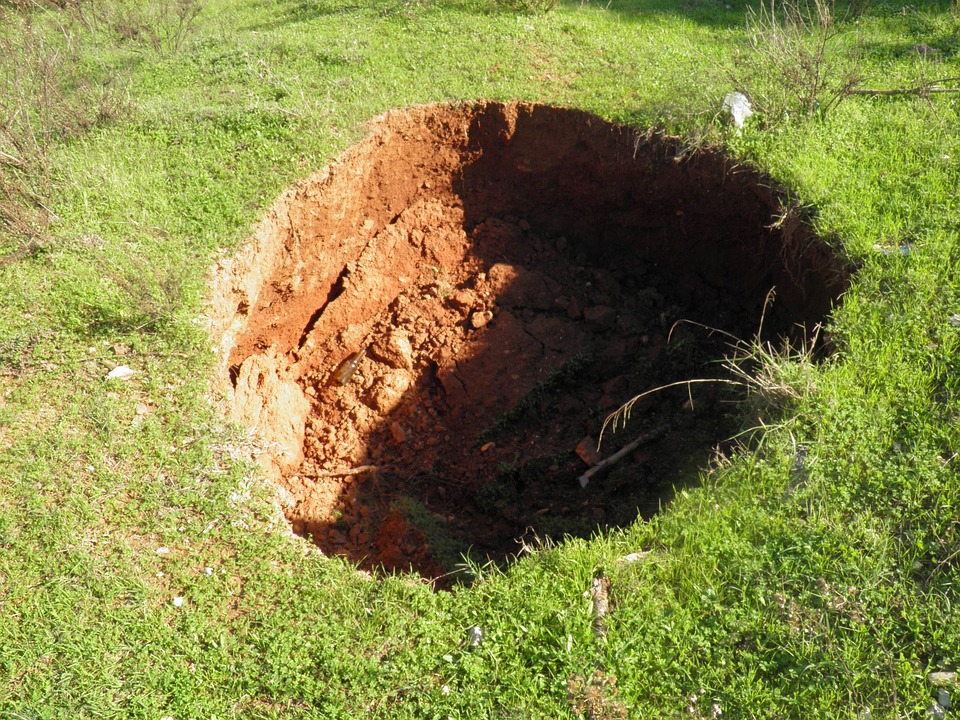
There are two types of coverage for earth movement in Florida: Catastrophic Ground Cover Collapse, known as CGCC, and Sinkhole Loss Coverage. CGCC covers you in cases you often hear about in the news, where a sinkhole opens up under or near a house and there is considerable damage.

All homeowners’ insurance companies provide it. The normal policy deductible applies, so the same deductible you would have for a theft or a fire loss applies to CGCC. To qualify as a CGCC there needs to be 4 components

  • An abrupt collapse of the ground.
  • A visible depression in the ground.
  • Structural damage to the building.
  • The insured structure being condemned and ordered to be vacated.

Sinkhole Loss Coverage is different. Because there are 2011 Statute changes impacting this coverage, my comments will address policies written new in 2012. First of all, sinkhole loss coverage is optional. You do not have to buy it. Sinkhole loss coverage is also different in that not all the 4 components need to be present.

However, there must be actual structural damage to the house and/or foundation, not just cracks to things like exterior walls, driveways, or interior walls around doors or windows. Of course, the damage must also be shown to have been caused by sinkhole activity. If the damage is eligible for coverage, then your policy will require you to pay the sinkhole loss deductible, then the insurer will pay the remaining costs of repair.

The sinkhole loss deductible applies to sinkhole loss coverage only, and at Tower Hill Insurance Group, LLC it is 10% of your Coverage A amount. Coverage A applies to the house itself, as opposed to other structures, or your possessions in the house. Let’s say you insure your home for $200,000. The sinkhole deductible is 10% or $20,000. In the event of a Sinkhole Loss Coverage claim, you would need to pay the first $20,000 in repairs, and as repairs are completed, Tower Hill Insurance Group, LLC would pay the remaining amount to repair your house.

Let me give you an example for a policy that would be written today. OK, the home is valued at $200,000 and the deductible is $20,000. The initial testing is paid for by the insurance company. Further testing may include a contribution from the insured, but if there is structural damage and sinkhole activity is present, then the company pays for all the testing. Then we get a contractor estimate and bids. Let’s say the cost to repair the foundation is $45000, and the cost to repair the home is $10,000. Once you contract to repair the home you will pay the contractor the first $20,000. As work continues we will pay the balance of the foundation repairs which are $25,000. We will also pay the $10,000 to repair the home.

Well that’s a quick recap of sinkhole coverages and how the deductible works. We at Tower Hill Insurance Group, LLC certainly hope that you do not experience damage to your home, but if you do, we pride ourselves on handling your claim promptly and fairly. After all, we have been doing it for 40 years.

Thanks for watching and thanks for using our social media sites.

Why Insurance Rates Increase?

Rate increases are necessary to maintain a company’s ability to pay out claims during the worst catastrophes. One of our Insurance Carriers, Tower Hill Insurance Group has created a great video explaining how and why insurance rates change. If you have any questions about your rates please contact us.

https://www.youtube.com/watch?v=LLV2RnToLME

Below please find the transcript from the video featured in this article.

Hi, this is Joel Curran coming from the Tower Hill Insurance Group, LLC offices in Gainesville, Florida, where we have been serving the insurance needs of Floridians for 40 years. Our customers are loyal – every year, more than 95% accept our renewal offer. More than 100,000 have been with us for 5 years or more.

Unfortunately, everyone has to endure rate increases. But you still think: “why did you increase my premiums? I live in the same house and the market value has declined, there were no hurricanes, and I haven’t had any claims.”

The simple answer is that we need more premiums to cover our costs. But before I give more detail, let me tell you about Good Faith and Spread of Risk. Insurance is a Good Faith contract which means in part that you pay us, and we promise to pay you for damage or injuries covered by the contract. We take that promise seriously. We need to be financially strong enough to pay claims especially if there is a catastrophe. I’ll tell you more about that in a minute.

The second principle is Spread of Risk. Two hundred years ago when Ben Franklin started the first mutual fire insurance company, insurance meant that a small group chipped in equally, and if one house burned down there was money for rebuilding it. But if only ten people paid in and there were two house fires in a year, there would not be enough money to rebuild both homes. But the bigger the group, the broader the spread of risk, and pretty soon you get to a large enough number that the risk is low compared to the number of insurance buyers. That makes the overall risk more predictable. The more predictable – the lower everyone’s contributions will be.

Florida homeowners have a higher-than normal risk. Our 1,300-mile coastline is longer than any state except Alaska. The narrow shape of Florida means even non-coastal areas are very exposed. Our love of being near the water comes with a cost. To spread the risk and keep insurance accessible to everyone, we have to spread the cost as well.

So, what are those costs? Your premium goes towards three main cost areas: First, we make sure we can pay claims. We set aside surplus funds, as well as claims reserves, and we make conservative investments to fund them. We never take a risk with your premiums by putting them into risky investments.

Second, we cover the cost of operating the company, which provides jobs for more than 350 people in Florida. Through sales commissions we also support local independent insurance agencies in every Florida county. In addition, we have to make sure that if there is a hurricane, our facilities can keep running at full capacity so we can be there when you need us most.

Third – and this may surprise you – the biggest cost is reinsurance. Reinsurance is exactly what it sounds like – insurance for insurers, to make sure we can cover catastrophic losses. Reinsurance spreads risk globally, meaning that homeowners around the world are actually helping fund claim payments if a hurricane makes landfall in Florida – which happened in 2004 and 2005– when we paid out more than $2 billion to repair homes in Florida due to 8 hurricanes.

By the same token, Florida’s contributions help fund recoveries in other states and countries. When you watch the weather channel and see tornados in Kansas, or monsoons in China, know that premiums paid by insurance buyers all over the world, including us in Florida, will help repair the damages.

Reinsurers need to be prepared for the worst, and Tower Hill Insurance Group, LLC buys only from the best, most stable reinsurers who have demonstrated year over year that they can fund the losses they insure. The bottom line on reinsurance is that, no matter how well we run our company and manage our investments, if Tower Hill Insurance Group, LLC were on our own to fund years like 2004 and 2005 we would have to charge premiums that are a multiple of what we charge now.

So back to your question, “why is my premium increasing THIS year”? Well, in determining rate changes every year, Florida insurers have to balance the need for keeping insurance rates competitive with the need for keeping their businesses stable and for buying reinsurance.

Recently, two things have contributed. In 2011, even though Florida had a mild year, the world had its worst year on record for weather catastrophes. Because their risk is spread globally, reinsurers are increasing their rates to recover. That rate increase is hitting Florida just like everywhere else. In addition, while the value of homes everywhere has drastically dropped, the cost of repairing and rebuilding has not dropped. When we pay property damage claims we expect to pay contractors a fair price for their work, so we need to collect premium accordingly.

We don’t take rate increases lightly, and we know you don’t either. We go through extensive analysis to determine the fairest rates, and we file our rate changes with the Office of Insurance Regulation who is charged with making sure rates are adequate, not excessive, and do not unfairly discriminate.

Hopefully what I have said makes sense to you. I want you to know that everything we do at Tower Hill Insurance Group, LLC is done to ensure peace of mind for our individual and commercial policy holders. Forty years of experience means we know how to make the right decisions to protect your interests, so stick with us and we’ll ride out any future catastrophes together.

Lowering Your Hurricane Insurance Premium

Many homeowners believe that switching insurance companies is the only way to save on their windstorm (hurricane) insurance premiums. Unfortunately, companies with the lowest premiums may not have enough money to pay claims after a storm. Rather than buy insurance from an insurance company without the capital to pay losses, homeowners can reduce their premiums by taking advantage of wind mitigation credits.

Wind mitigation credits are premium discounts based on the ability of a home to tolerate strong winds without experiencing damage. According to one estimate, if homes were constructed in a manner beyond that which is currently required by building codes, the average losses per year would be reduced by over 70%. This is why increasing a structure’s wind resistance, or hardening, allows homeowners to save on their windstorm insurance premiums.

Homes built or retrofitted to incorporate specific mitigation features designed to increase wind resistance may qualify for wind mitigation credits. Insurance companies consider numerous factors when determining the availability and amount of wind mitigation credits, such as:

  • Roof Covering: Is the roof covered by shingles, clay tiles, metal, built-up tar, membrane, gravel or other material that meets or exceeds building codes?
  • Secondary Water Resistance (SWR): Is there a layer of protection between the roof covering and the roof decking (plywood, metal panels, etc.) that protects the home if the roof covering blows off?
  • Roof Deck Attachment: How is the roof decking connected to the roof trusses or rafters?
  • Roof-to-Wall Attachment: How are the walls connected to the roof trusses or rafters (toe nails, clips, single or double wraps, etc.)?
  • Roof Geometry: What is the shape of the roof (hip roof, flat roof, etc.)?
  • Opening Protection: How are openings, such as windows, doors and skylights protected against flying debris (shutters, hurricane glass, etc.)?

Mitigations features must meet very specific guidelines to qualify for credits. For example, the availability of a wind mitigation credit can depend on the size, spacing and number of nails used in the roof deck or roof-to-wall attachment. Credits will not be awarded unless there is strict compliance with applicable building codes, laws, regulations or standards.

The first step to getting a wind mitigation credit is to get the home inspected. Wind mitigation inspections, which typically cost less than $250 and take about an hour, are often done by licensed building inspectors, contractors, architects and engineers. However, since state laws and specific insurance company requirements may dictate who is qualified to perform wind mitigation inspections, be sure to confirm licenses and check references before hiring an inspector.

Those who do not qualify for one or more wind mitigation credits should consider the cost of hardening their homes and the anticipated savings. Since the amount of wind mitigation credit typically depends on various factors, including state laws and specific insurance company requirements, the assistance of a qualified insurance agent may be needed to estimate premium savings. If the math does not justify retrofitting, homeowners should keep wind mitigation credits in mind the next time general repairs are being done, such as roof and window repair or replacement.

If you would like to learn more about wind mitigation credits or windstorm insurance, contact us.

If you would like to subscribe to our newsletters please click here.

Will business owners buy insurance online?

Insurance companies such as Geico and Progressive started selling personal insurance online over a decade ago. So is it safe to assume that business insurance can also be sold online?

We decided to explore this endeavour and we’re not the only ones. Plenty of insurance agencies offer business insurance, but very few can offer clients an online quote.

Just because the tool is out there doesn’t mean business owners will use it. Getting a quote for business insurance is significantly more complicated than obtaining a personal quote. Some of the other agencies that are offering business quotes are approaching it quite differently than we did.

Hiscox is targeting small business with a page on their site dedicated to explaining the various types of insurance coverage small business owners need. Apogee lists the types of insurance they can quote instantly and features a video tutorial of how to use their quoting tool. Our tool lists all the instant quotes we offer including Property and Liability Quotes, Professional Liability Quotes, Business Auto Quotes, and many more.

The introduction of this tool to our website also created the need for a complete redesign. We call ourselves a full-service independent insurance agency and creating this tool made us realize the possibility for an online marketplace. If clients can get quotes online they should be able to service their policies online as well. That’s why we also created a service page which allows clients to manage their policies online

If successful, online quotes for business insurance could be a big game changer. It will be interesting to see how many more agencies begin offering business quotes online. Get a quote and let us know what you think.

At Setnor Byer Insurance & Risk, we are committed to offering you a seamless insurance experience. Check back with us periodically for informational updates about insurance news. If you have specific questions about our instant quoting tool or if you are ready to take action and would like to see how Setnor Byer Insurance & Risk can help, contact us.

If you’d like to subscribe to our weekly newsletters please click here.

Insurance Agent Experiences the Need of Insurance Firsthand

One of the most common phrases you’ll hear from an insurance agent is don’t wait until it happens to you to get coverage.

On Sunday, February 3rd our very own agent, Pamela Malfavon, noticed smoke coming from the balcony below her 6th floor apartment at Midtown 24. When she looked down and saw that there was a fire, she immediately called 911 to report it. Afterward, she went downstairs to alert a Midtown 24 employee that there was a fire in the building.

The fire was put out before causing any severe damage, and fire fighters speculated that it may have been caused by a cigarette or a candle. Even more of a mystery to all tenants is who will pay for the damage to the building and is the property that was lost in the fire covered?

The damage to the exterior of the building would be covered by Midtown 24’s Property Insurance. However, this policy does not cover any damage to an individual’s property. That would have to be covered under a tenant’s insurance policy IF they opted-in for coverage.

Most apartment complexes require their tenants to purchase renter’s insurance to protect the landlord against injuries to visitors and guests. Additionally, these policies will reimburse the landlord for damages sustained to the interior structure of the tenant’s unit. Let’s hope Midtown 24 secured appropriate proof of insurance for the tenant on the 4th floor!

This still leaves the question of the property lost in the fire. Many tenants overlook or minimize the value of their personal belongings, such as furniture and electronics, and decline the option to protect their contents. These belongings, if insured, will be protected against:

  • Water Damage
  • Fire Damage
  • Vandalism or Theft
  • Falling Objects
  • And many more


Contact us. 

If you’d like to subscribe to our weekly newsletters please click here.

Help! I’m Being Taken Out of Citizens

Citizens Property Insurance Corporation is a not-for-profit government corporation insuring Florida homes and businesses that are unable to purchase property insurance in the private marketplace. As the “insurer of last resort,” Citizens is actively trying to reduce its exposure by transferring policies to the private sector with its depopulation program.

Through this program, private insurance companies–approved by the Florida Office of Insurance Regulation–select polices they would like to assume, or “take out” of Citizens. With few exceptions, any active personal residential policy may be selected by a takeout company.

According to Citizens, there are several possible benefits of participating in the depopulation program, such as:

  • Entering the private property insurance market
  • Lowered risk of premium assessments
  • More comprehensive coverage
  • Lower premiums

However, these benefits are only possible, not guaranteed. Consider that:

  • Those taken out of Citizens may still have to pay premium assessments
  • Policies may not provide more comprehensive coverage than Citizens’ policies
  • Premiums may be higher

Approval by the Office of Insurance Regulation does not necessarily mean that the takeout company has the financial strength to provide the security you expect from your insurance company.

Given the complexity and significance of making the best choice, it is important to consult with a licensed and experienced insurance agent. Upon receiving notice that your policy has been selected for assumption by a takeout company, contact your insurance agent to discuss your options.

At Setnor Byer Insurance & Risk, we are committed to guiding you through the process of deciding whether having your property insurance policy assumed by a takeout company is the best option for you. If you have any questions, please contact us.